
Biography
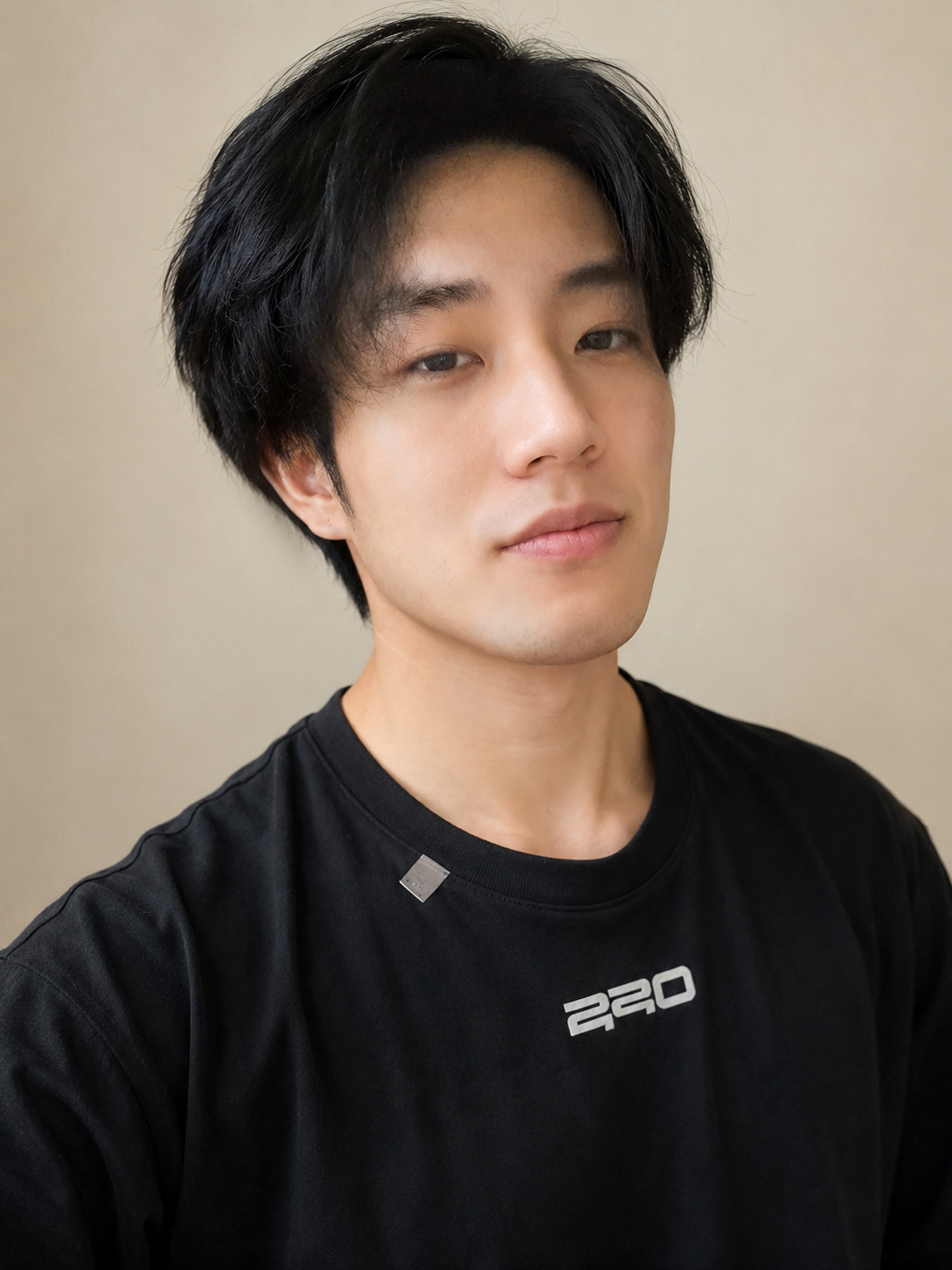
Jiafeng Di is a multidisciplinary designer working across architecture, computational design, AI-assisted creativity, and digital fabrication. Educated in both China and the United States, his practice sits at the intersection of spatial reasoning, material behavior, and emerging technologies. He is interested in how design evolves when intuition, algorithms, and fabrication logics are integrated into the same workflow.
Di’s architectural experience spans public and cultural projects in China to interior and medical environments in New York, giving him a grounded understanding of spatial systems, building logic, and cross-disciplinary coordination. His academic research in the United States further expanded this foundation into computational modeling, AI-driven form exploration, and machine-assisted design workflows, allowing him to merge conceptual thinking with advanced digital processes.
Beyond architecture, Di works extensively with fabrication technologies—including CNC milling, 3D printing, laser cutting, and industrial production systems at full scale. His experience in factory environments provides a rare perspective on how digital design translates into material precision, operational workflows, and real-world constraints. He sees fabrication not only as a tool for making, but as a framework for testing ideas, understanding materials, and defining new design methodologies.
Across these domains, Di develops a hybrid design approach that moves fluidly between concept and construction, computation and craft, vision and execution. His work explores how emerging tools—whether AI systems, robotic processes, or material experiments—can expand the possibilities of spatial design and shape future environments.
Experience
Architecture & Spatial Design
China / New York
I worked across public and cultural buildings in China and later interior and medical environments in New York, contributing to spatial planning, concept development, building-system coordination, construction documentation, and detail design. These experiences gave me a solid architectural foundation—understanding how form, program, regulation, and technical constraints shape built environments—and strengthened my ability to translate design intent into precise, buildable outcomes.
Digital Fabrication & Industrial Production
California, USA
I developed digital-to-physical workflows using CNC milling, six-sided drilling, edge banding, and panel-based production systems. Working directly with machine programming, toolpath logic, troubleshooting, and fabrication optimization gave me hands-on insight into materials, tolerances, and industrial constraints. This experience taught me how design decisions translate into real manufacturing outcomes, strengthening my ability to bridge digital models with full-scale production environments.
Computational & AI-Assisted Design
United States
My research explores algorithmic modeling, generative systems, and machine-learning–driven form exploration. I investigate how computational thinking can reshape spatial logic, material behavior, and fabrication strategies. Beyond parametric tools, my work focuses on integrating AI as a design collaborator—examining how data, pattern recognition, and synthetic imagination can expand architectural and material possibilities.
Concept Development & Cross-Disciplinary Workflow Integration
At the intersection of architecture, computation, and fabrication, I develop integrated workflows that connect concept modeling with algorithmic processes and material execution. My approach emphasizes iterative prototyping, digital–physical feedback loops, and the strategic use of emerging technologies—enabling projects to move fluidly from early exploration to technical resolution and large-scale production. This hybrid methodology helps me structure ideas, test assumptions, and define new modes of making.
Education
University of Pennsylvania
Master of Science in Design
Advanced Architectural Design (MSD-AAD)
Philadelphia, PA, USA
2022 – 2023
Taiyuan University of Technology
Bachelor of Engineering
Architecture
Taiyuan, Shanxi, China
2015 – 2020
Outstanding Graduate · National Scholarship · First-Class Scholarship
Skills
Computational Design
Parametric Modeling (Grasshopper)
Algorithmic Design
AI-assisted Form Generation
Generative Systems
Python for Workflow Automation
Design & Visualization
Rhino · Houdini · ZBrush
Revit · AutoCAD · SketchUp
V-Ray · Lumion · Enscape · Keyshot
Adobe Photoshop / Illustrator / InDesign
Concept Design · Spatial Design
Storyboarding
Digital Fabrication
ABB Robot Program
CNC Milling · Six-sided Drilling
Edge Banding Systems
3D Printing · Laser Cutting
G-code Toolpath Strategy
Material Prototyping & Fabrication Optimization