
AI-Driven
Facade Design Innovation

AI Integration
The initial image was generated by artificial intelligence by blending the style image and content image. Based on the AI image, we started to analyze and re-imagine the new form and potential special qualities, to create the grace, lightness, and spatial complexity of form combinations.
There is the potential that digital technologies can transform architecture techniques and practice profoundly. The new AI image software generates feedback based on what we chose, and this method always has the potential to give rise to unexpected effects. And designer conceives and manipulate the variables of this feedback, creating the feedback loop between the new technology and human being.
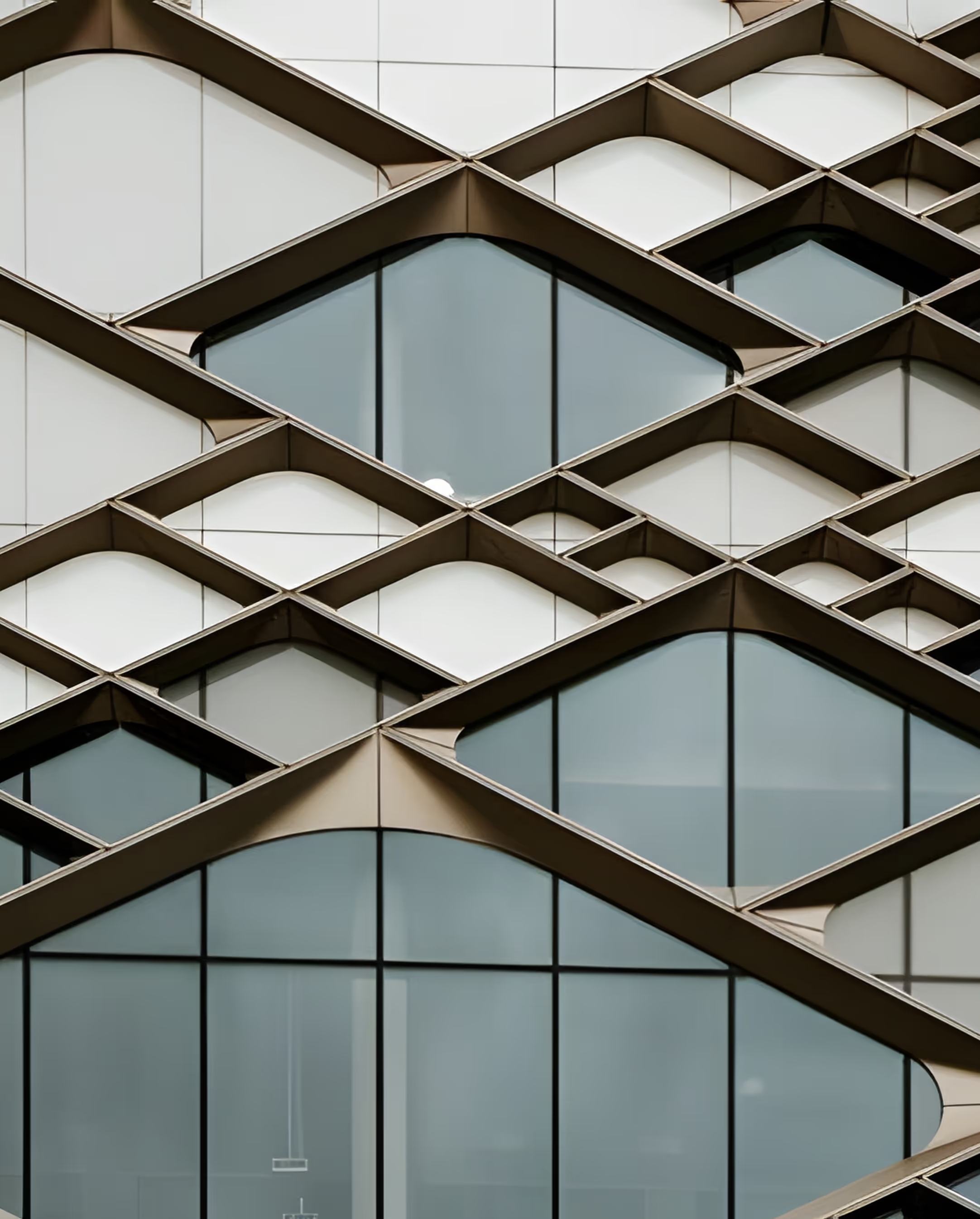
content image
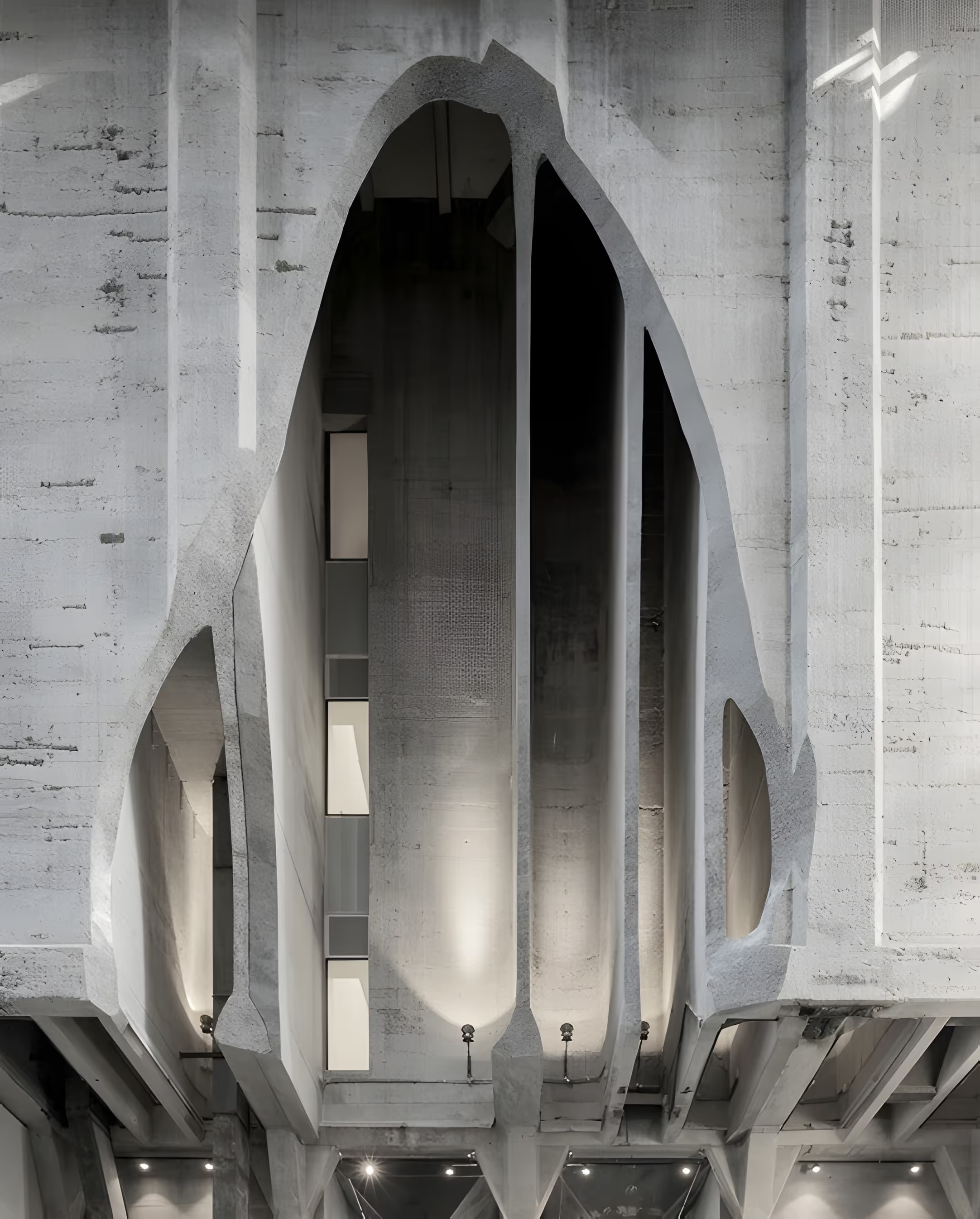
style image
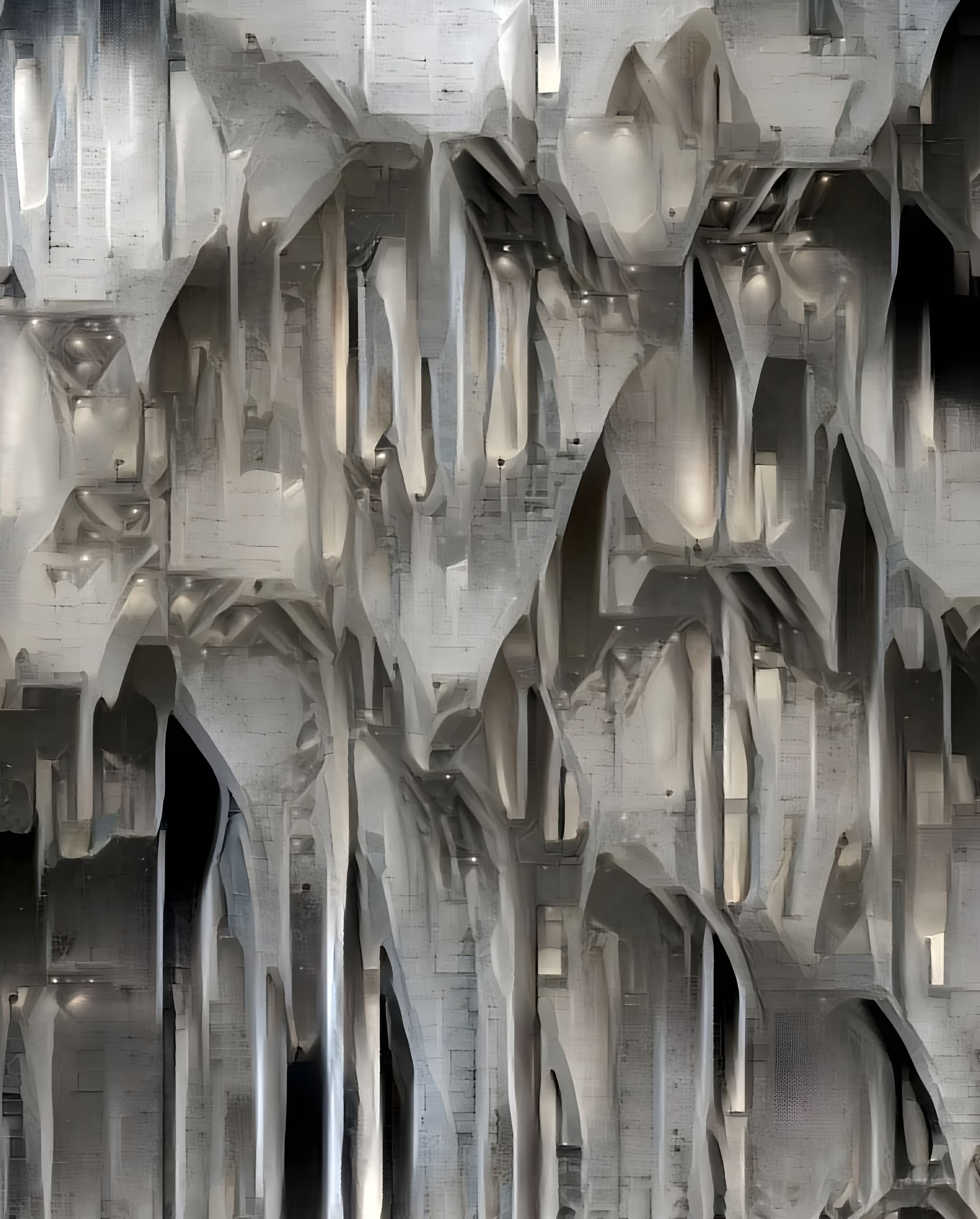
ai integration
Element Extraction
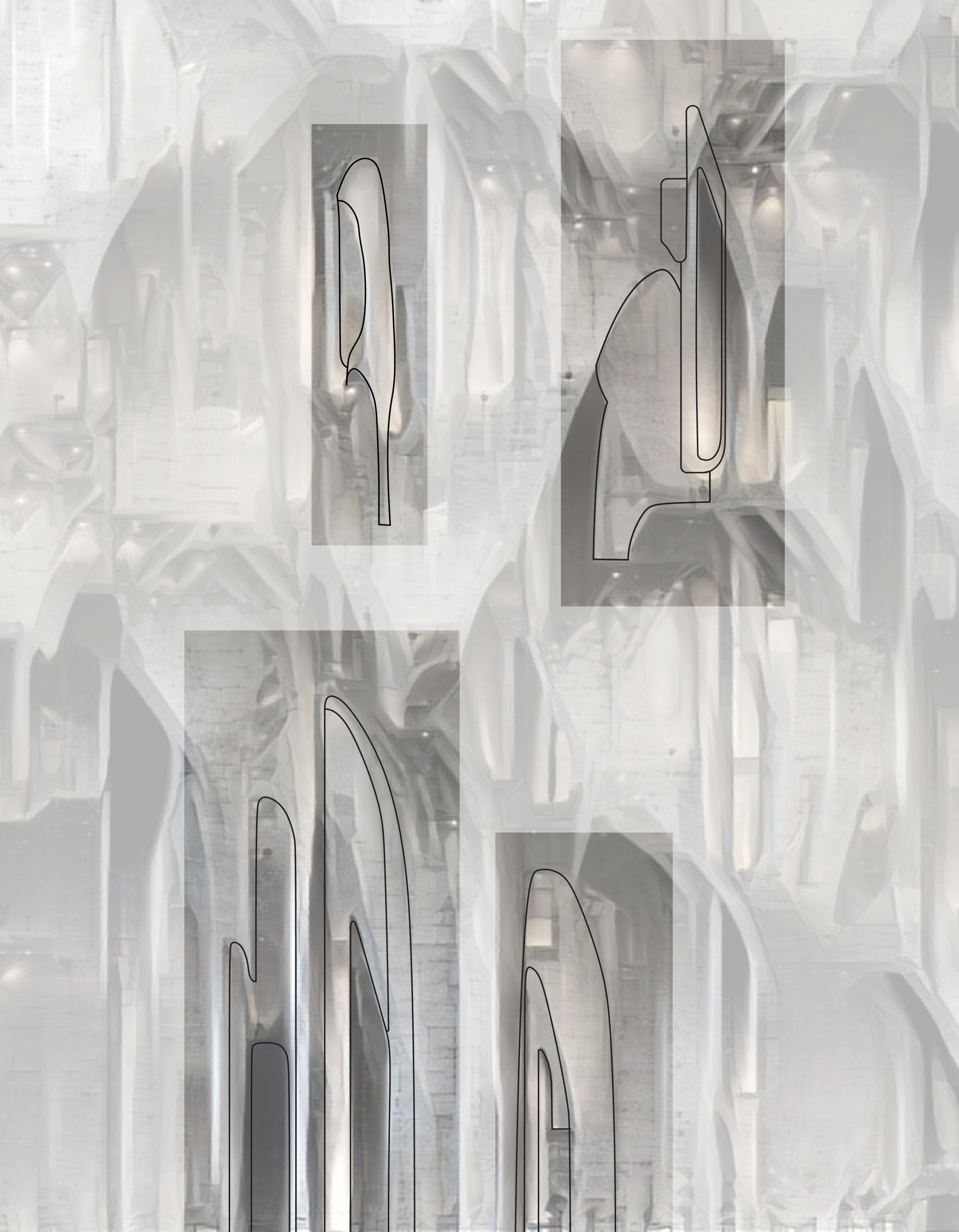
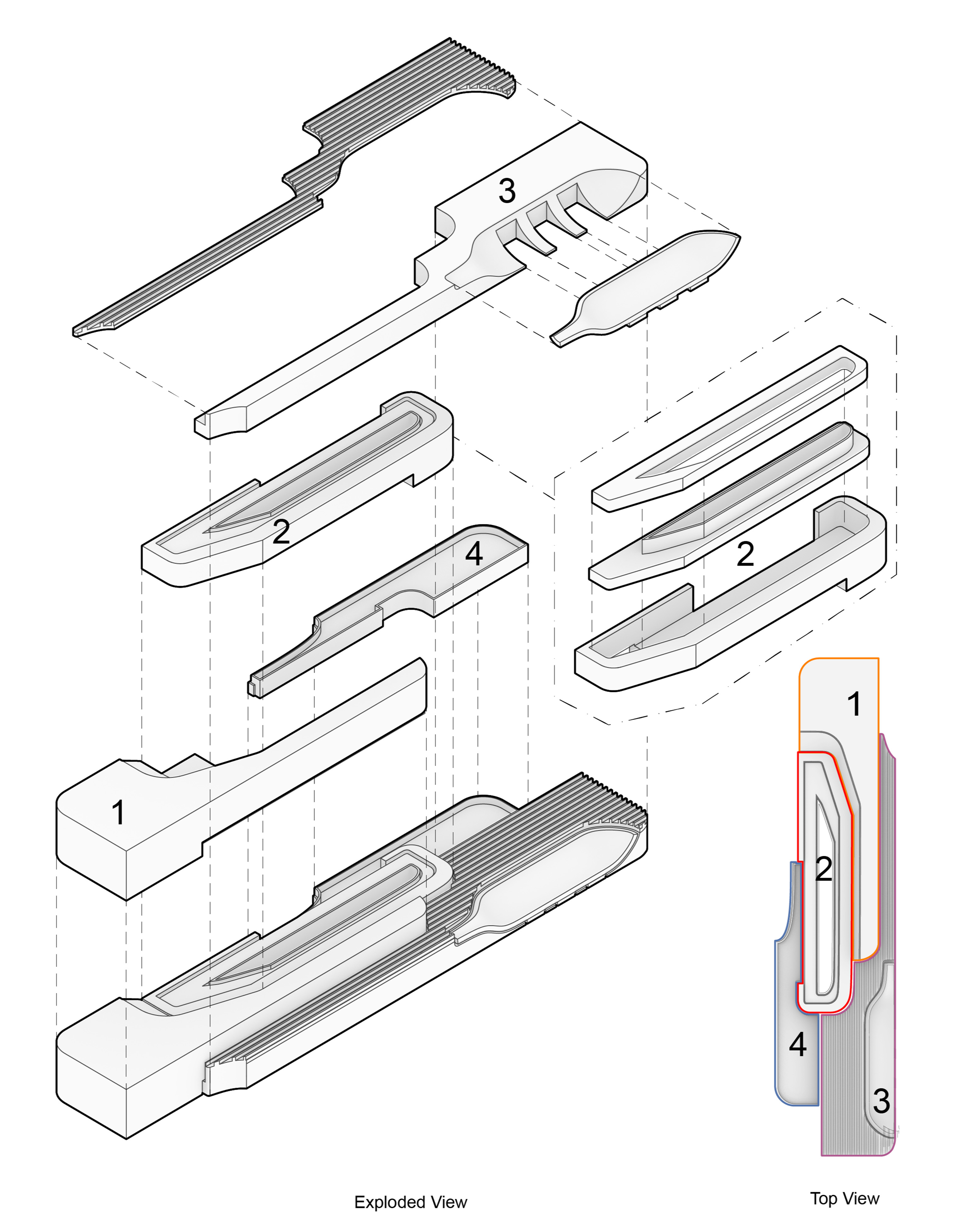
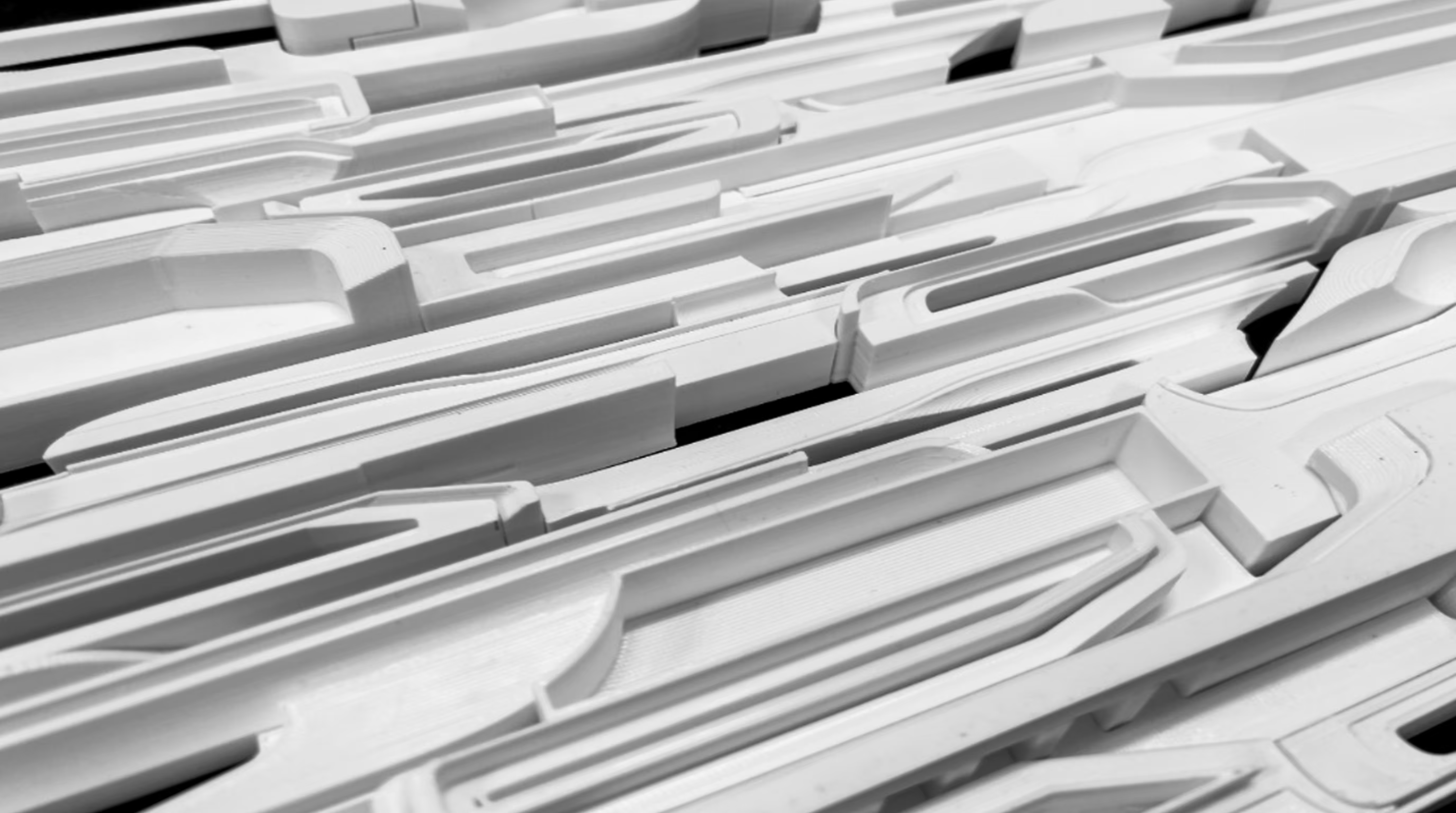
In the chunk design, we selected the different interesting moments in the AI image and used the technique of void, extrude, and revolve to generate the four linear elements as part of components of the whole façade. And the façade was contained with vertical elements and we use “slid” as the main assembly technique to reinforce the feeling of vertical, linear.
Elevation Drawing
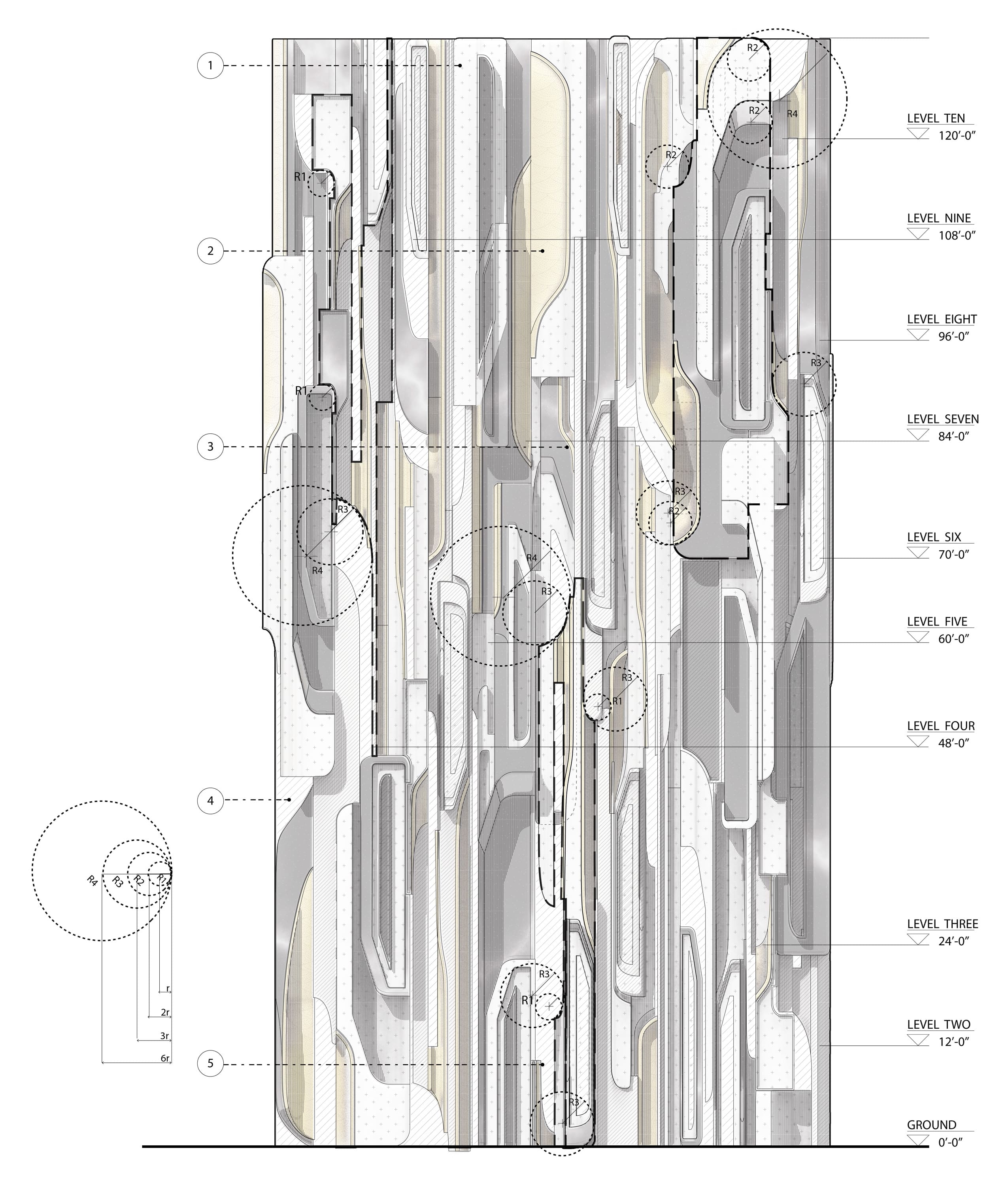
The façade design contains vertical elements and is filled with the detail of vertical seam. The seam is not only the meeting edge of different materials but could also be used to separate the same material differently. It moves across material assemblies instead of delineating them. In our assembly, the seam moves through the veridical direction of the assembly joins in concealing them.
Model Assembly
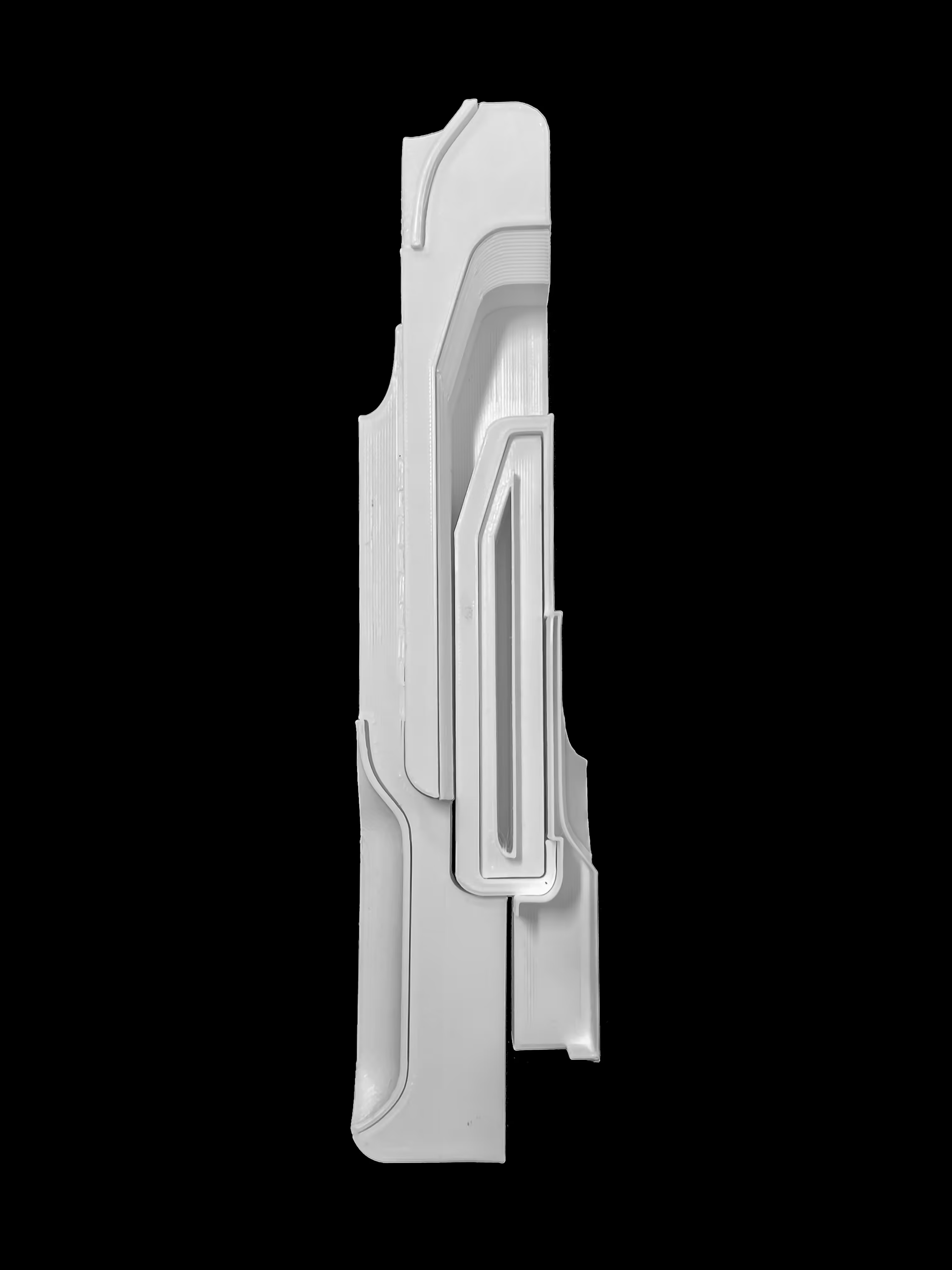
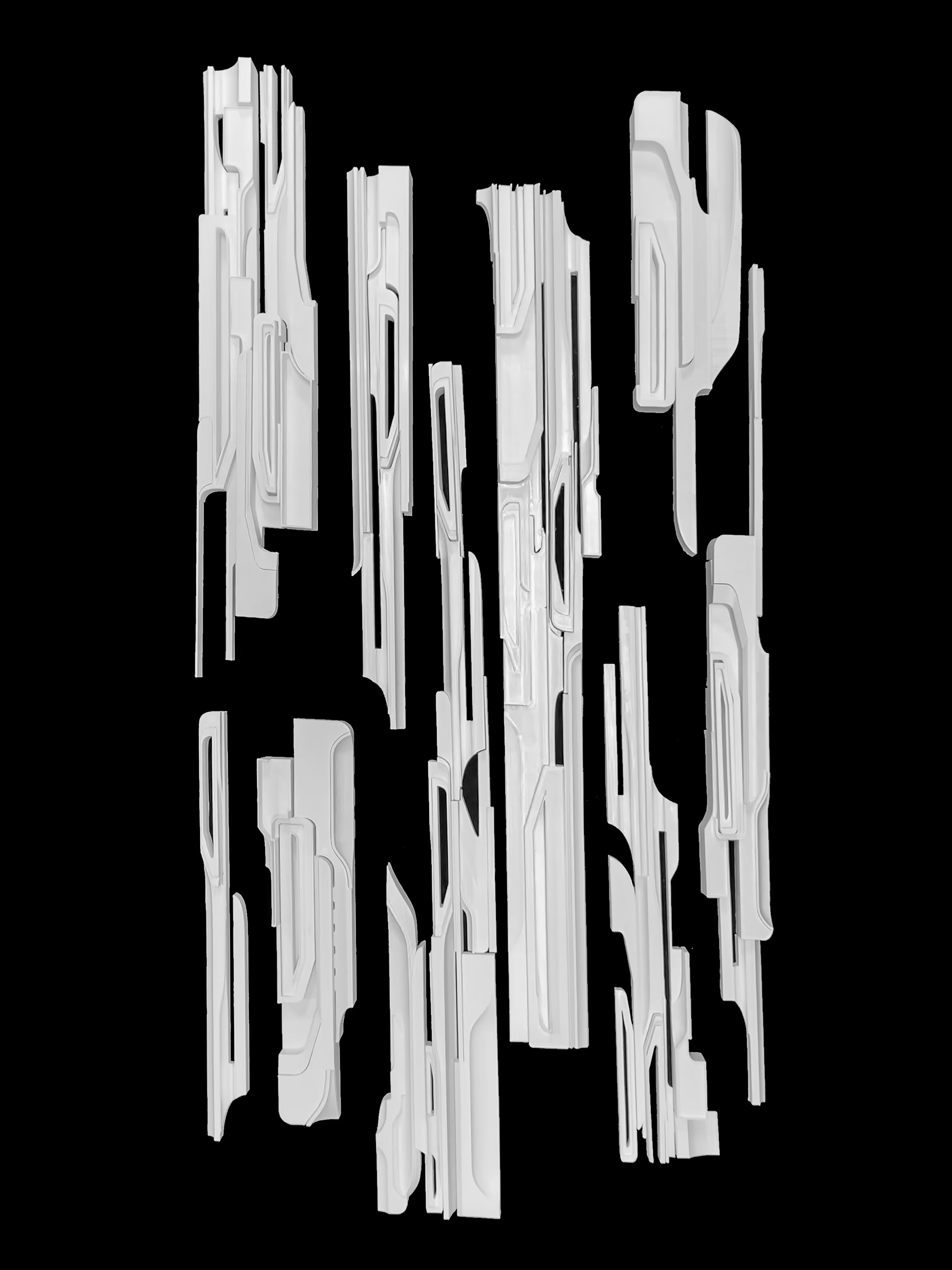
Model Details
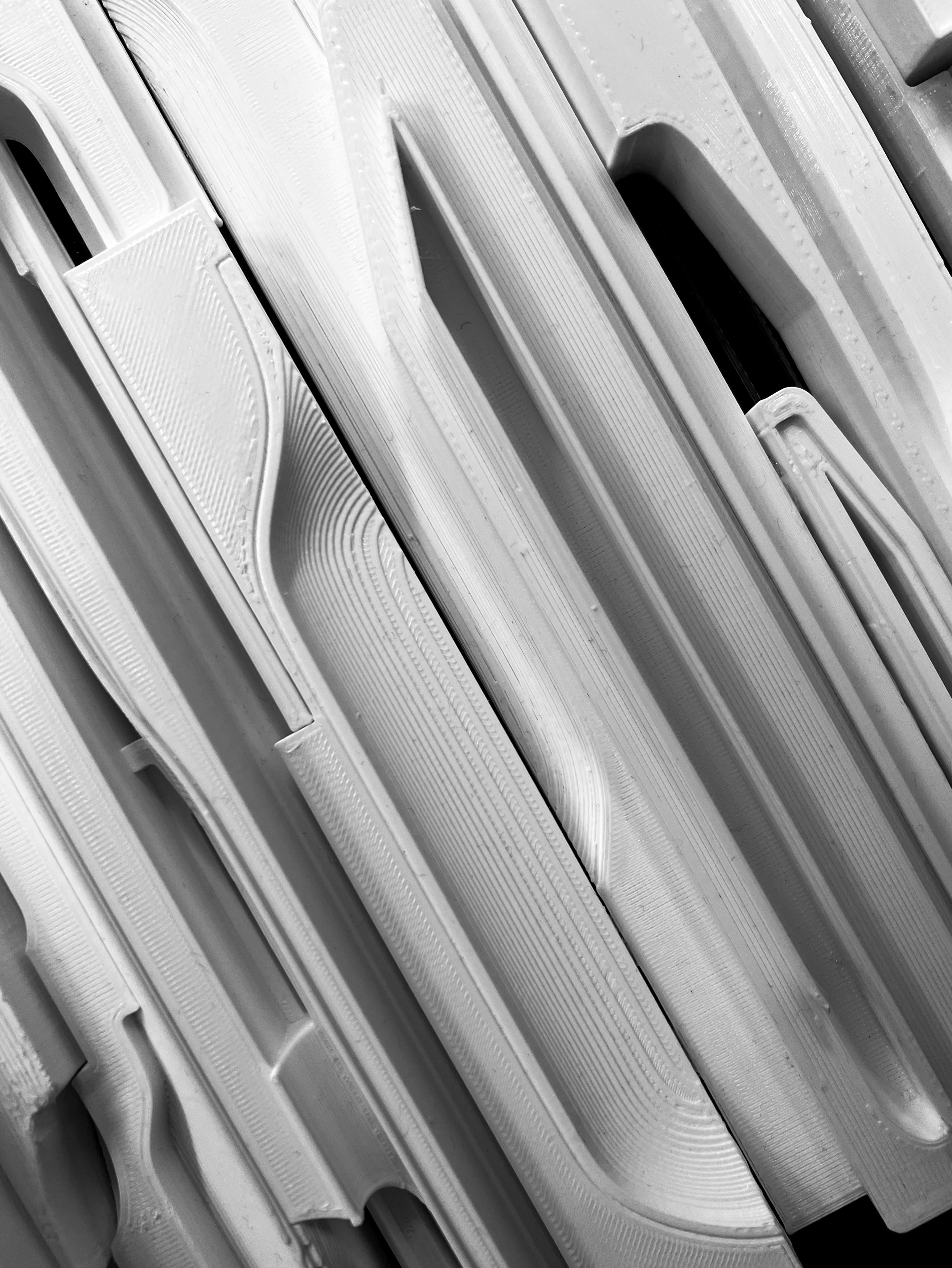
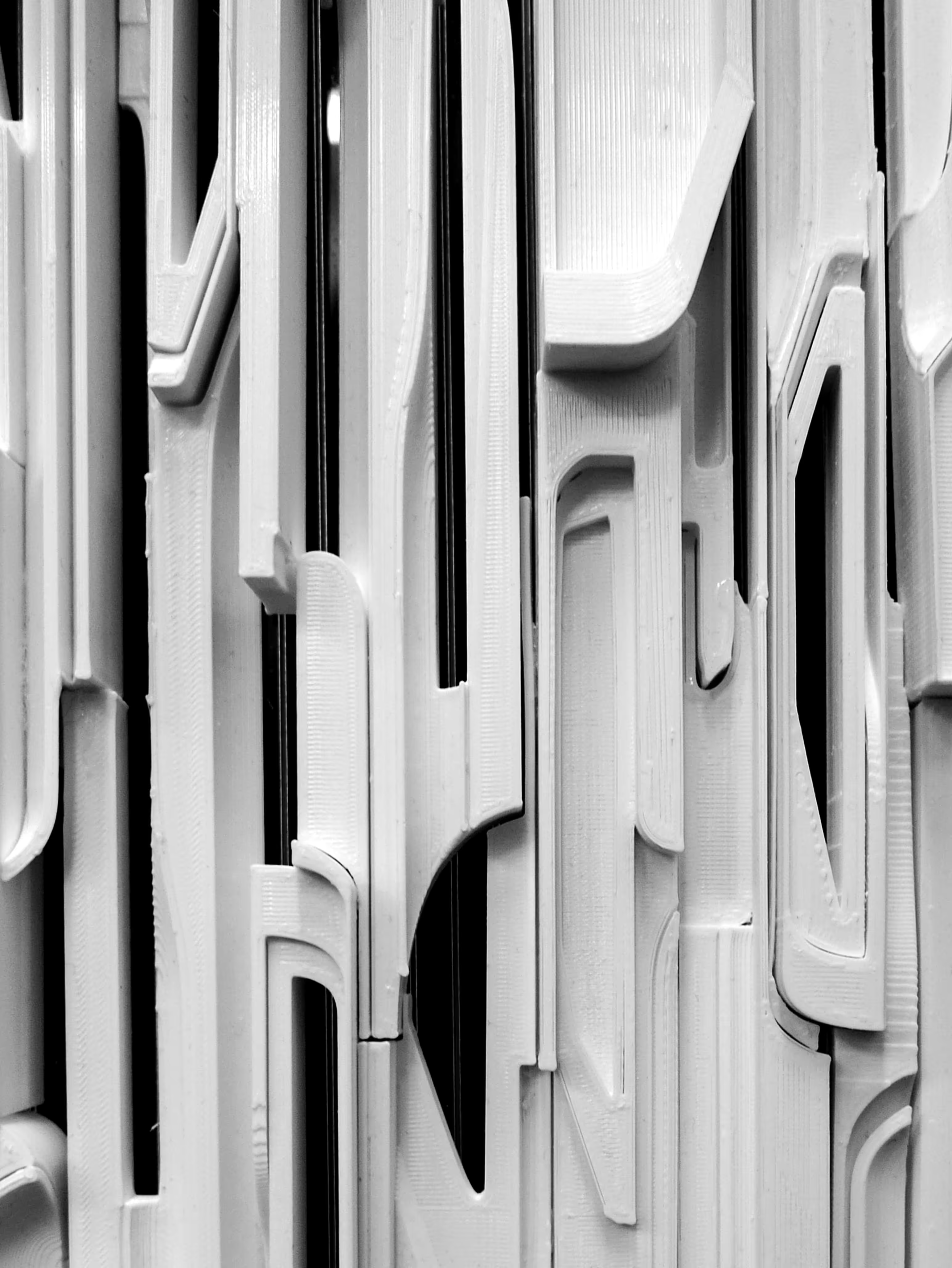
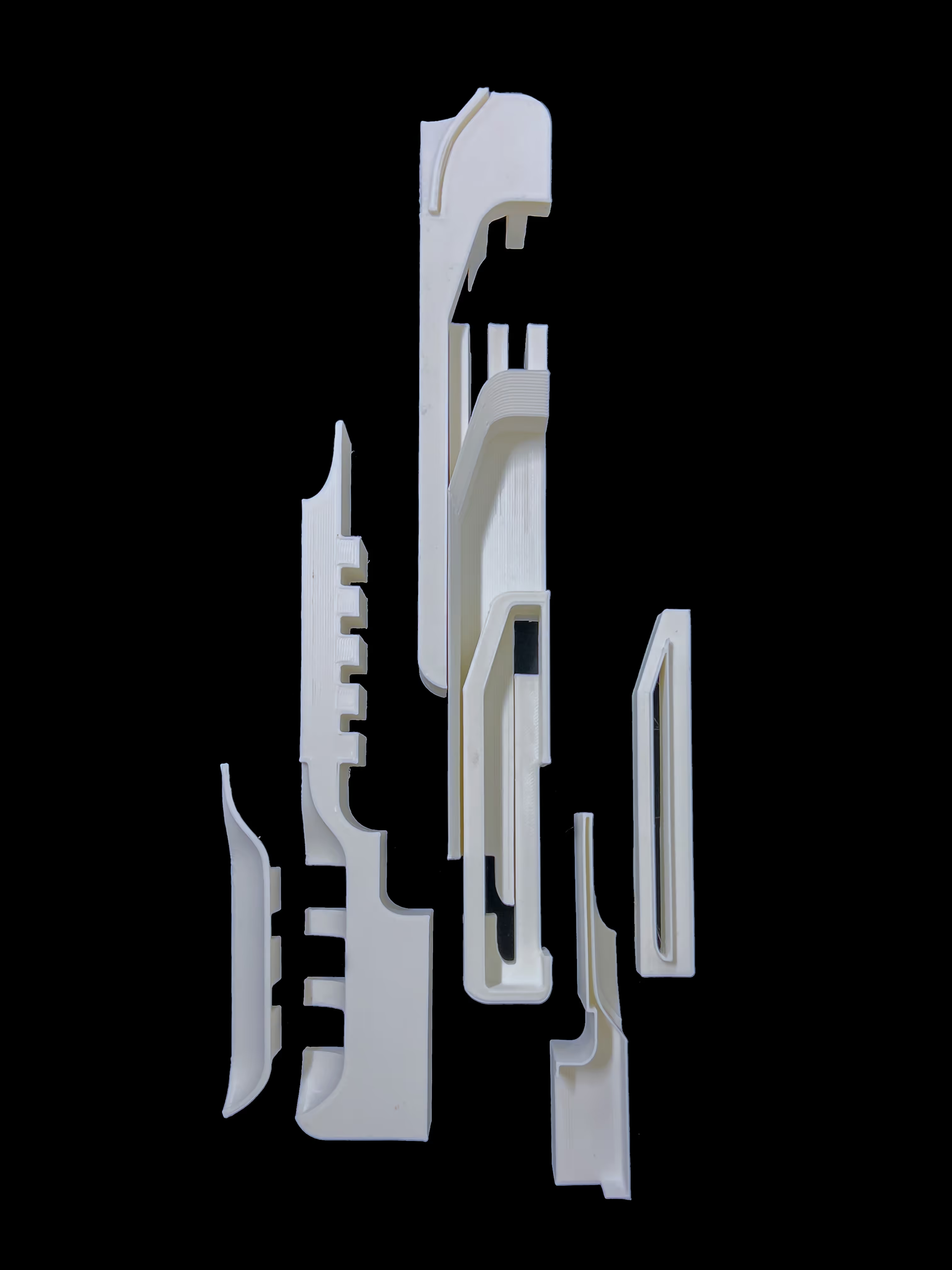
The model showcases the vertical seams and linear geometries extracted from the AI-generated form studies. Each component is assembled through sliding joints, reinforcing a sense of vertical continuity while creating subtle moments of spatial disruption. The seams traverse across multiple elements, unifying different material volumes and enhancing the façade’s overall material complexity. Through variation and repetition, the articulated seams reveal how AI-driven form extraction can generate a highly intricate and layered architectural expression.
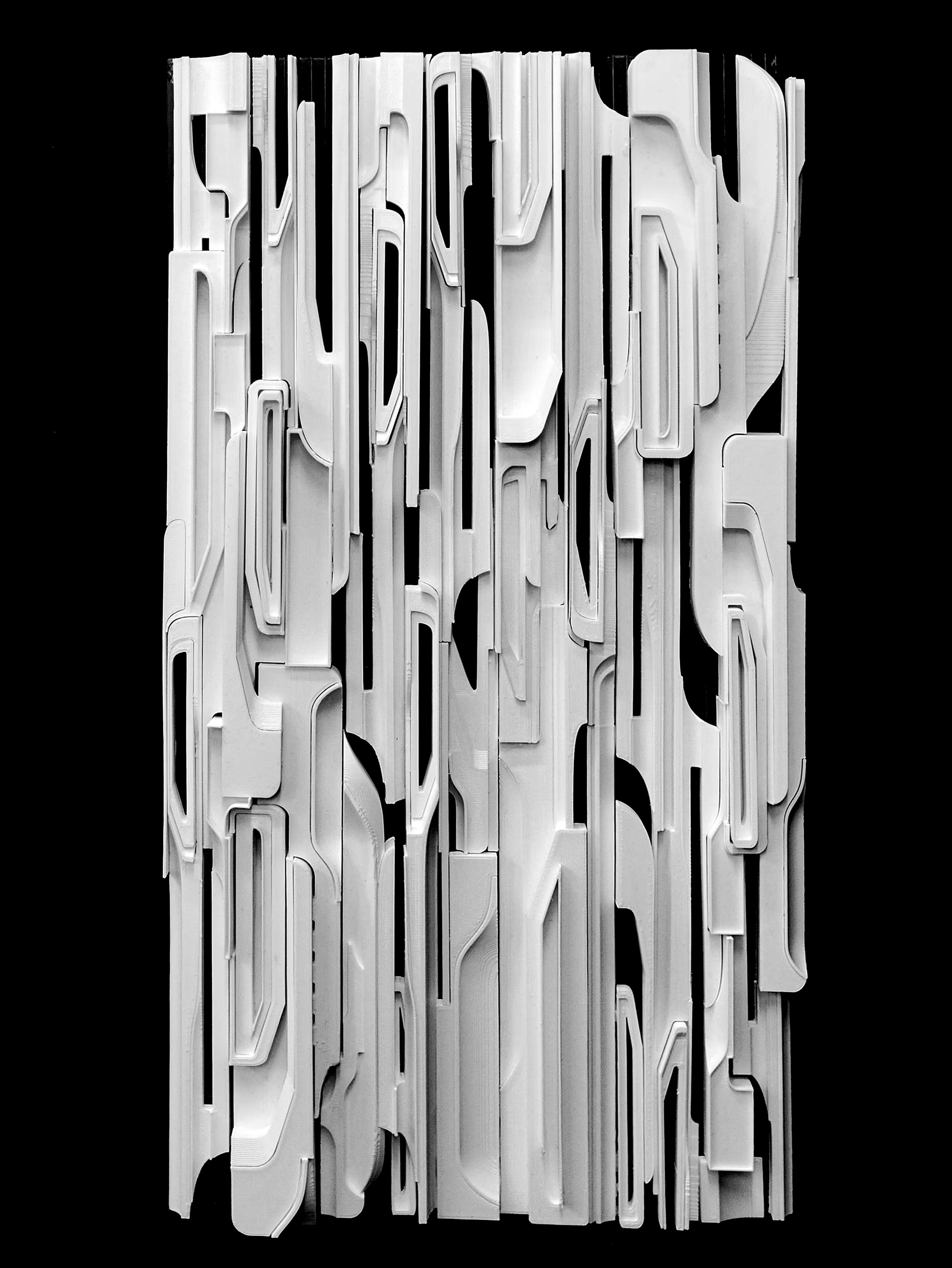
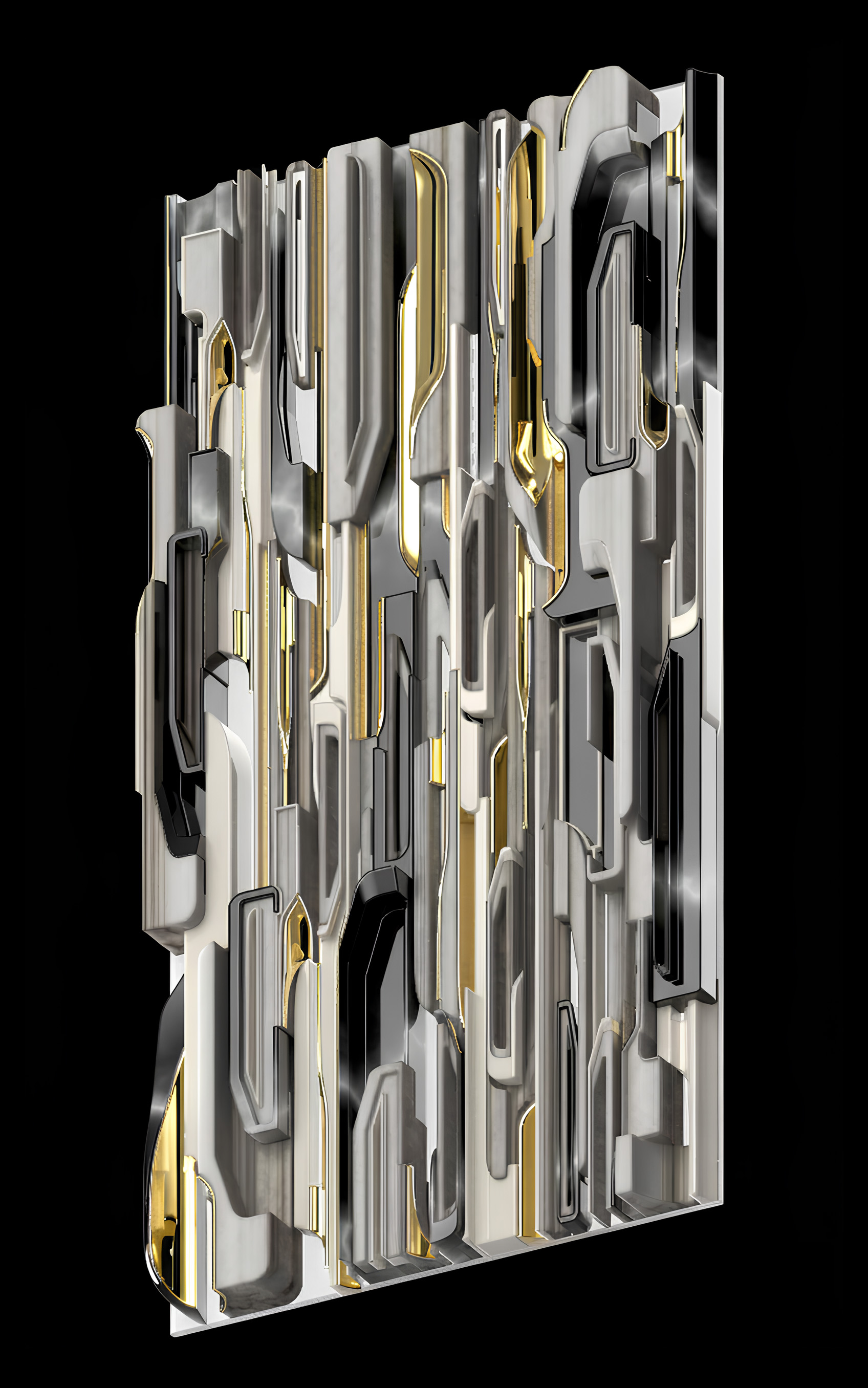
The seam serves not only as an assembly method but also as a spatial device. Its detailing reinforces vertical continuity, creating moments of uninterrupted geometry and intentional breaks that reveal floor levels. This contrast helps guide how the user perceives and moves through the space.
When scaled up, the seam can form larger monolithic volumes wrapped in different materials. Its variation and repetition across the façade enrich the material expression and enhance spatial depth. These subtle shifts collectively give the project a more dynamic and tactile architectural character.