
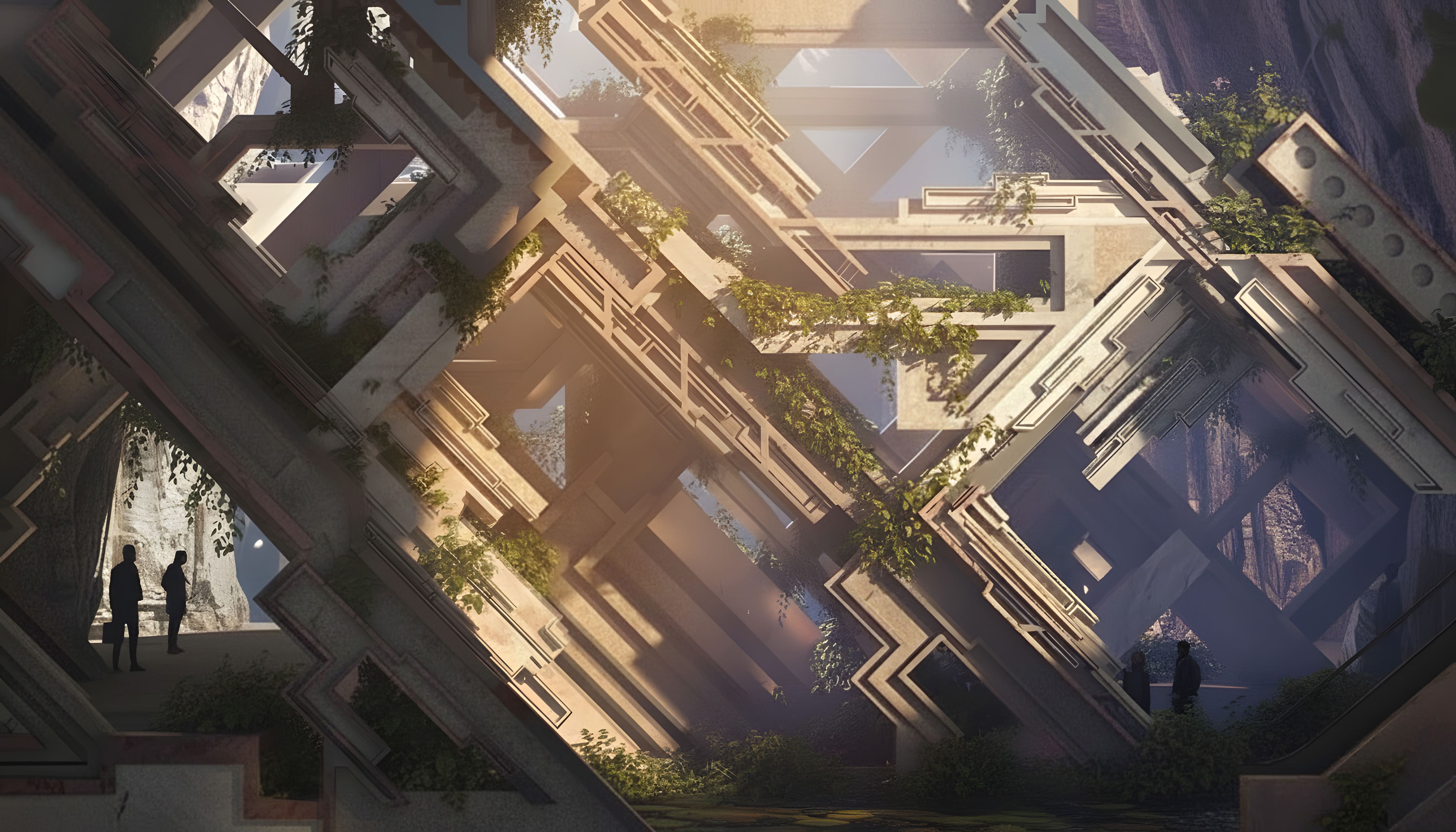
Hypophyle: Ecological Enmeshment

Barry Wark
Dao Wu
PressingMatters
UPENN Weitzman School of Design: 2022 Year End Show
3D Printing, Effect Spray Paint and Material Imitation
Rhinoceros, Houdini, Zbrush, Keyshot, Lumion and Illustrator
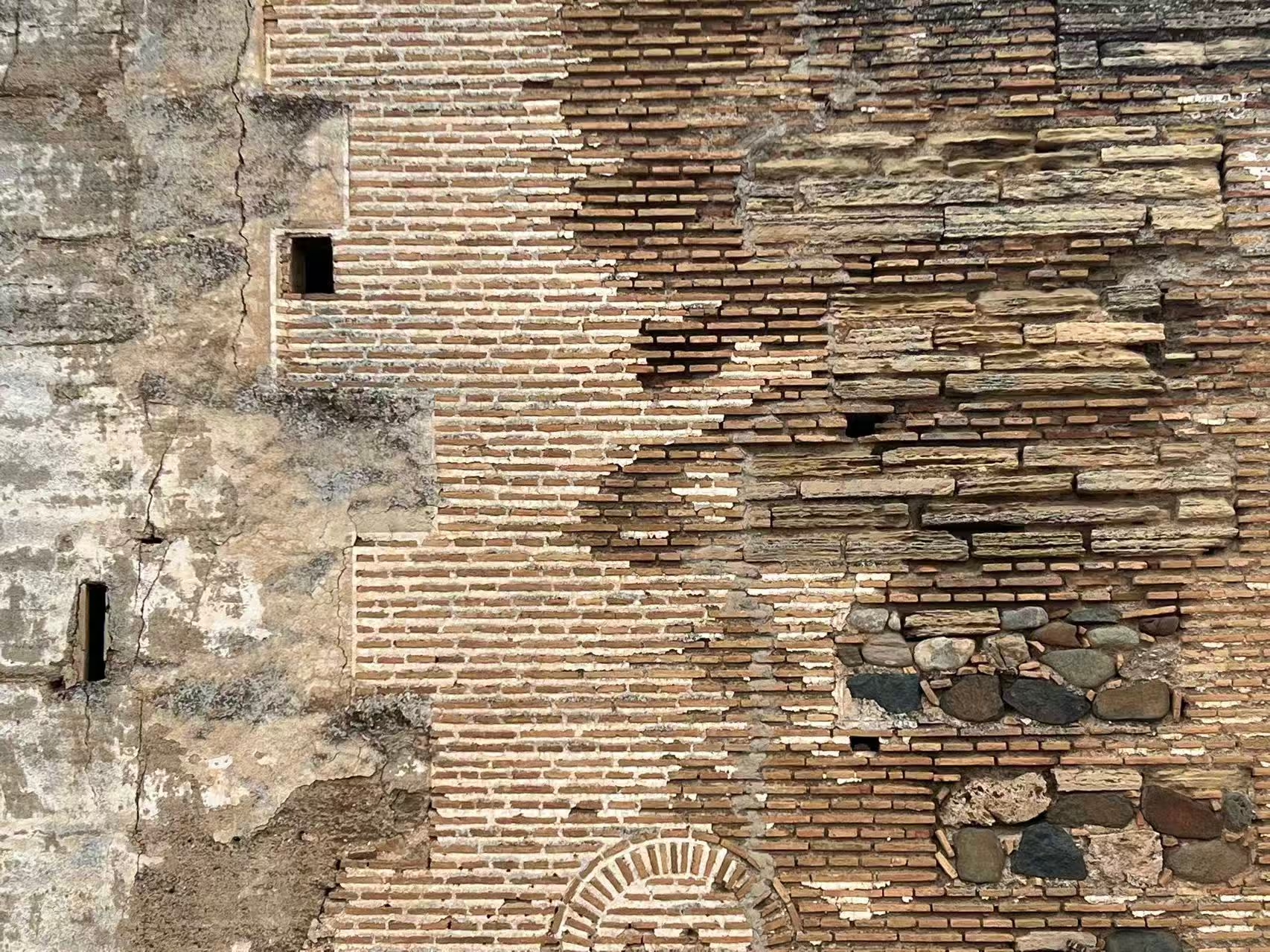
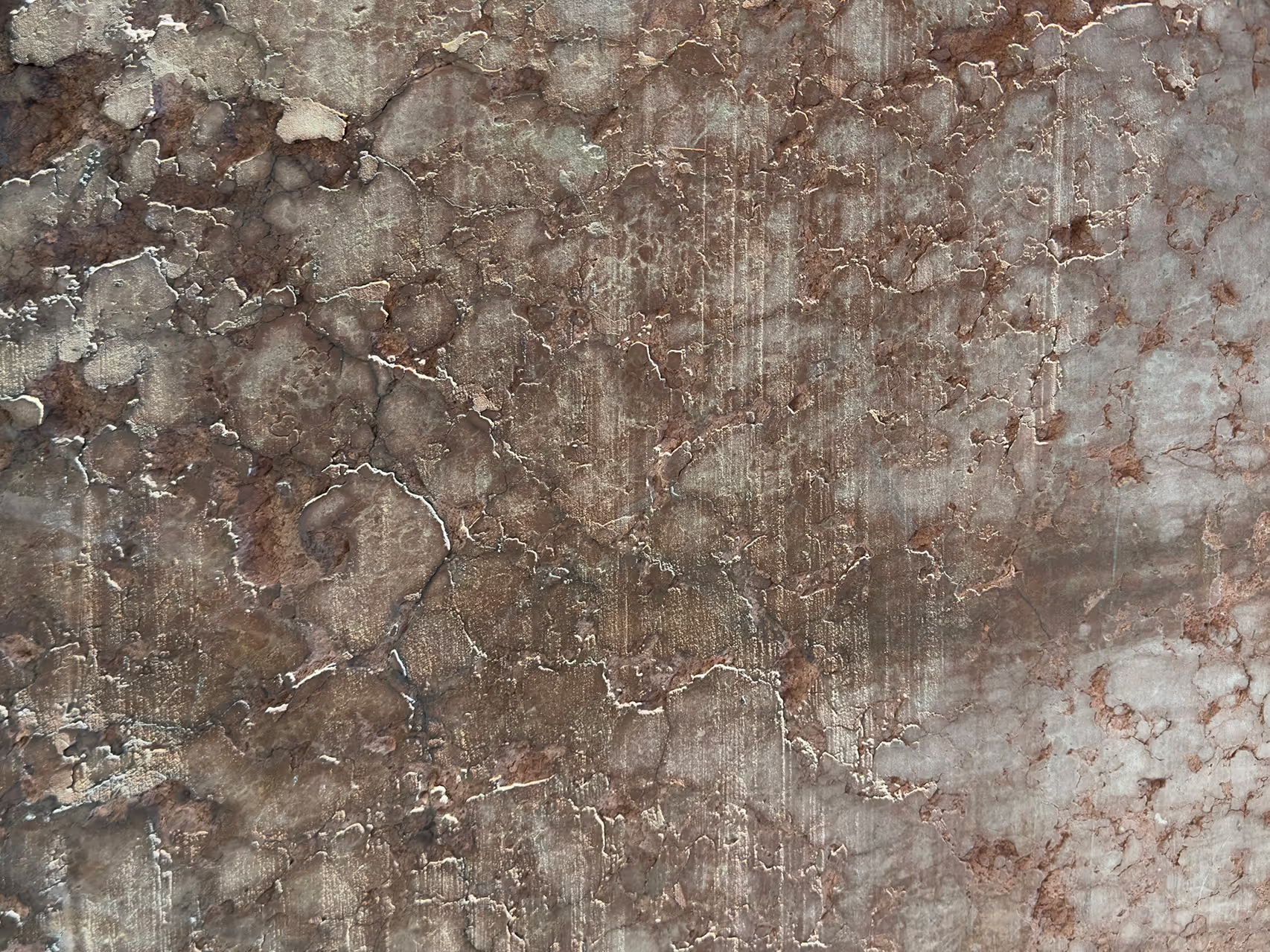
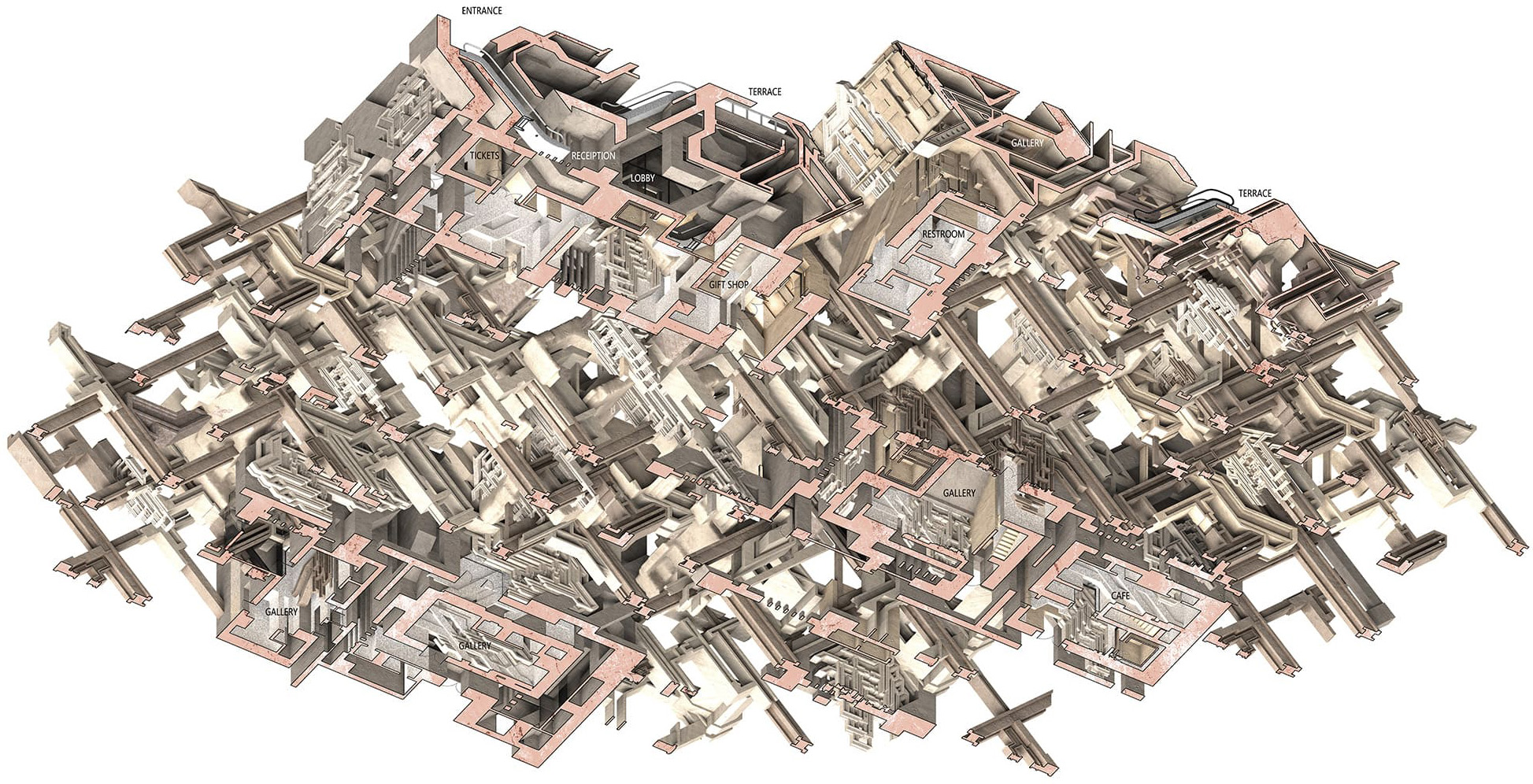
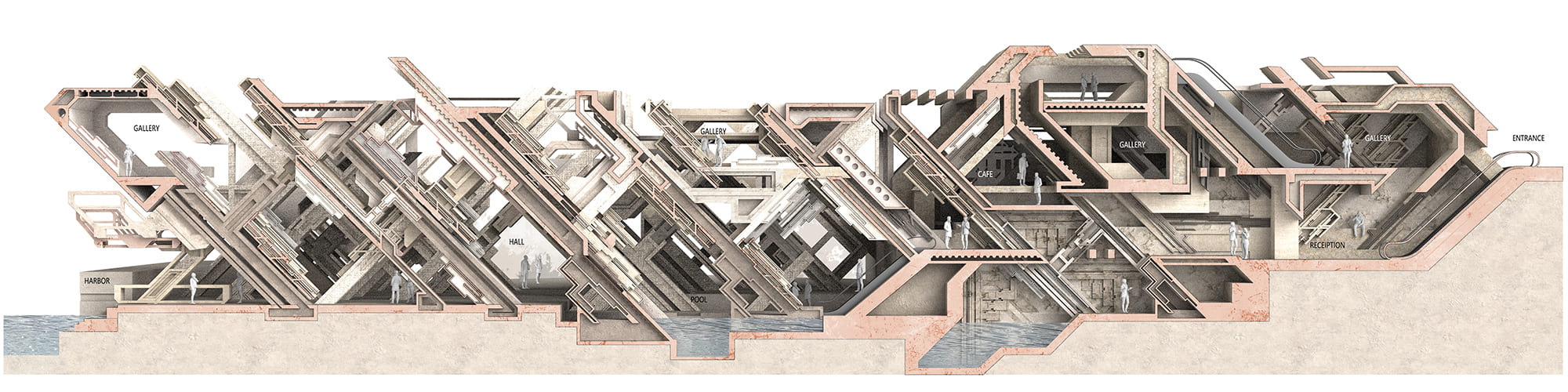
Hypophyle proposes an architectural framework that entangles built form with environmental processes. Rather than isolating architecture from natural forces, the project positions weathering, plant growth, and material degradation as integral components of spatial formation. Over time, these processes accumulate, erode, and regenerate the material body of the building, producing a non-static architecture that resists predetermined outcomes.Through material testing, ecological assemblies, and environmental simulations, the project explores how architecture can operate as a living matter—continuously reorganized through the interactions between structure, climate, and biological agents. Hypophyle reframes architecture not as an object to be preserved, but as an evolving ecological participant shaped by the changing conditions of its environment.
Prototyping
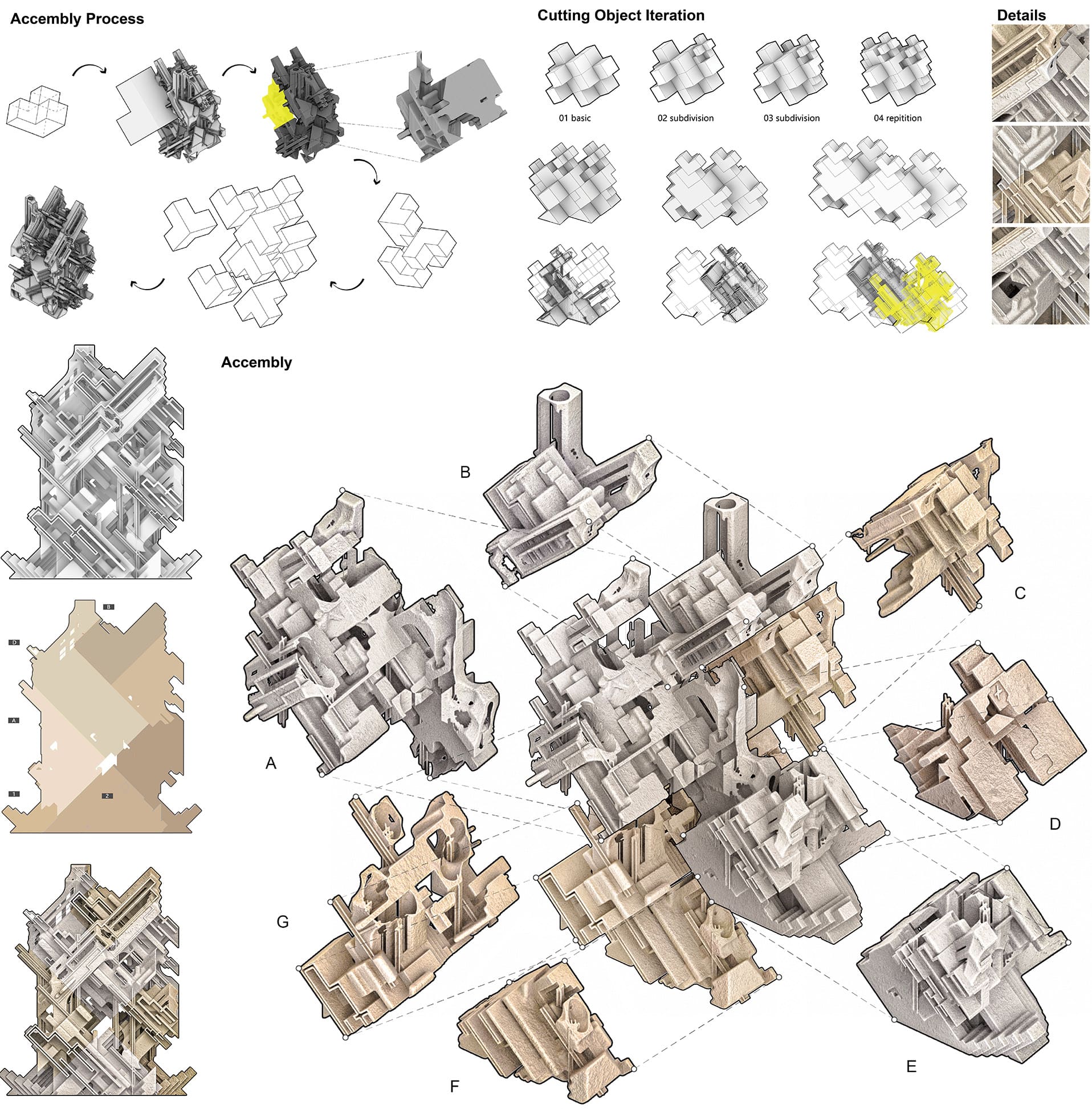
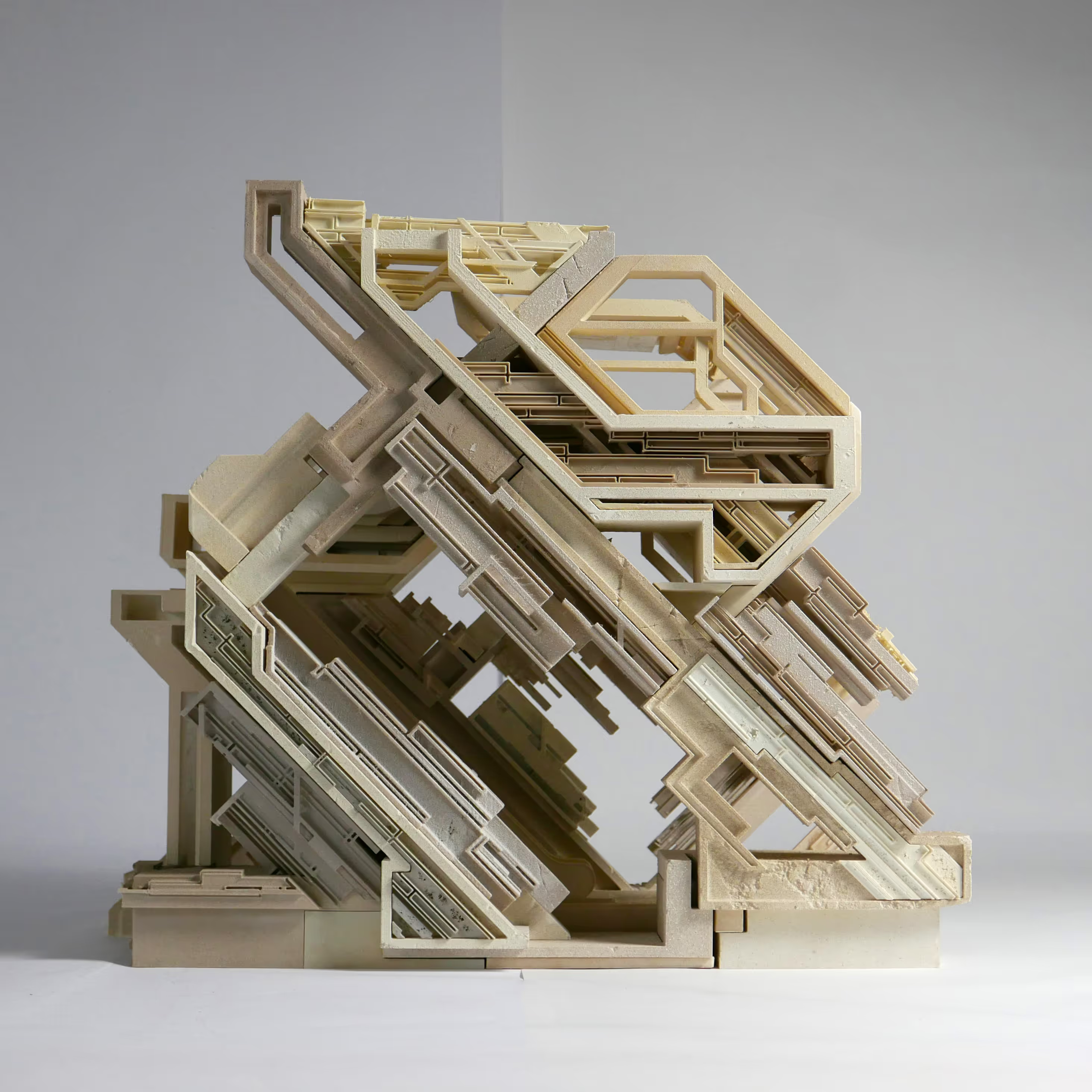
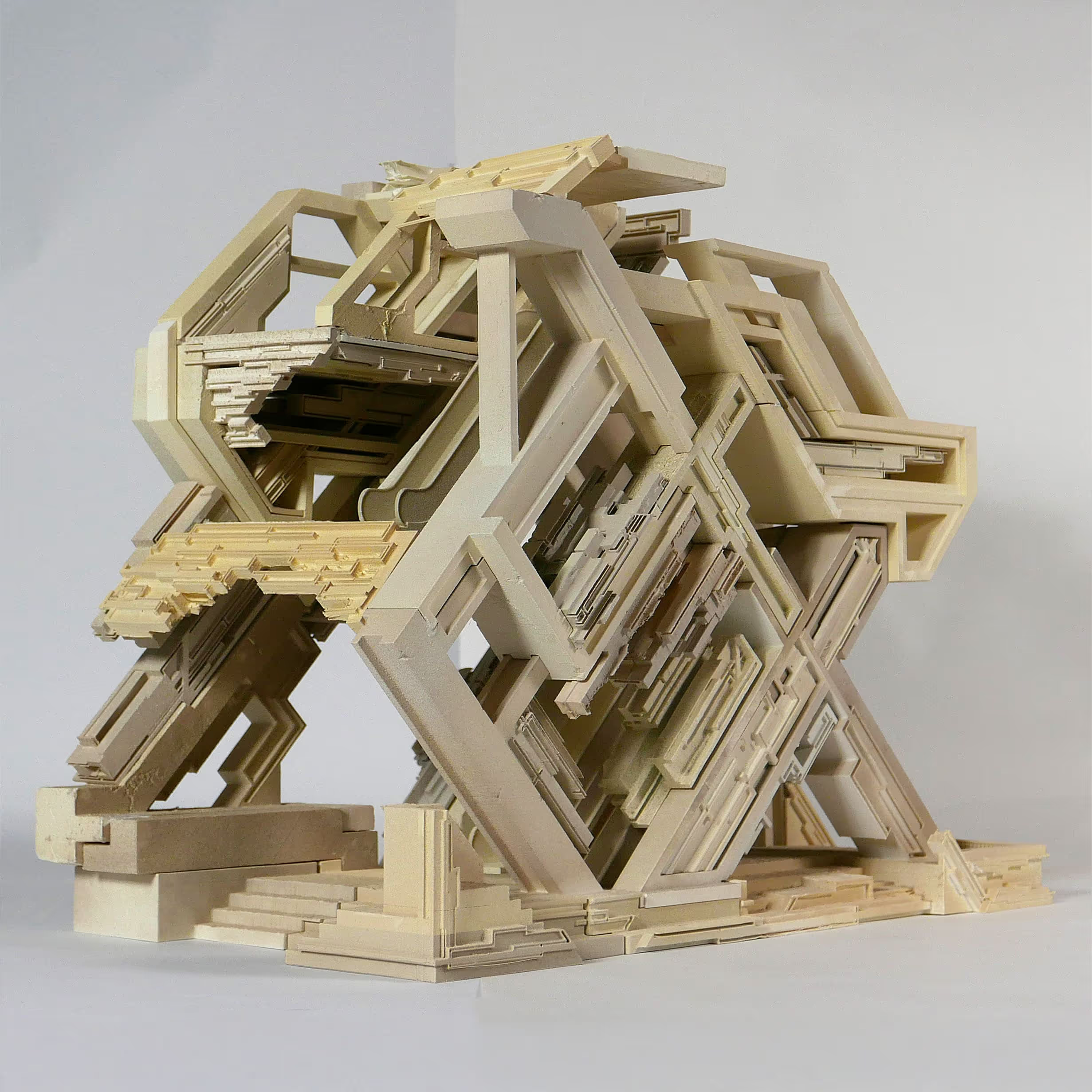
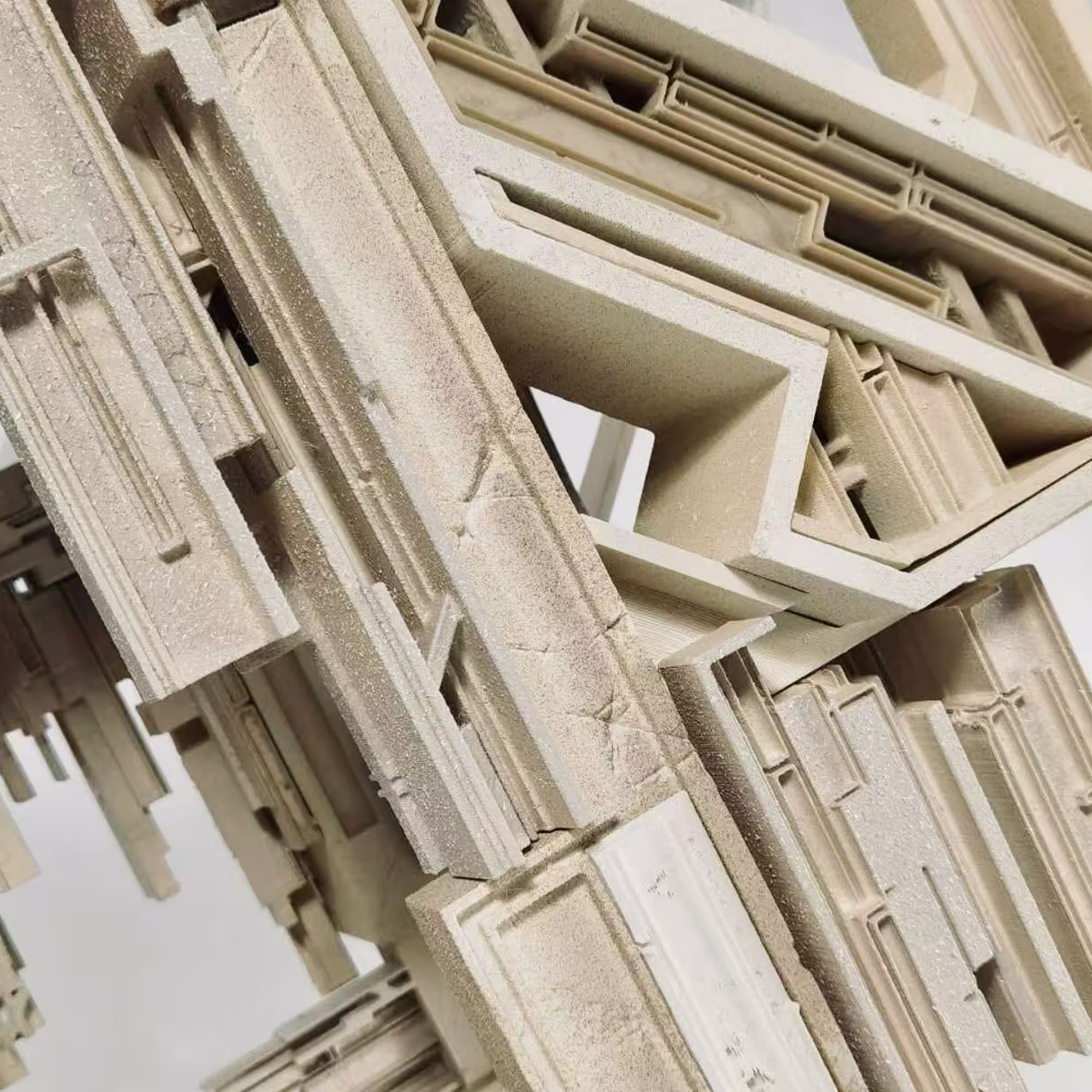
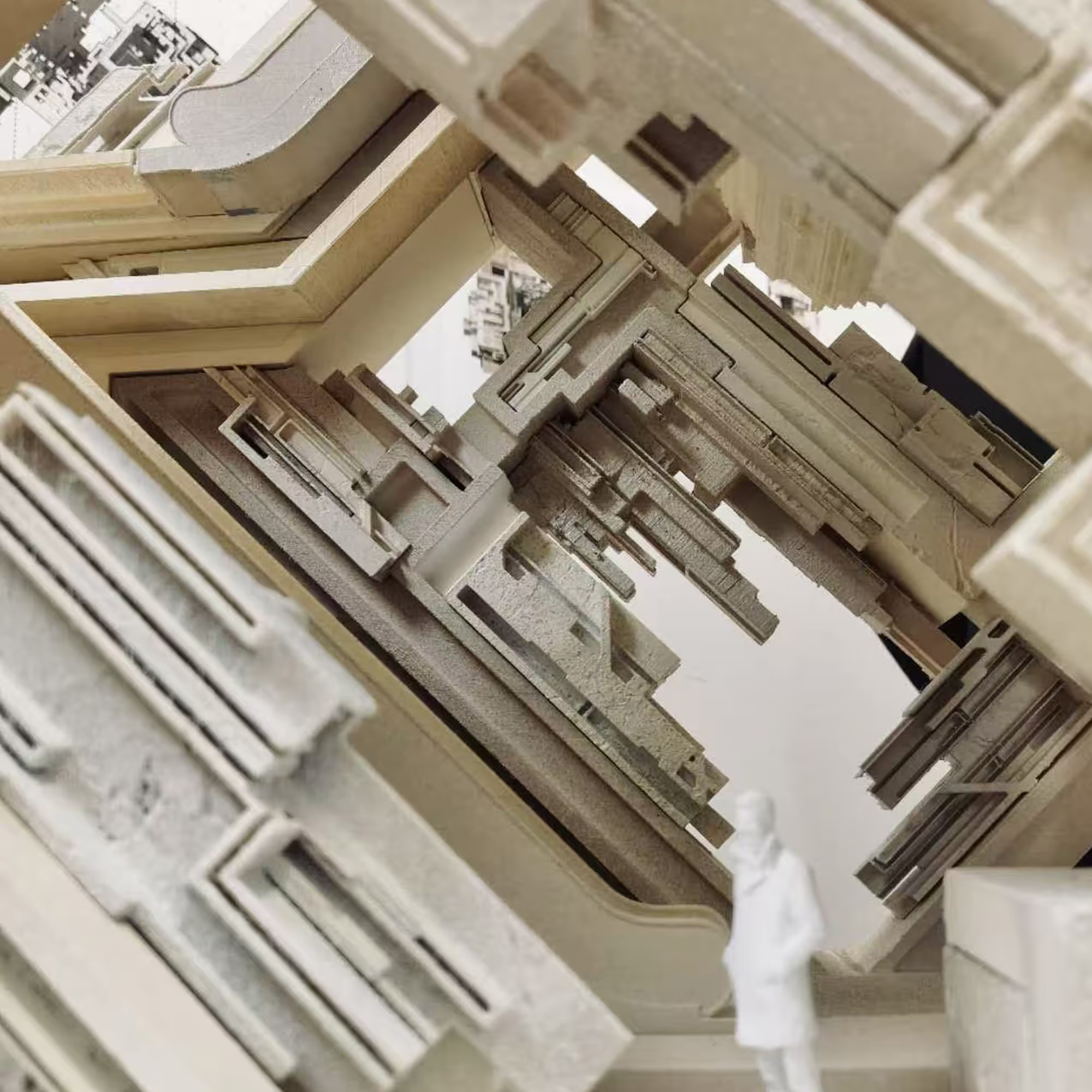
The project develops a modular assembly system generated through iterative cutting and subdivision of an initial massing object. Beginning with a basic volumetric form, the object is progressively subdivided to produce a family of interrelated geometries. These iterations inform a set of six removable fragments—each varying in scale—that can be detached, rotated, and recombined to produce new spatial configurations.The assembly process demonstrates how individual pieces lock into a primary base, forming a structurally coherent whole while remaining fully reconfigurable. Through repeated disassembly and recomposition, the system reveals multiple arrangements of density, porosity, and circulation. Detailed views highlight the interlocking edges, surface variation, and the spatial depth produced by overlapping layers of the fragmented geometry.Together, the iterations, fragments, and assembled model illustrate an architecture defined not as a fixed object, but as a transformable structure shaped through continuous decomposition and reassembly.
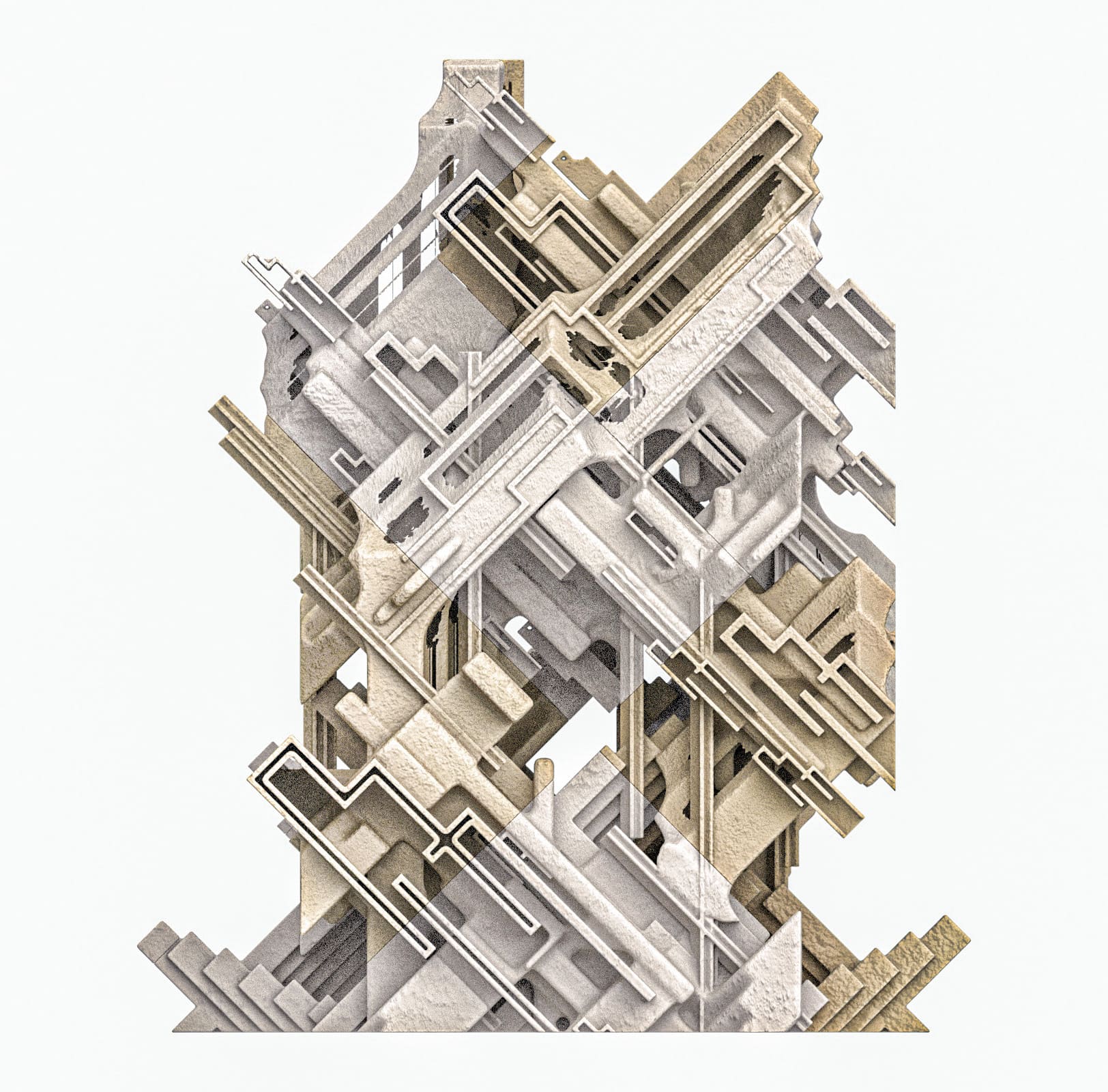
Elevation
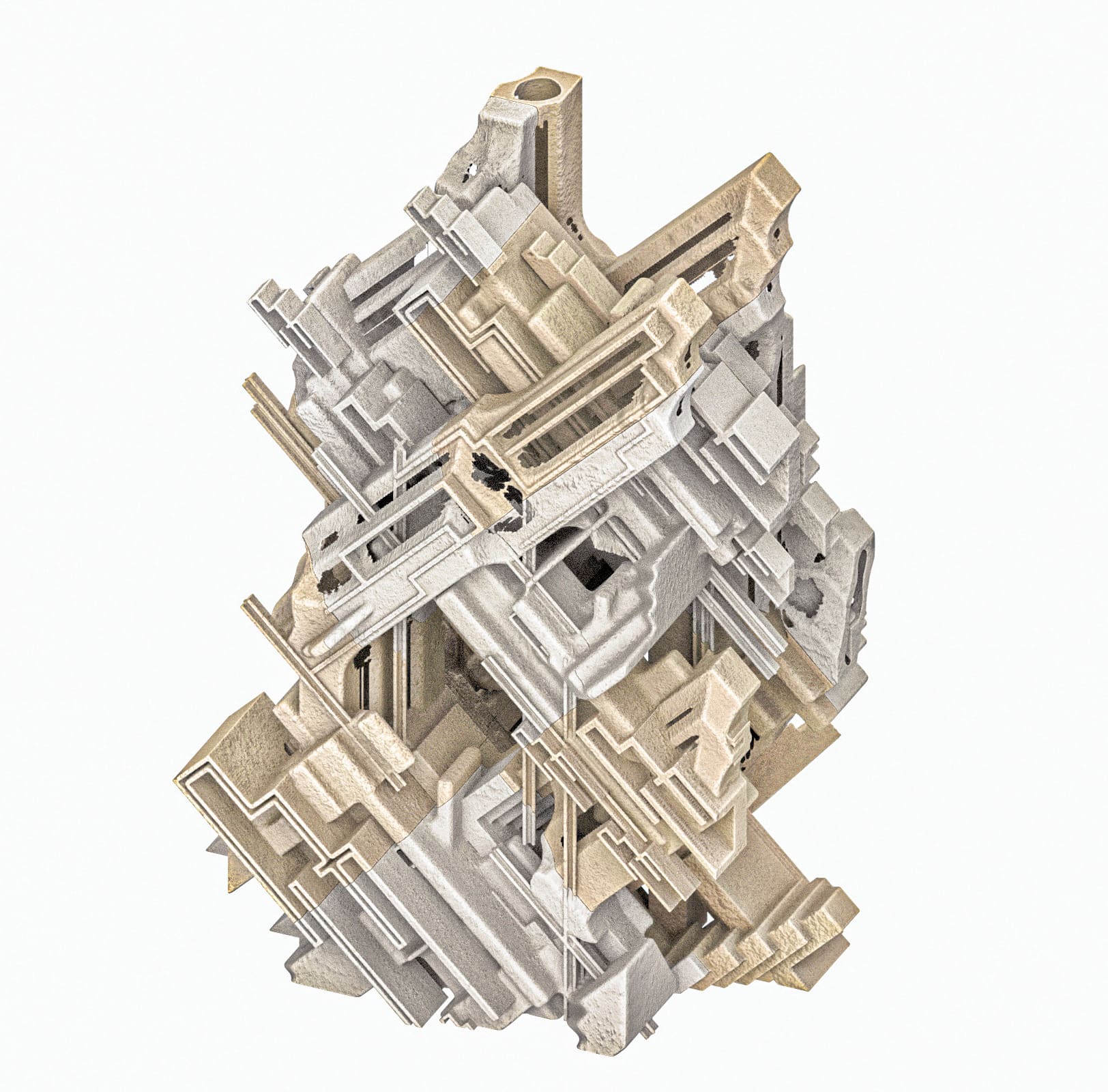
Isomatric
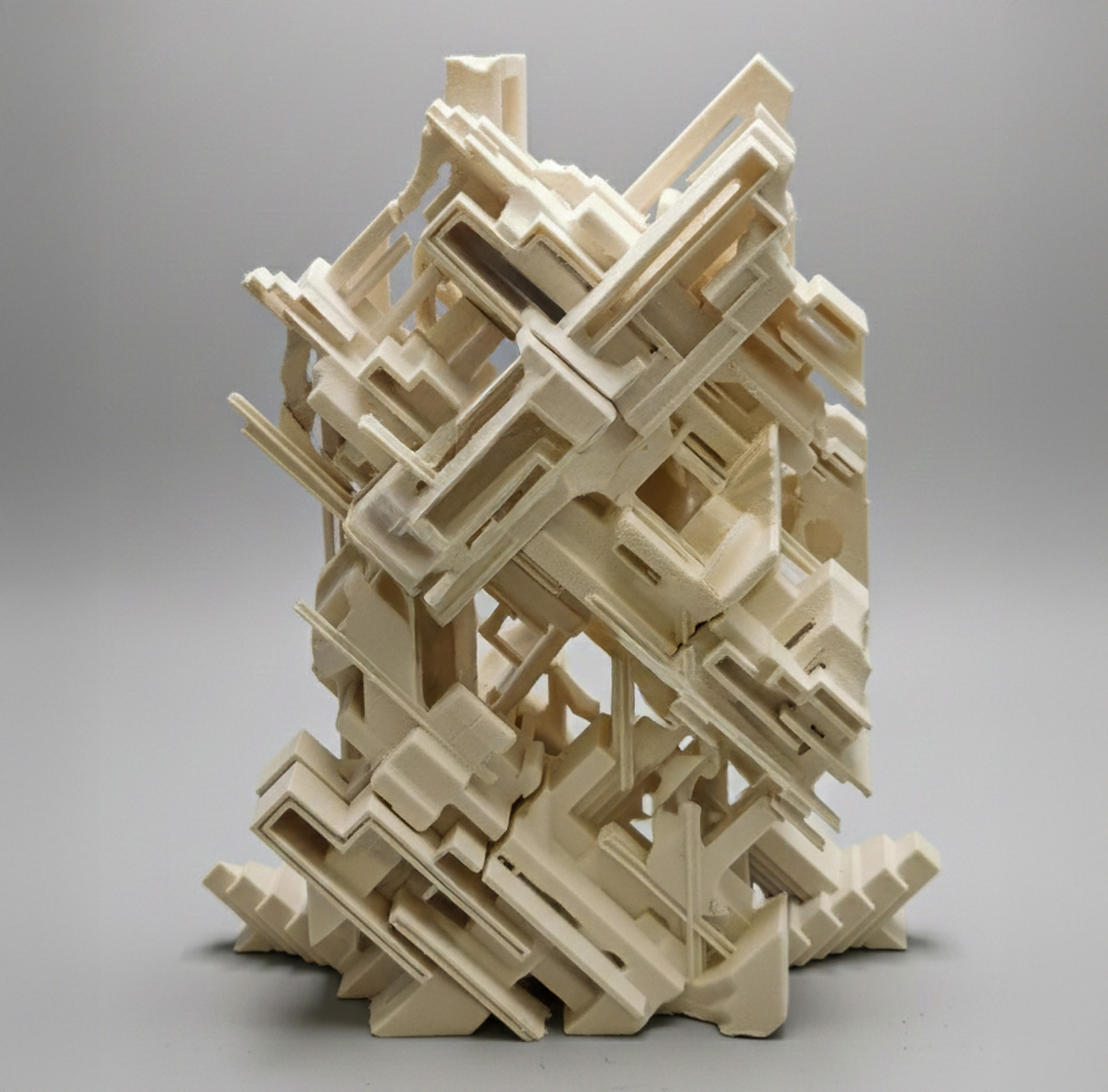
3D Printed Model
Site Research
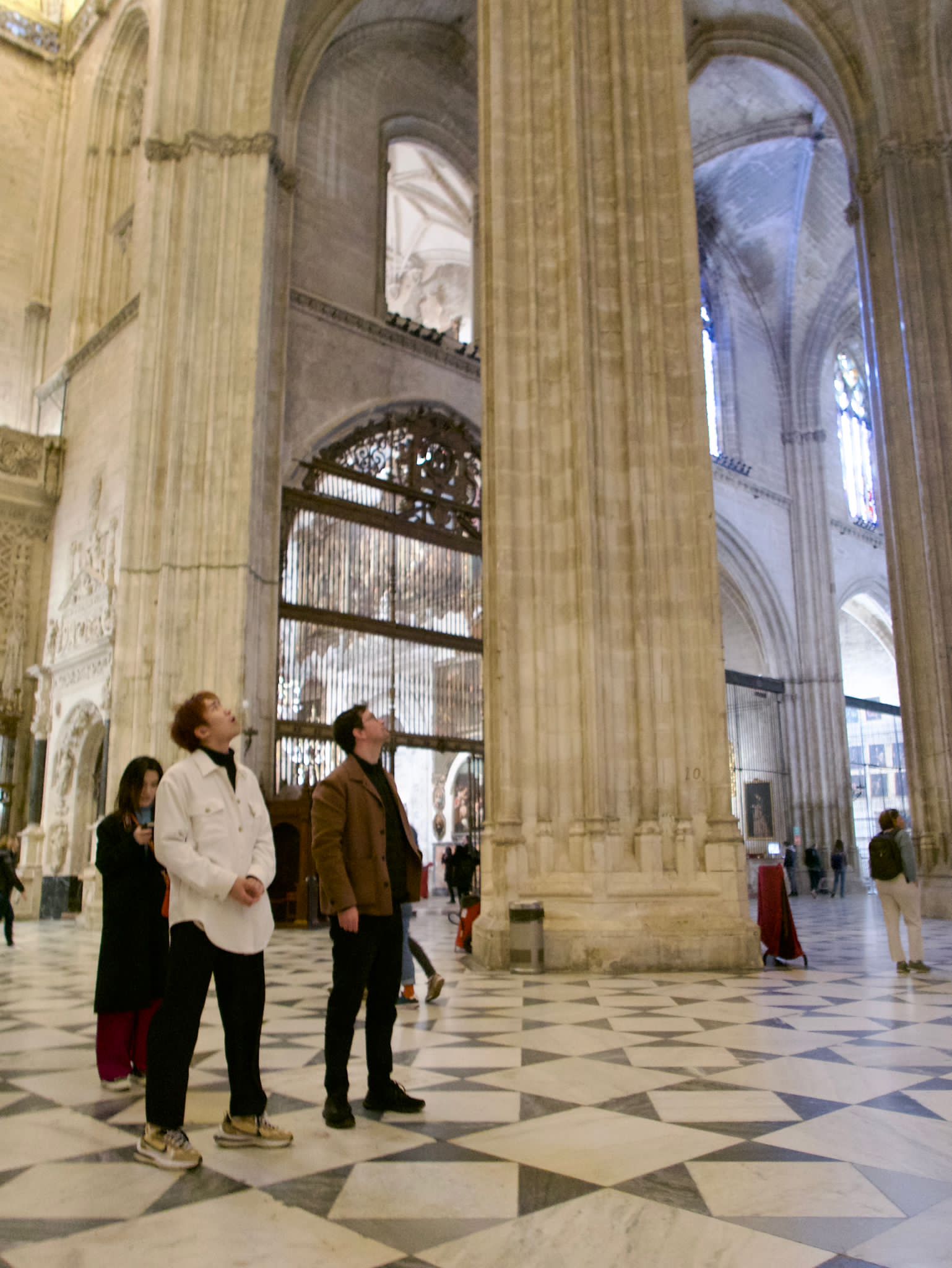
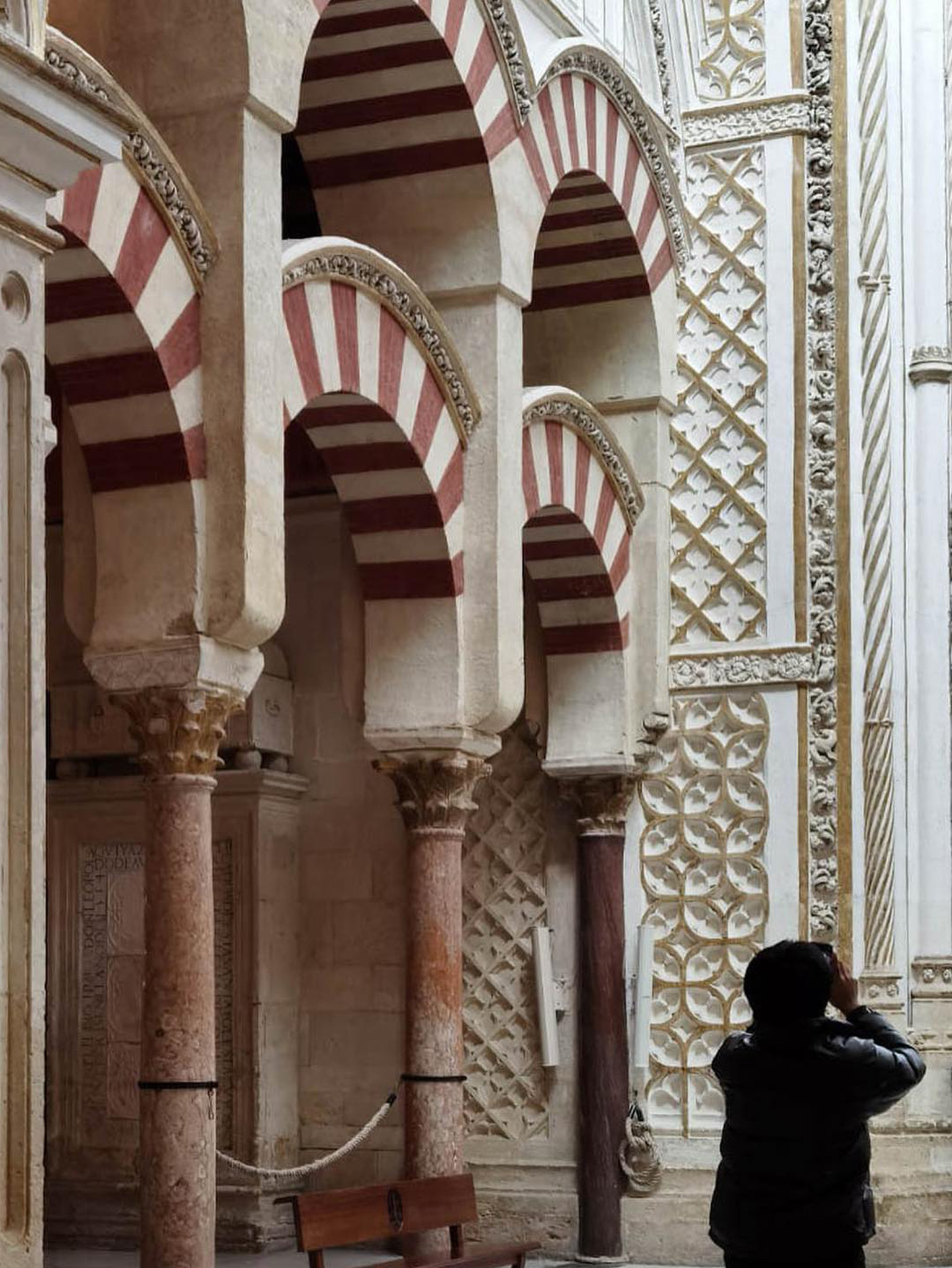
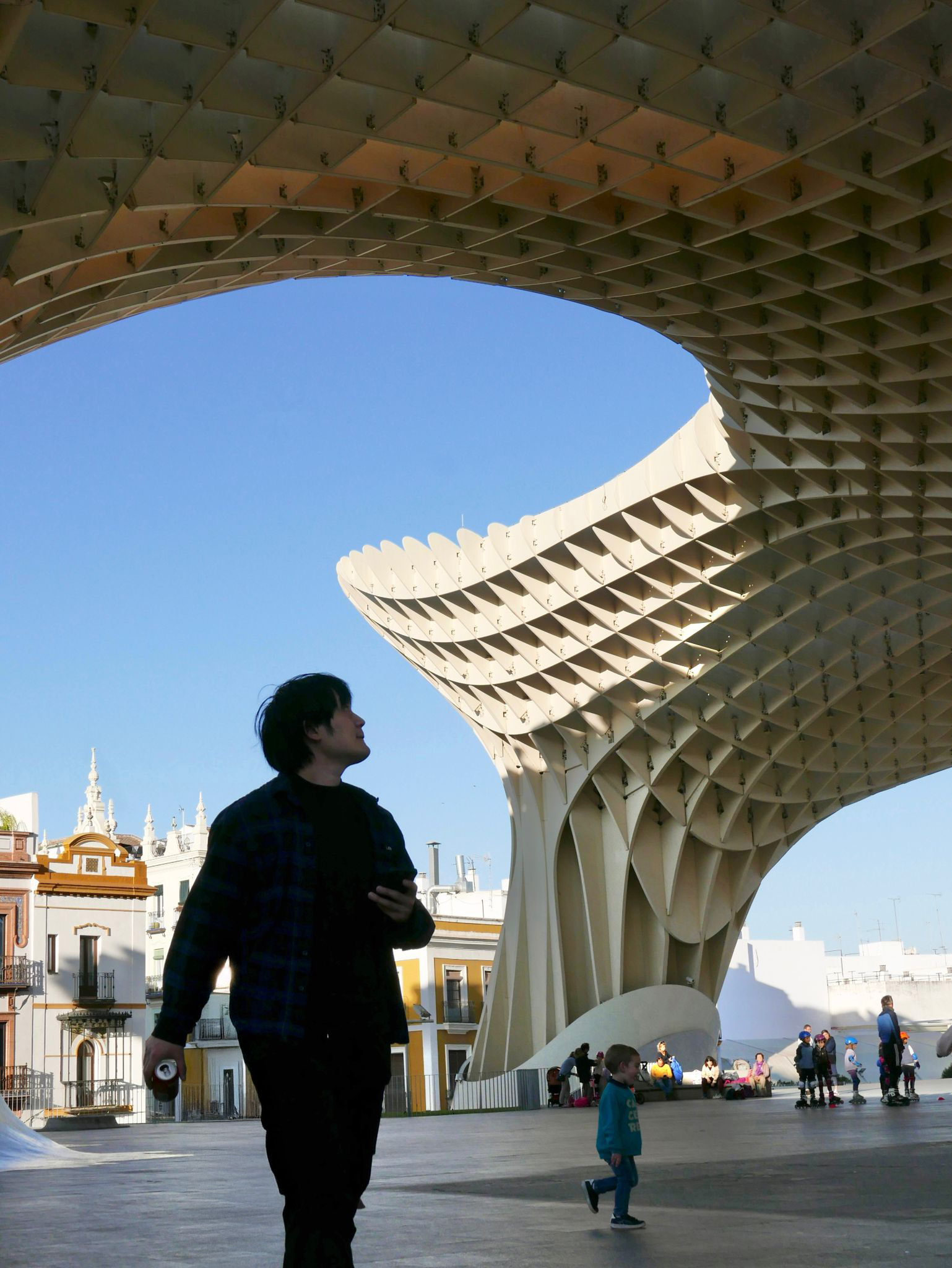
Typological Refences
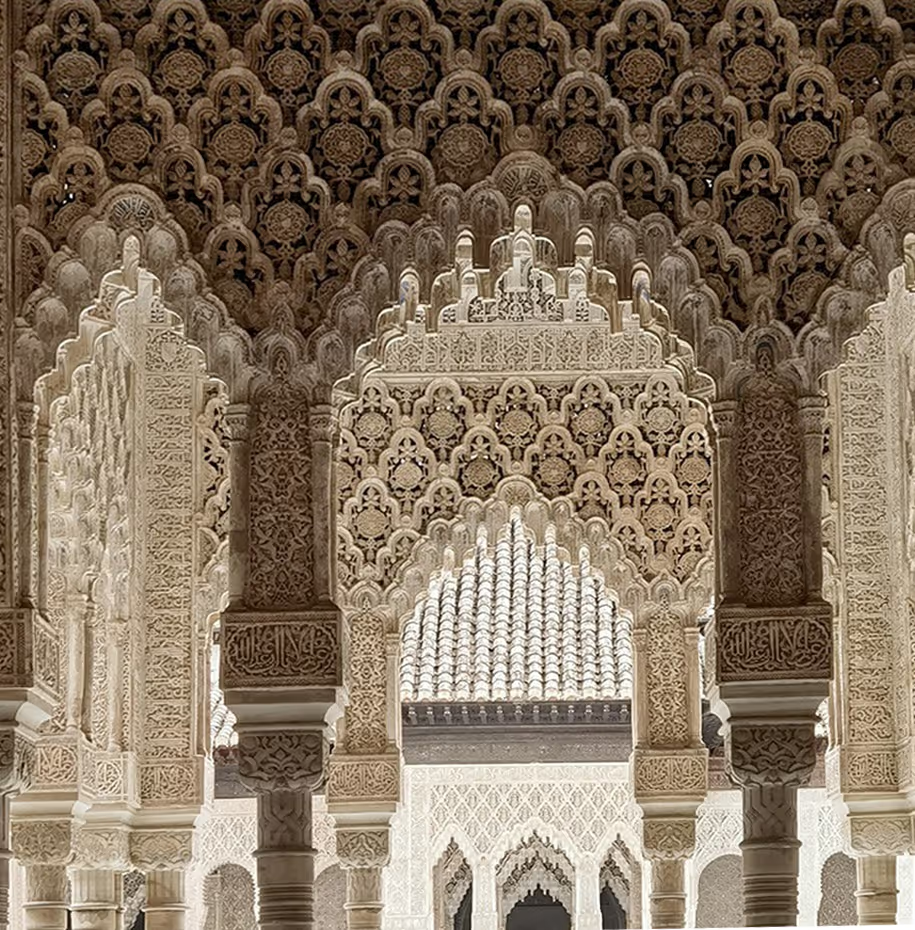
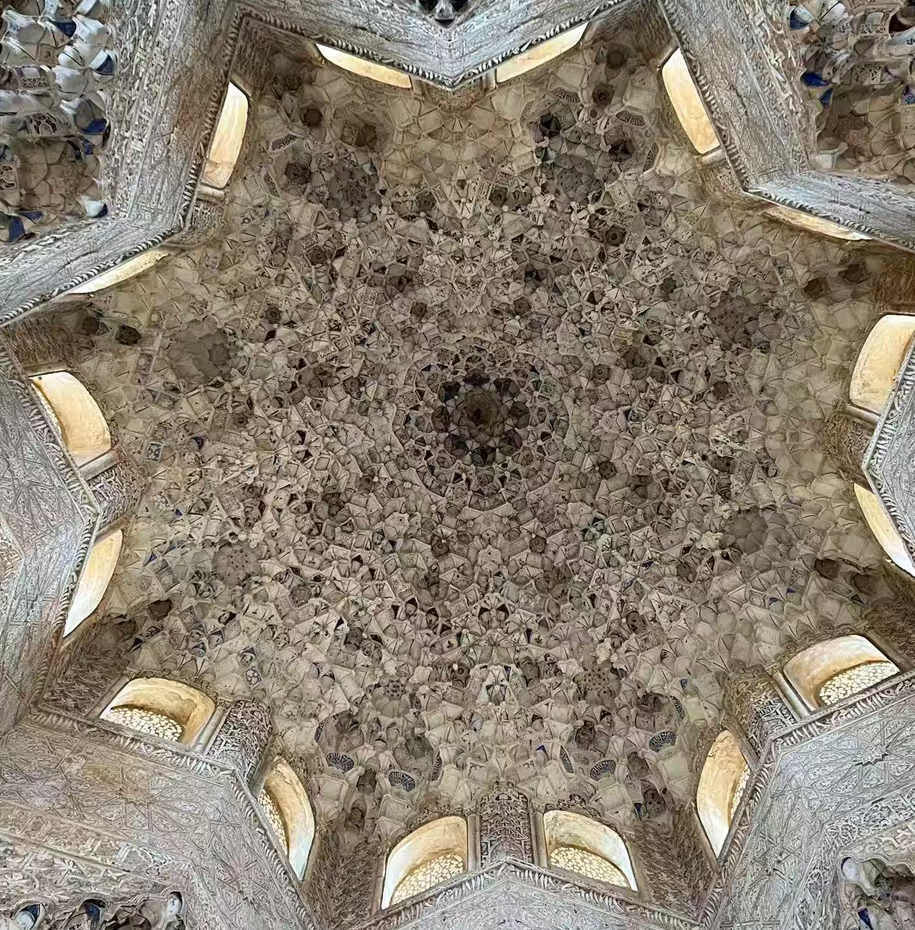
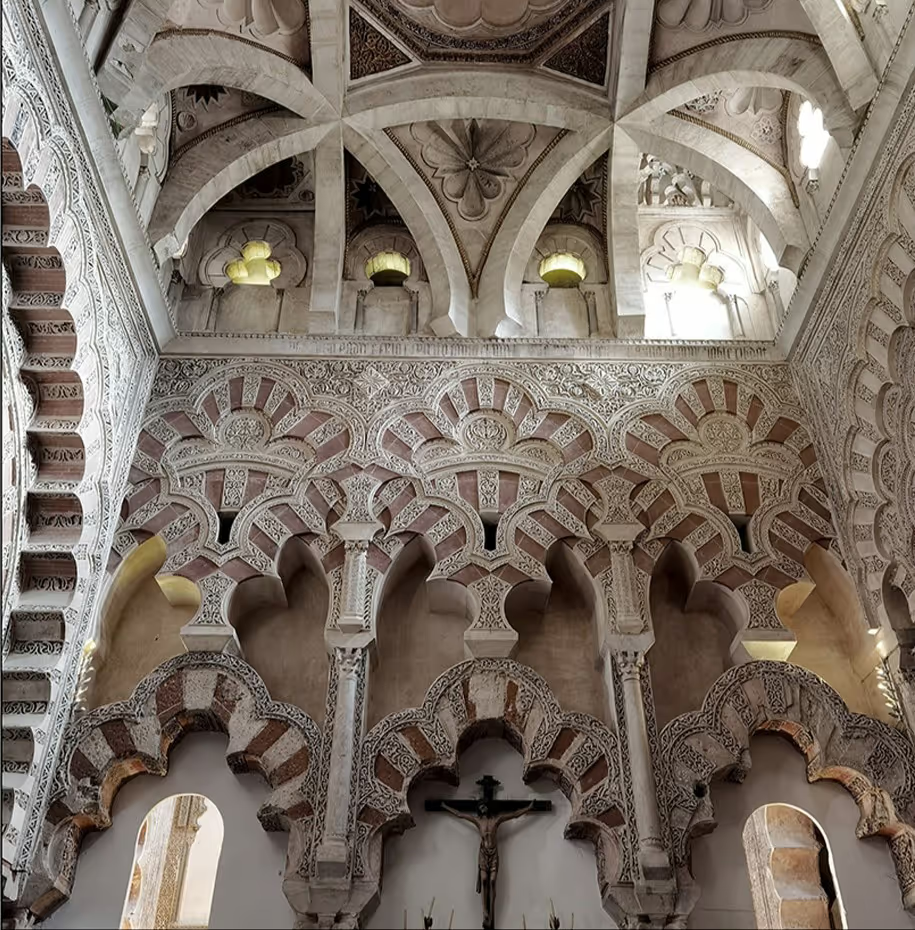
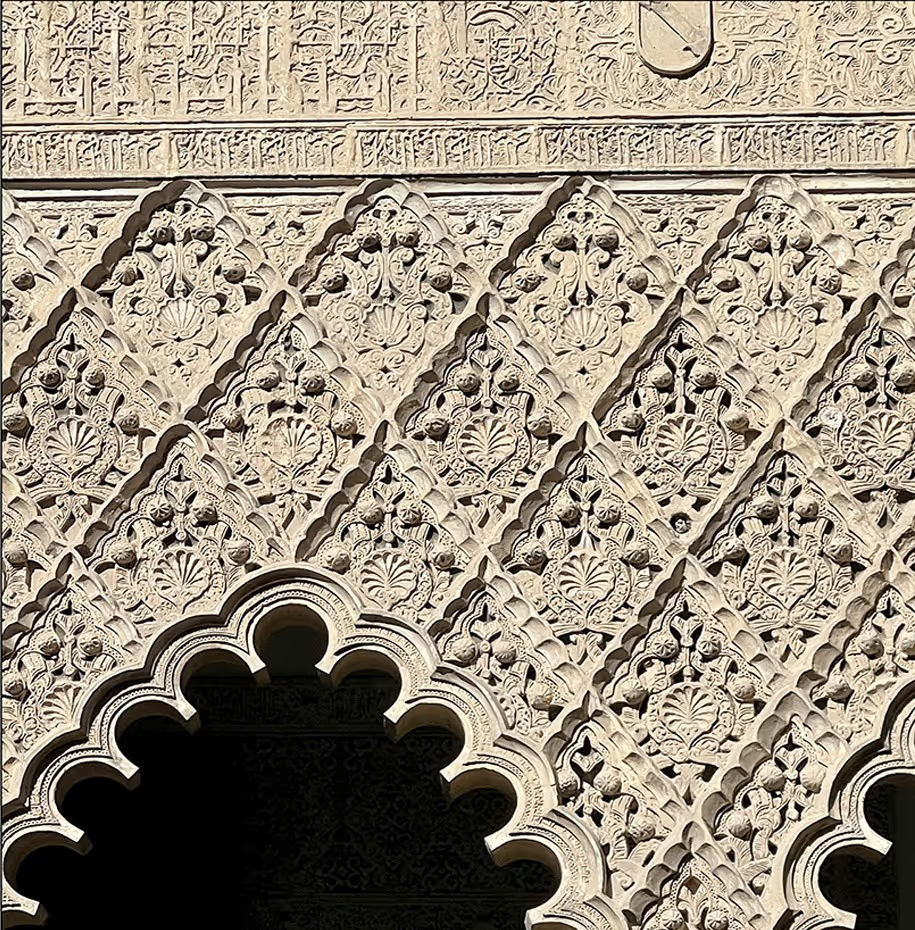
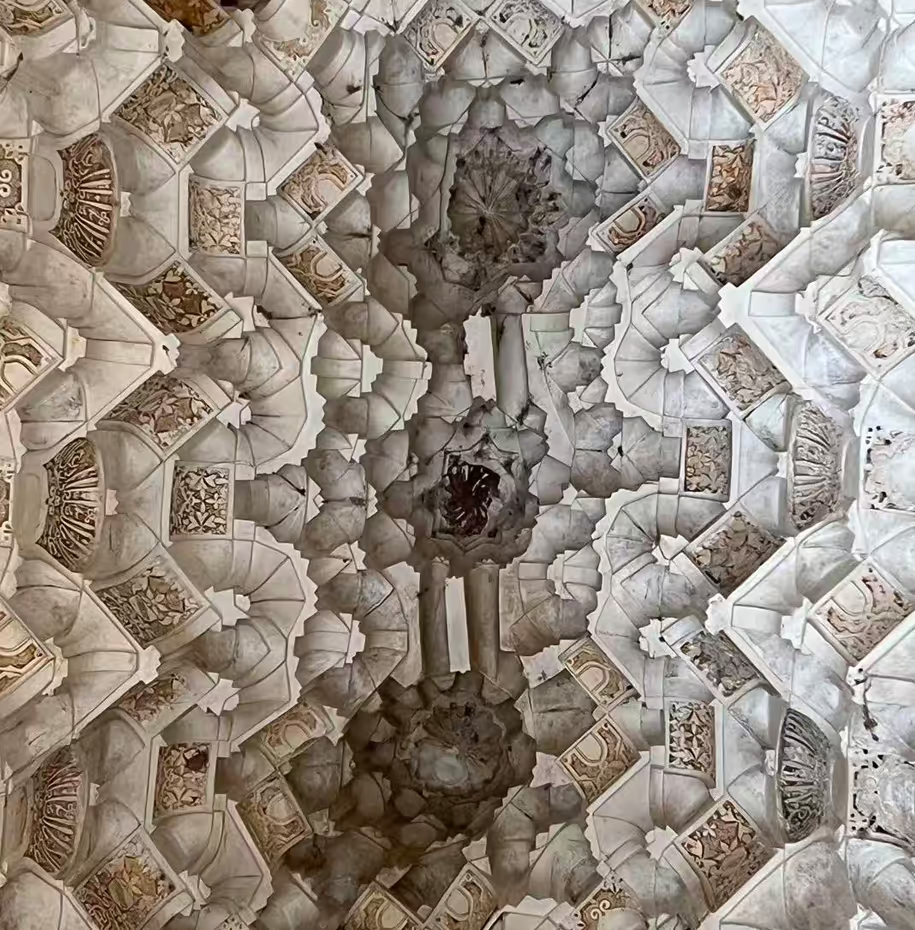
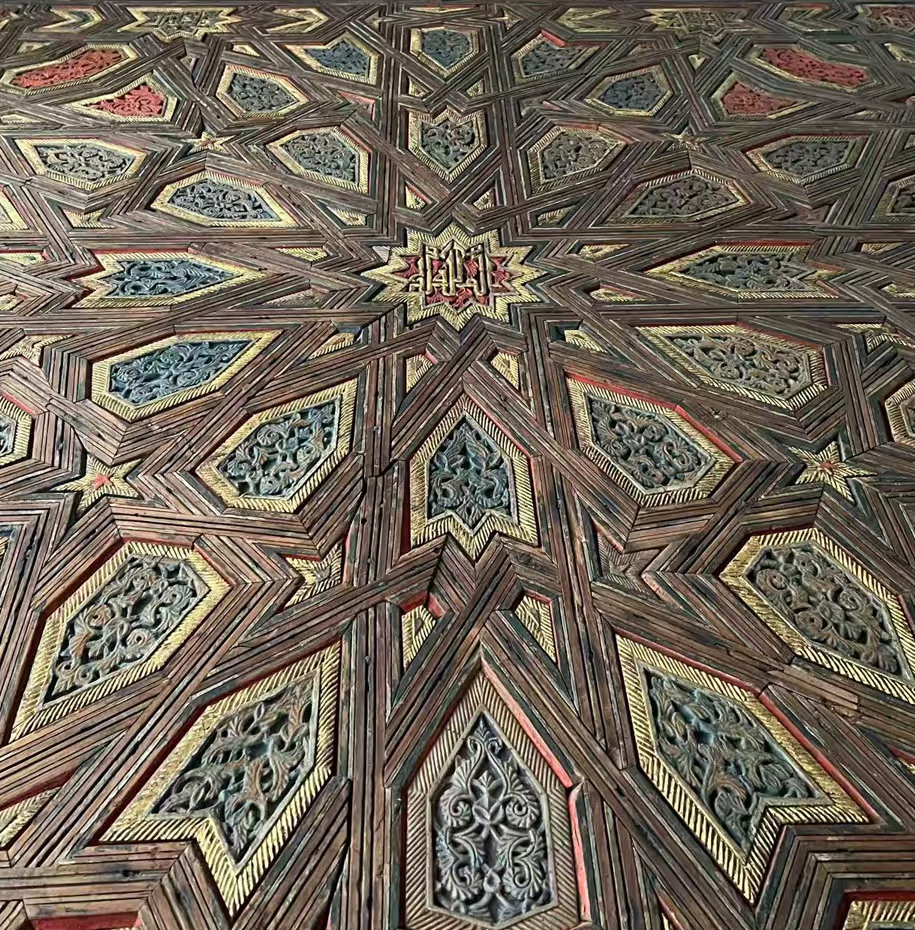
Typological Refences
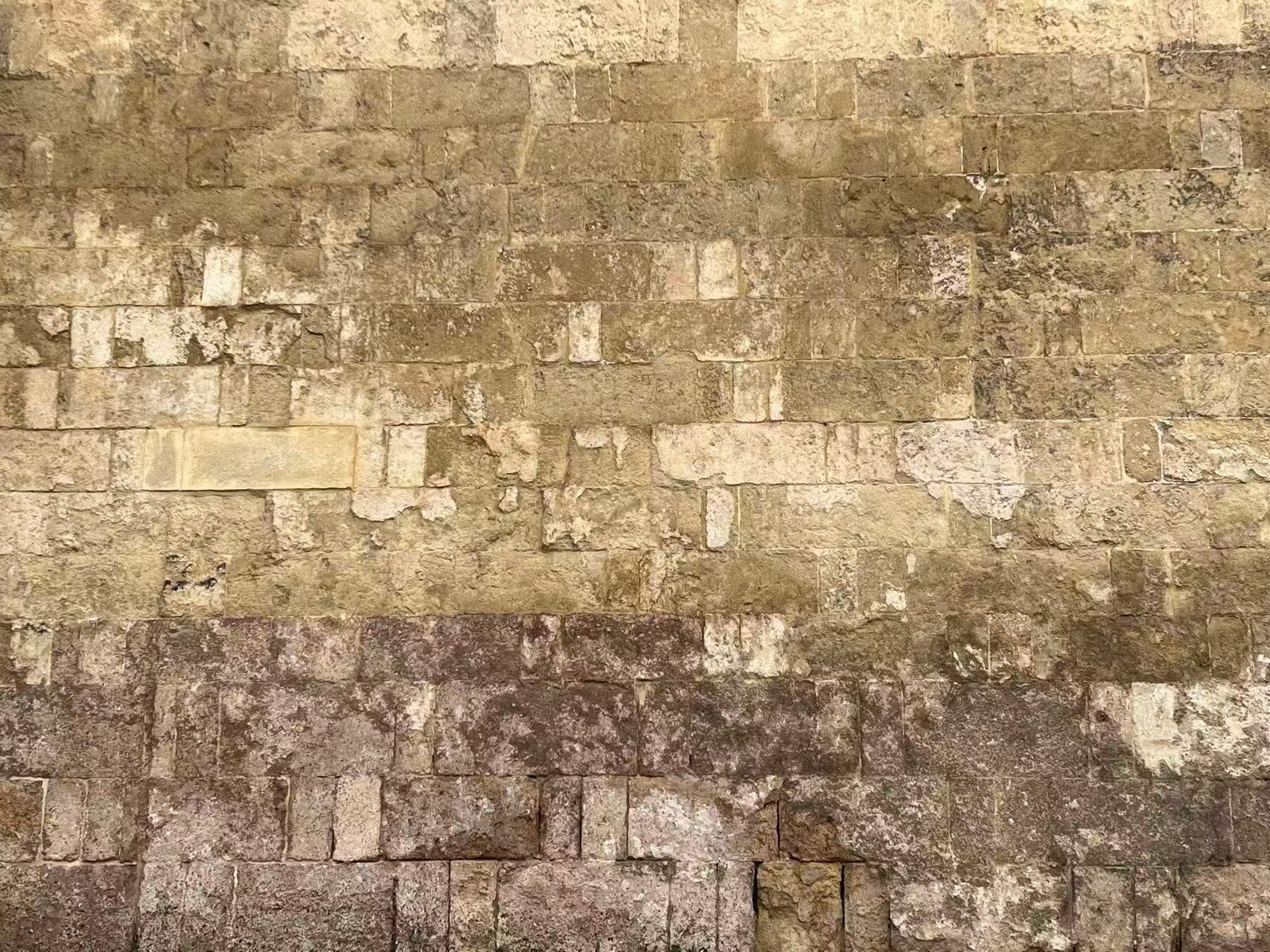
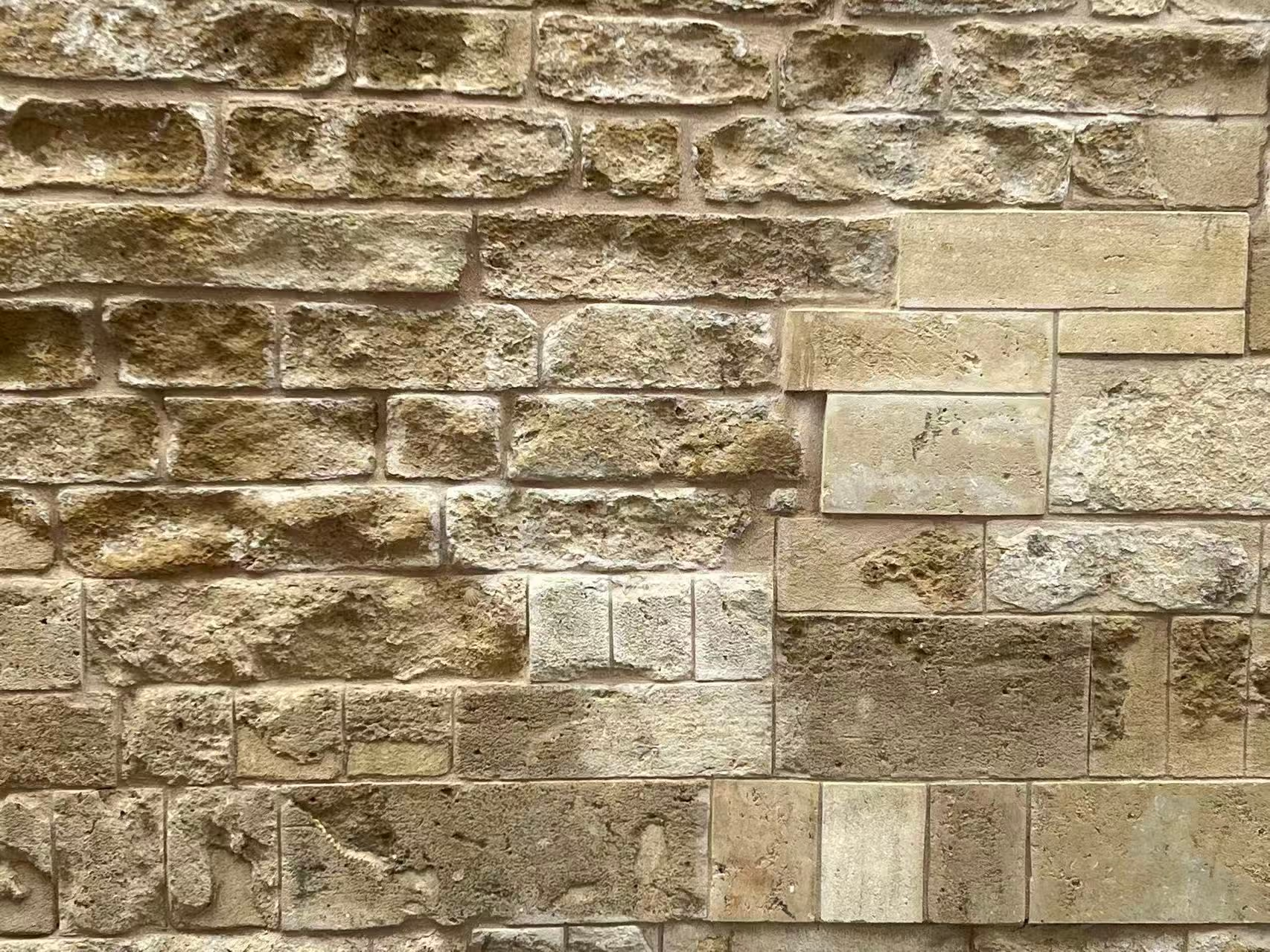
Choisy
Section
Reflected Ceiling Plan
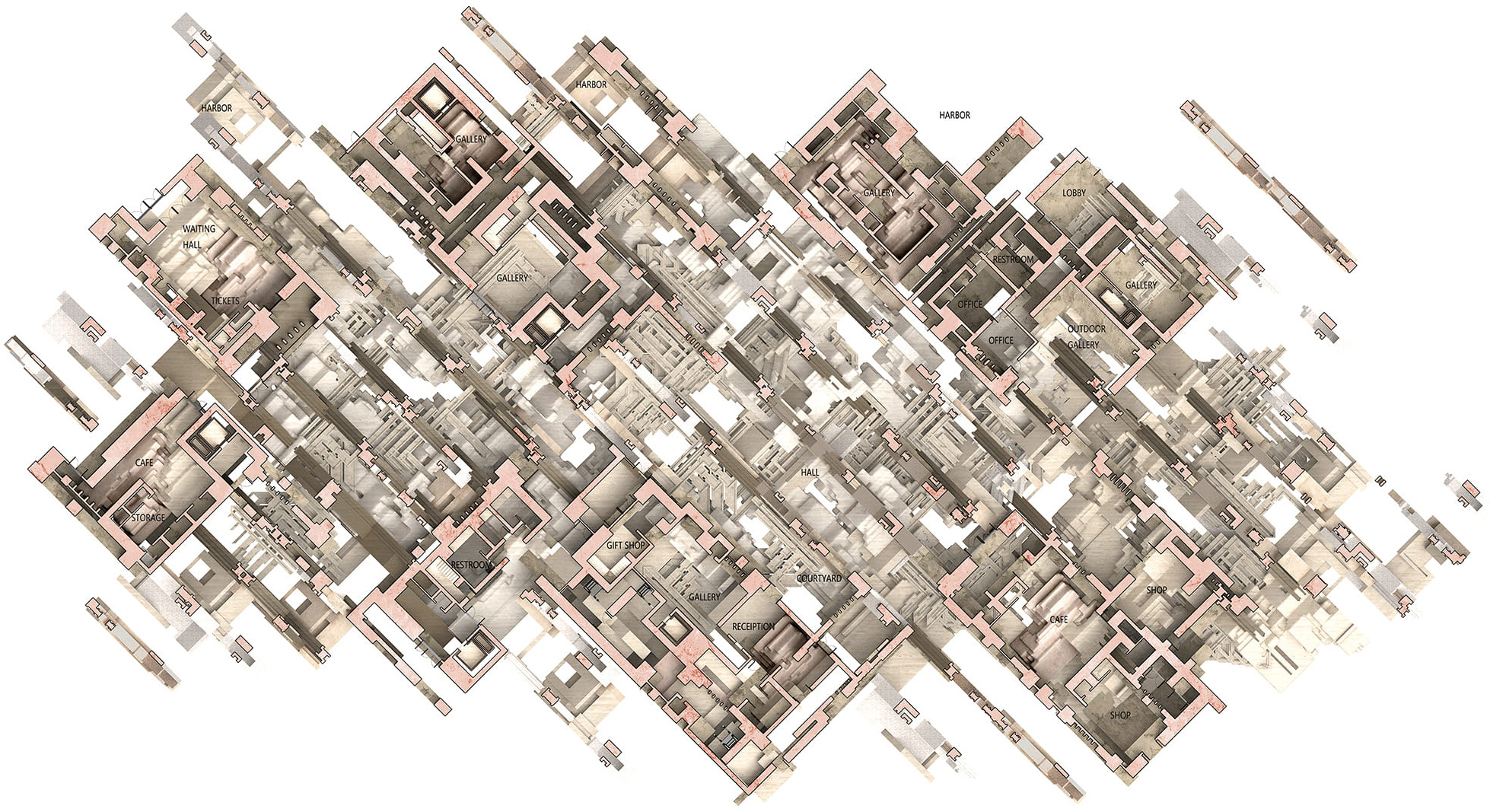
Model and Assmbly Logic
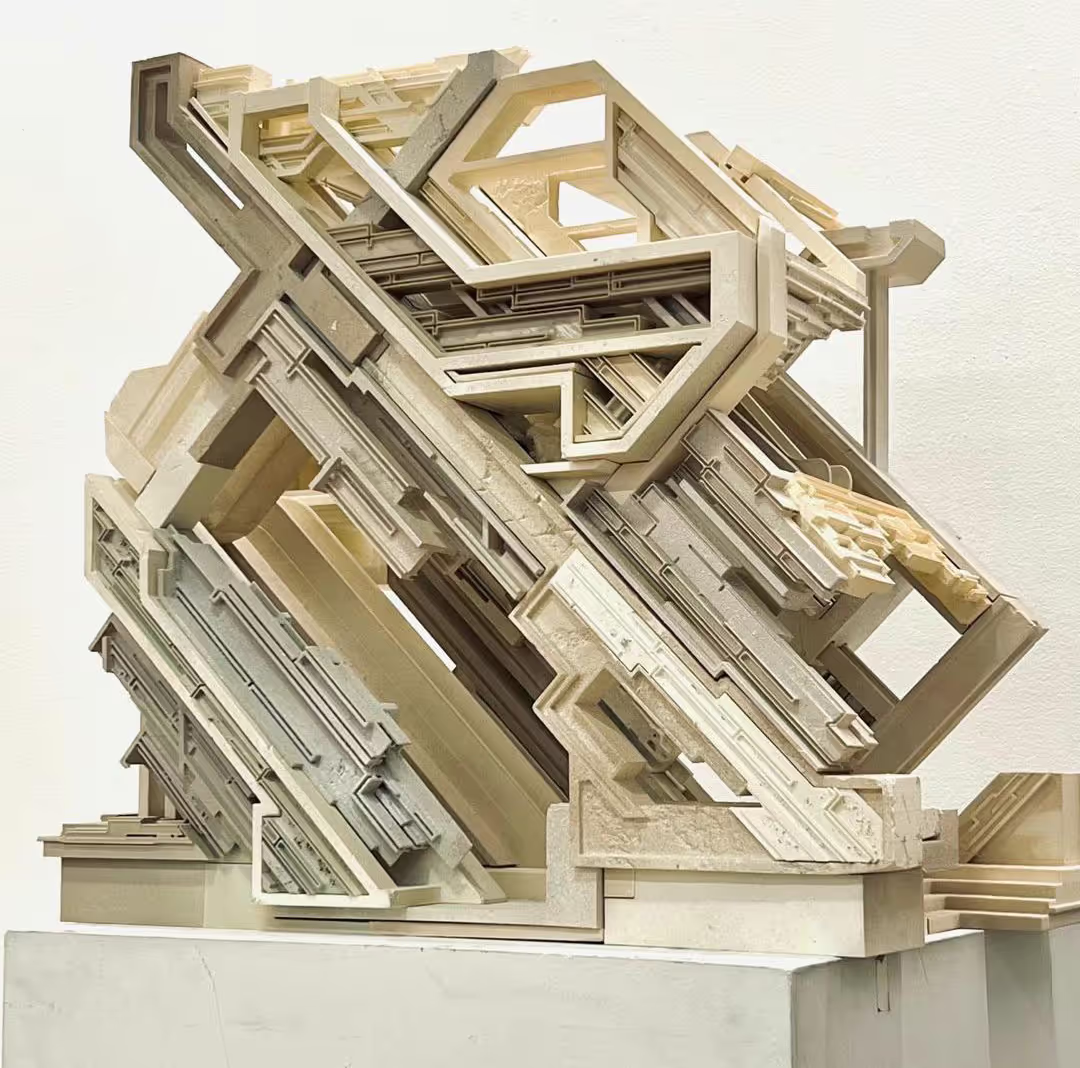
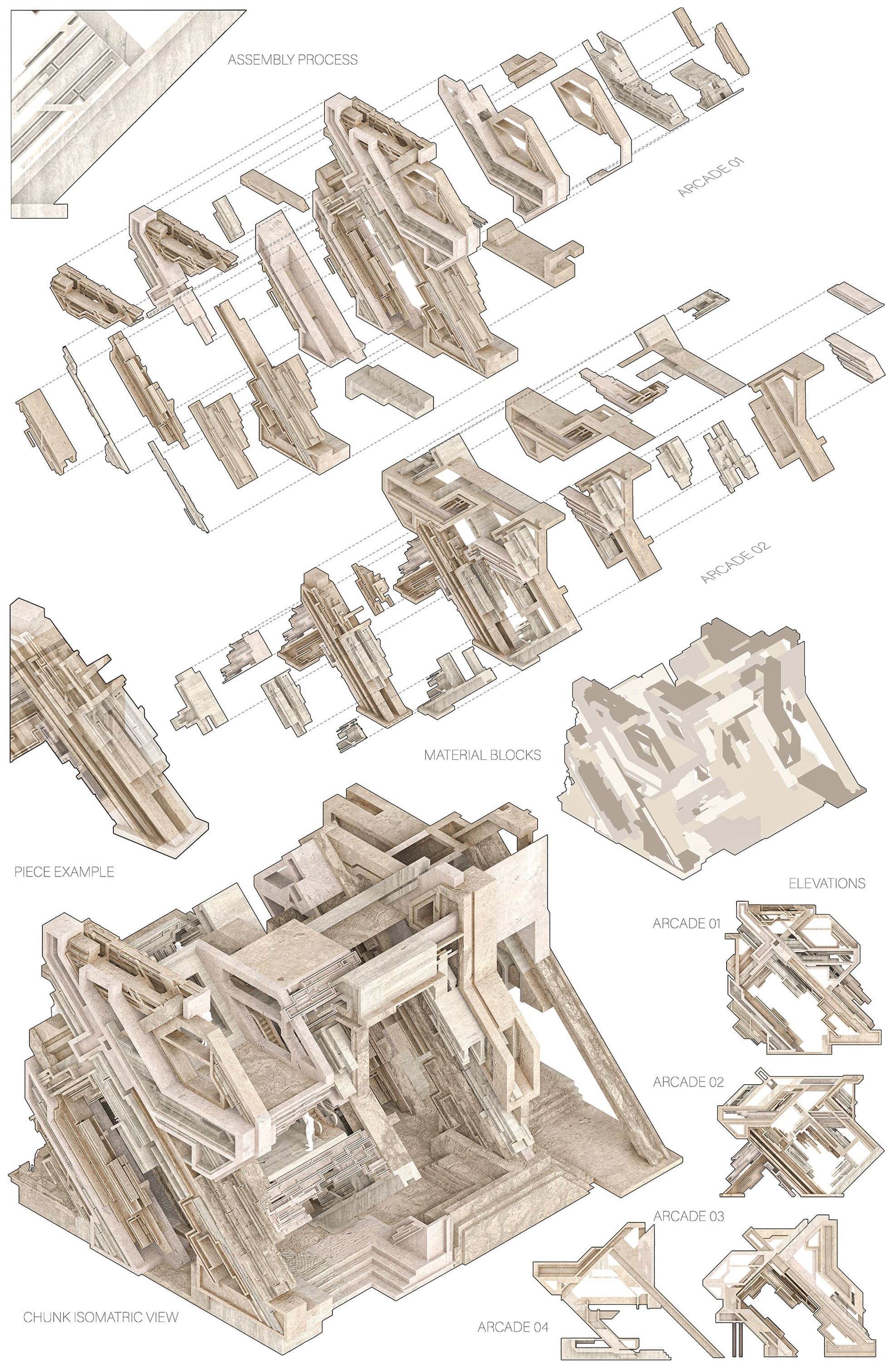
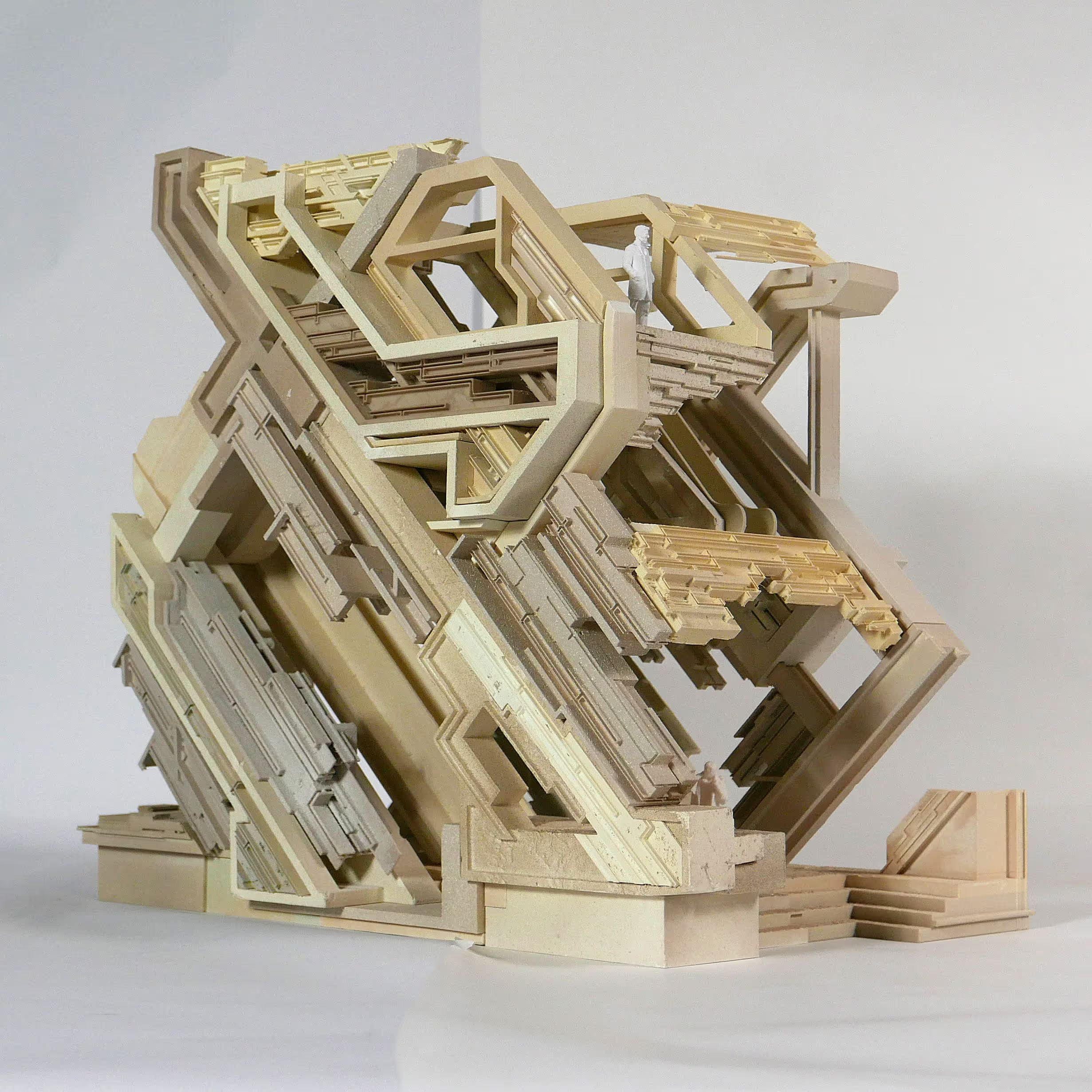
Model Details
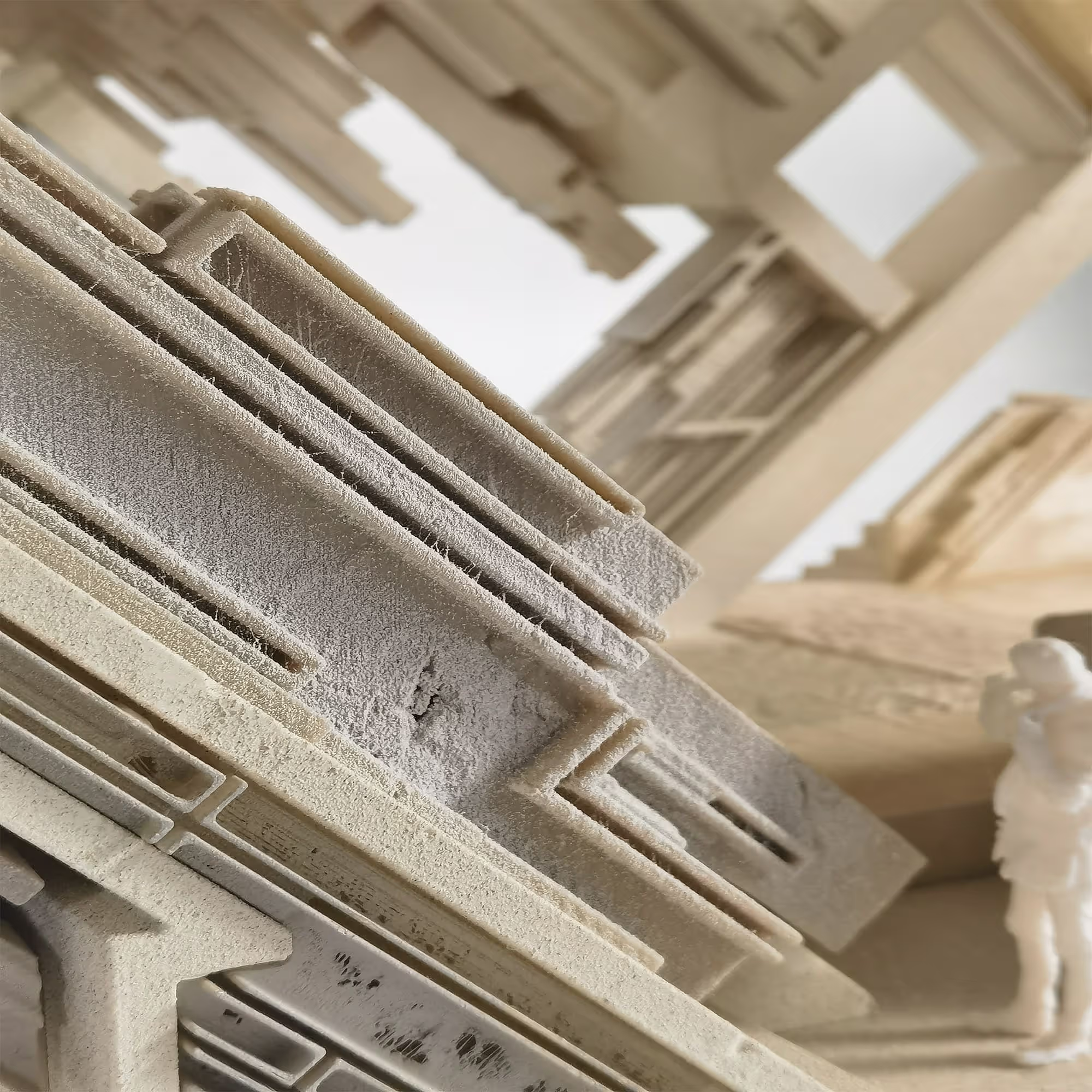
Model and Assmbly Logic
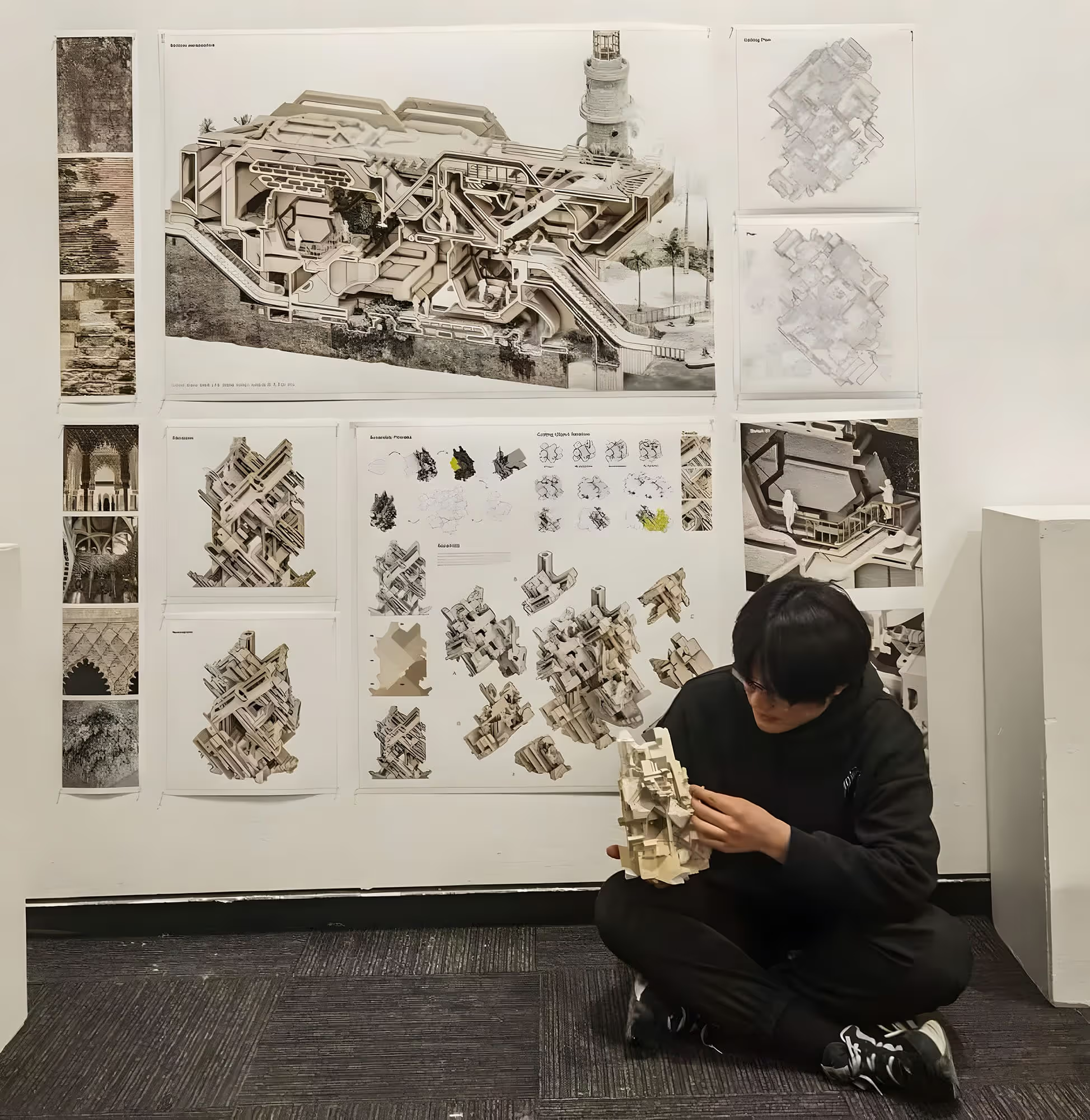
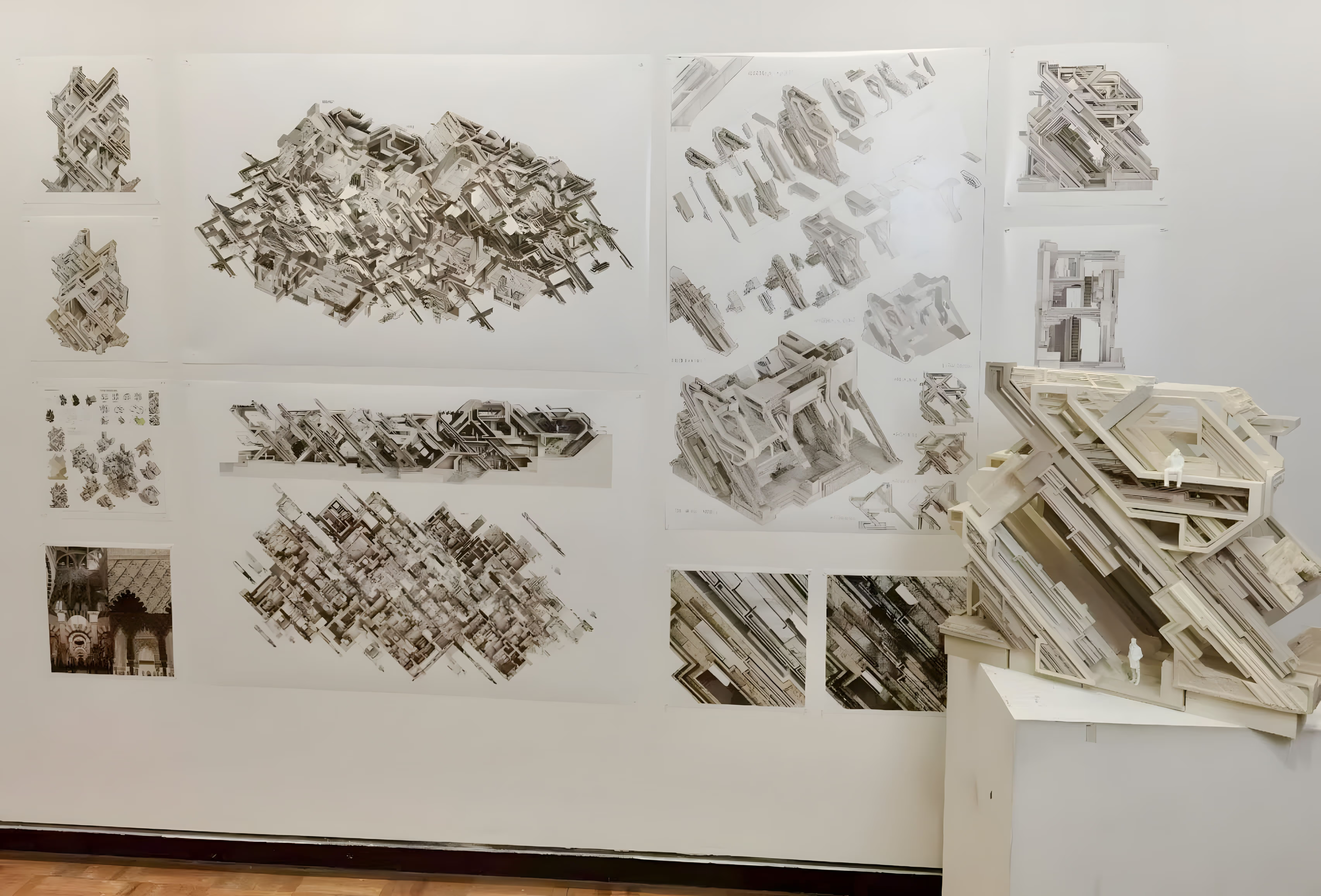
Hypophyle ultimately reframes architecture as a condition of continuous negotiation with its environment. Through processes of weathering, growth, and iterative reassembly, the project challenges the notion of the building as a fixed and complete object. Instead, it positions architecture as an evolving material system—one that accepts erosion, accumulation, and transformation as intrinsic operations rather than external threats. By embracing this shifting state, the work proposes a mode of design in which stability and change coexist, allowing architecture to participate more fully in the ecological and temporal forces that shape it.