
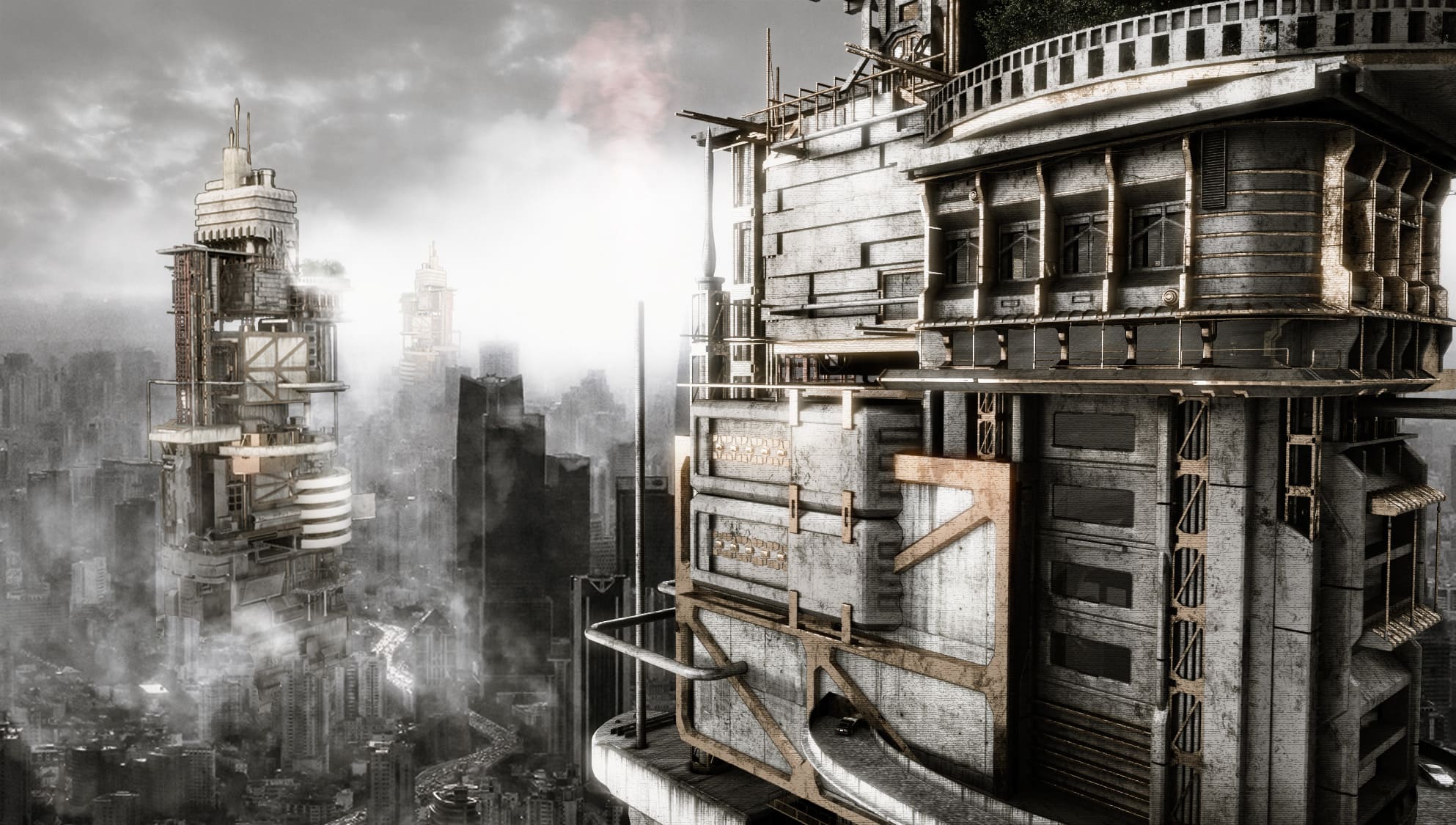
Rebirth Above the City

Nowadays, the decline of traditional beliefs in China has become increasingly evident. Mental health issues—such as depression—are rising year by year, while human activities continue to exert severe pressure on the natural environment. Both spiritual recession and environmental degradation are reshaping the way people seek meaning in life.
As faith weakens and the environment deteriorates, people face the need to establish new spiritual anchors. This project responds to that demand by exploring a future burial system that offers emotional and symbolic support for the living.
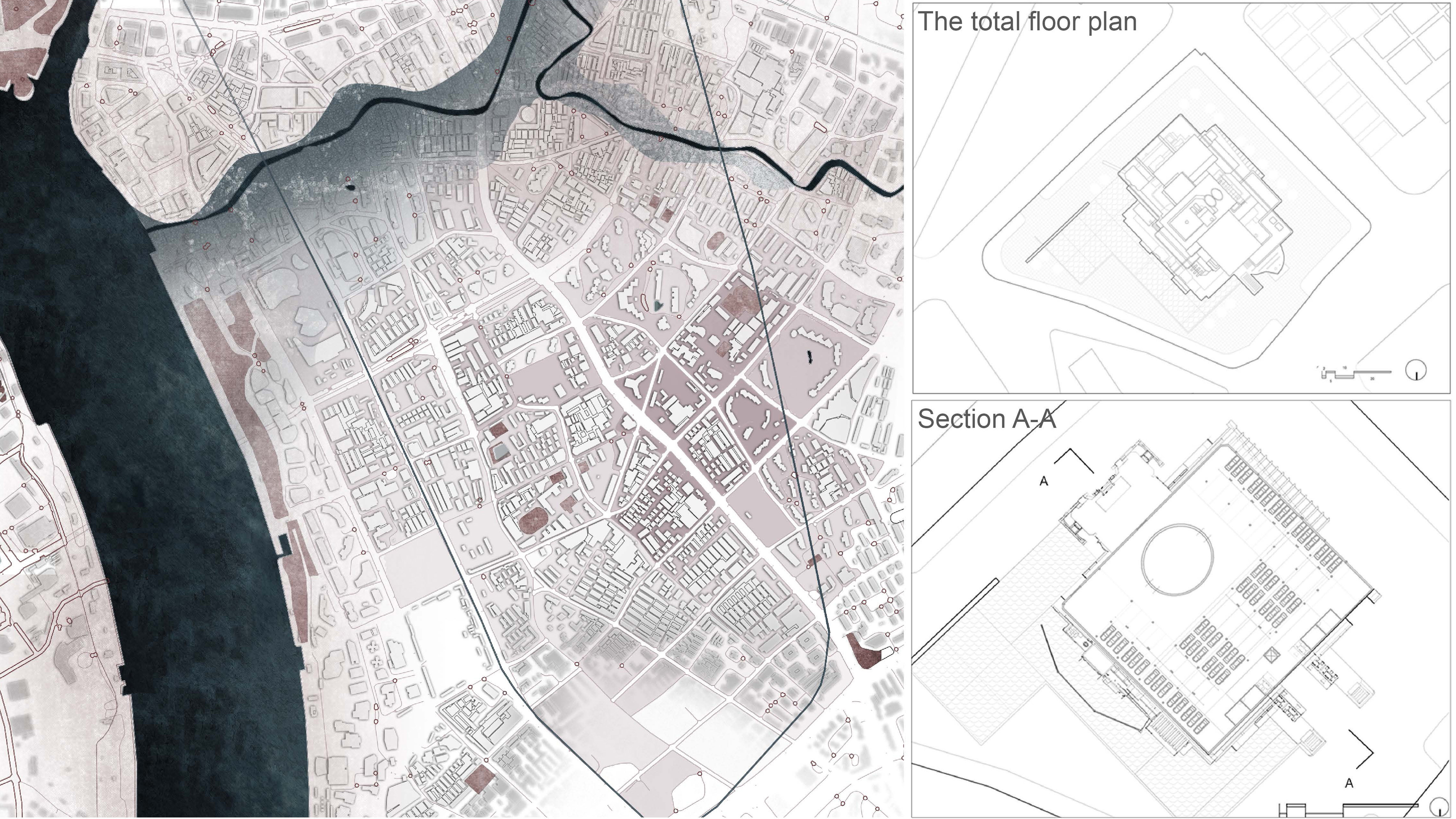
Located in Shanghai—one of the fastest-growing cities in China—the site also confronts two major challenges: a growing mental health crisis among residents and the worsening ecological conditions, especially the rising sea level.
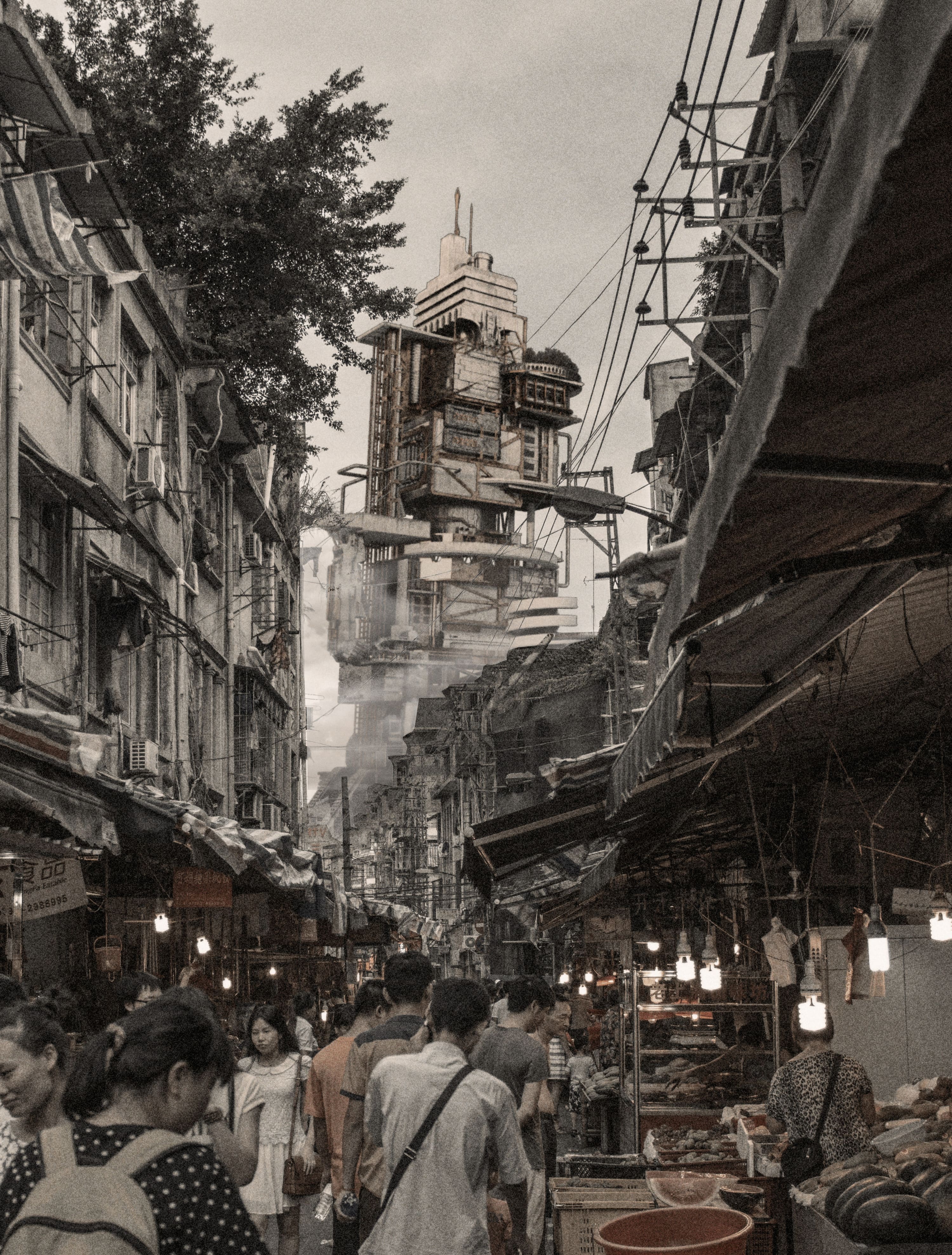
By adopting a cyberpunk aesthetic for the burial architecture, the project presents an ironic metaphor for the contrast between high-tech urban development and the low quality of human life. It questions how technological progress can coexist with spiritual emptiness, and how a future cemetery might provide a new narrative for death, memory, and belief.
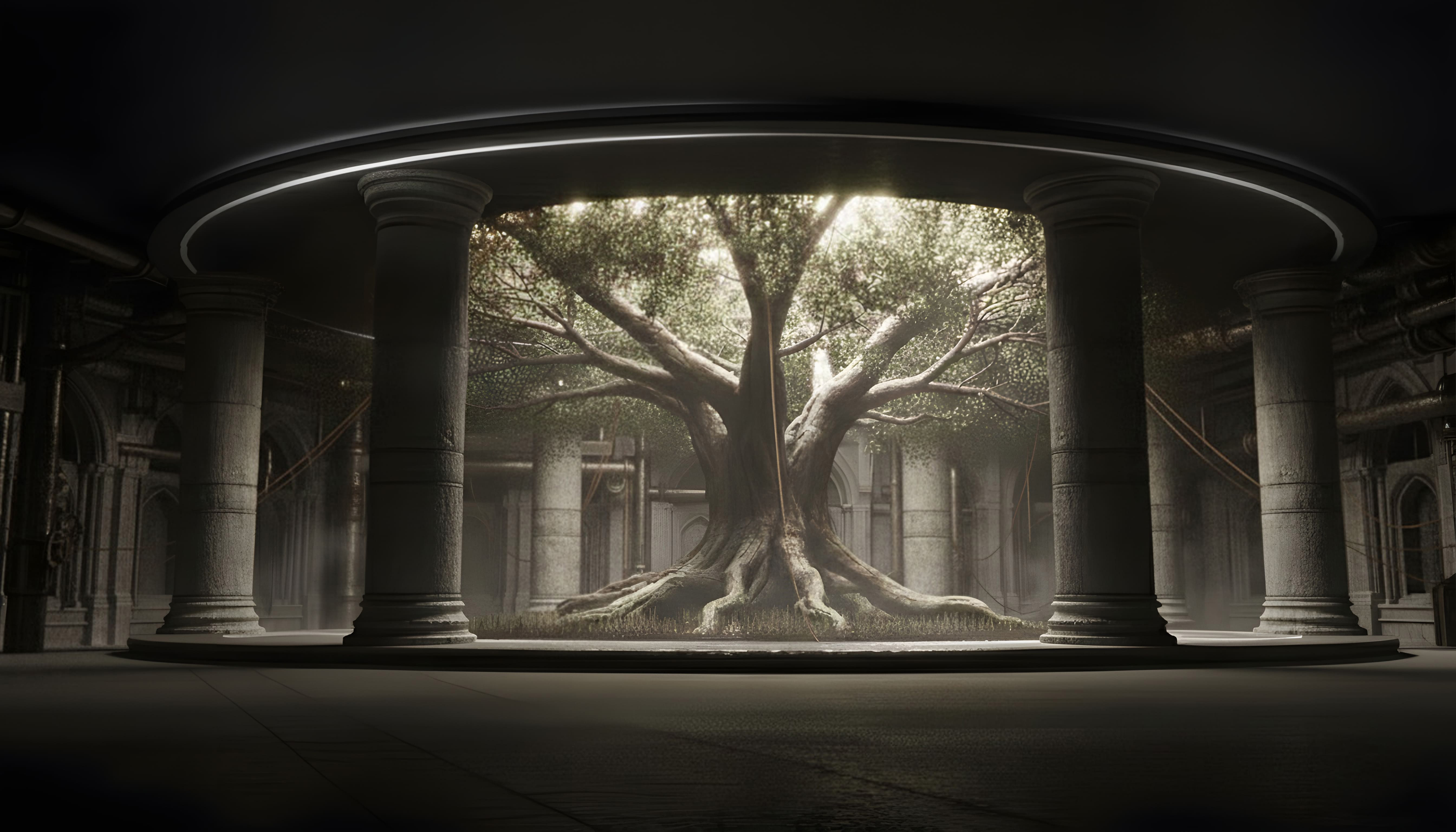
Cemetery Development
The development of cemeteries reflects the evolution of cultural values, social structures, and attitudes toward death across history.
Early forms—such as royal mausoleums, ancient civilian burial grounds, and traditional family tombs—were strongly shaped by hierarchy, lineage, and ritual order. These spaces emphasized permanence, ancestry, and the collective memory of families and clans.
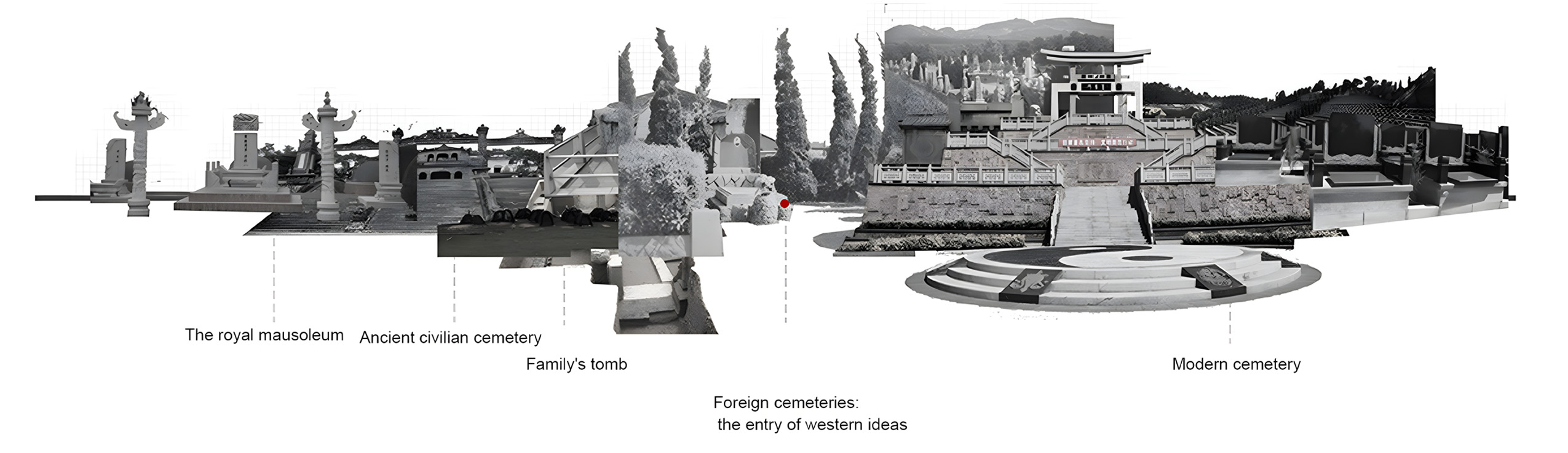
With the introduction of Western ideas, burial practices began to diversify. Foreign cemeteries brought new spatial concepts centered on individuality, public accessibility, and landscape integration. Churchyards and urban boundary cemeteries marked the transition from private ancestral grounds to community-oriented burial spaces.
Modern cemetery typologies expanded further into landscape cemeteries, rural garden cemeteries, lawn-park memorial grounds, and eventually woodland cemeteries. These newer forms prioritize ecological integration, open public space, and a more subtle presence of death within everyday life. Instead of monumental structures, they emphasize natural settings, greenery, and emotional comfort.
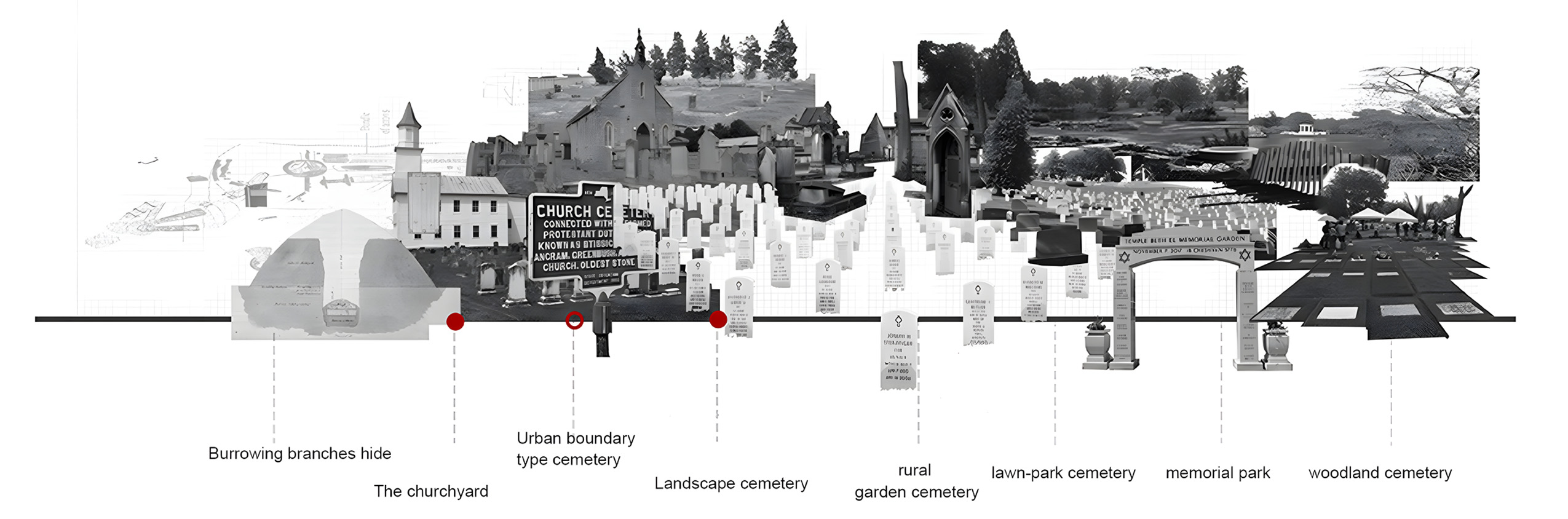
This historical progression reveals a shift from highly symbolic, rigid systems toward more open, ecological, and human-centered burial environments—an evolution that informs the conceptual foundation of this project.
Cremation Process
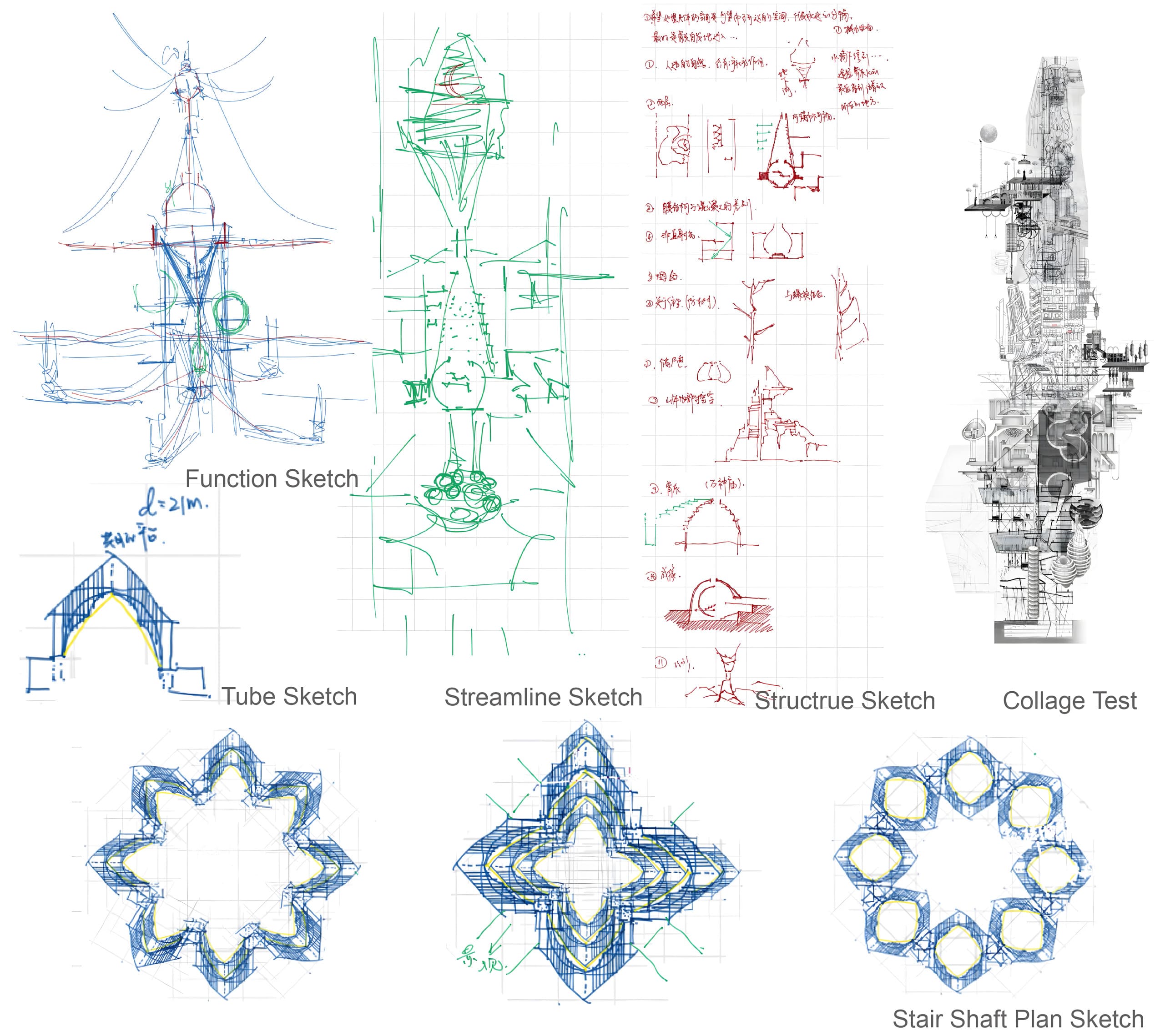
This project proposes a new burial ritual that encourages the living to reflect on belief and reincarnation. The architectural system consists of two vertically mirroring spaces—one dedicated to the dead and the other to the living—symbolizing the parallel yet interconnected realms of life and afterlife.
The dead are envisioned to be free from physical constraints and untouched by human interference. To achieve this, the body is placed inside a biodegradable package that inflates during cremation. As the package expands, it gradually ascends, allowing the remains to reach their designated niches naturally and peacefully.
This journey becomes a symbolic pilgrimage, representing the final pursuit of the individual’s spirit. The memories and hopes of the deceased are carried into a distant realm, inspiring the living to reconsider faith, mortality, and the meaning of existence.
Experiments With Light
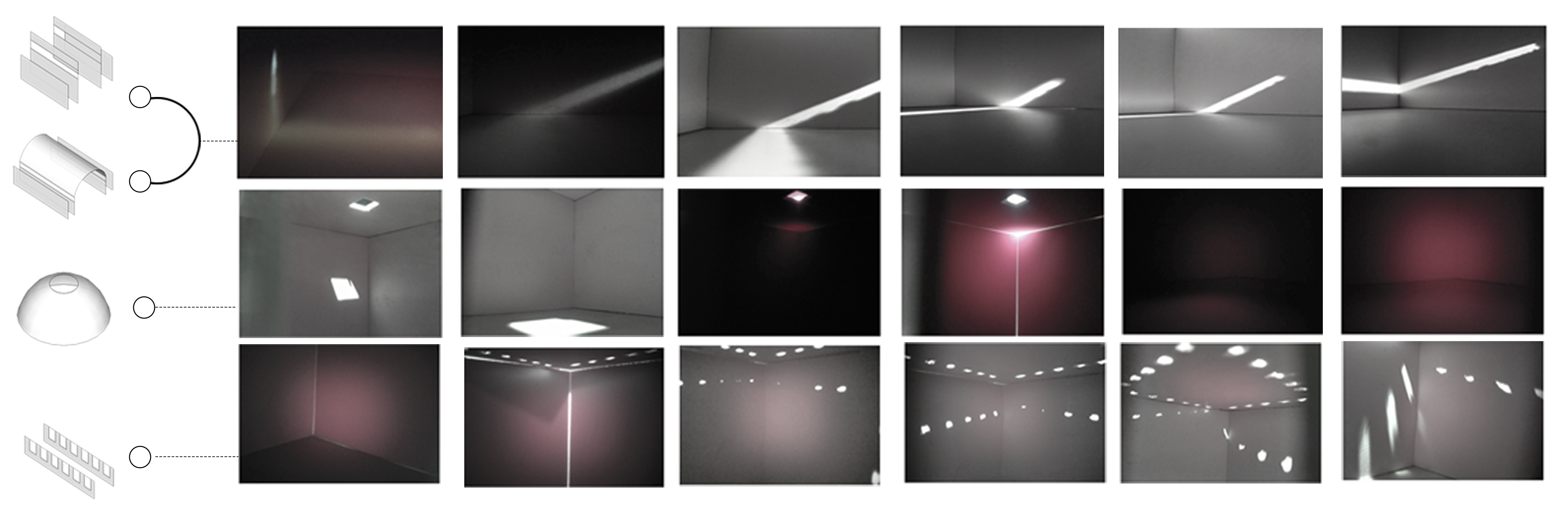
Light plays a fundamental role in religious architecture and has shaped the atmosphere of communal graves throughout history. By studying lighting strategies from different periods, three primary methods were identified and tested through experiments combining light, water, and various window openings. These variations produce distinct spatial effects and influence emotional perception—even creating sensations such as calmness, focus, or a sense of weightlessness. The dome light, in particular, enhances emotional depth and visual concentration within the space.
Environmental Impacts of Cremation
Cremation produces air pollutants and places additional pressure on the urban environment. In response, this project proposes an ecological system that transforms cremains into a source of regeneration. The ashes are used to nurture plants, helping to alleviate pollution while creating a more sustainable memorial practice.
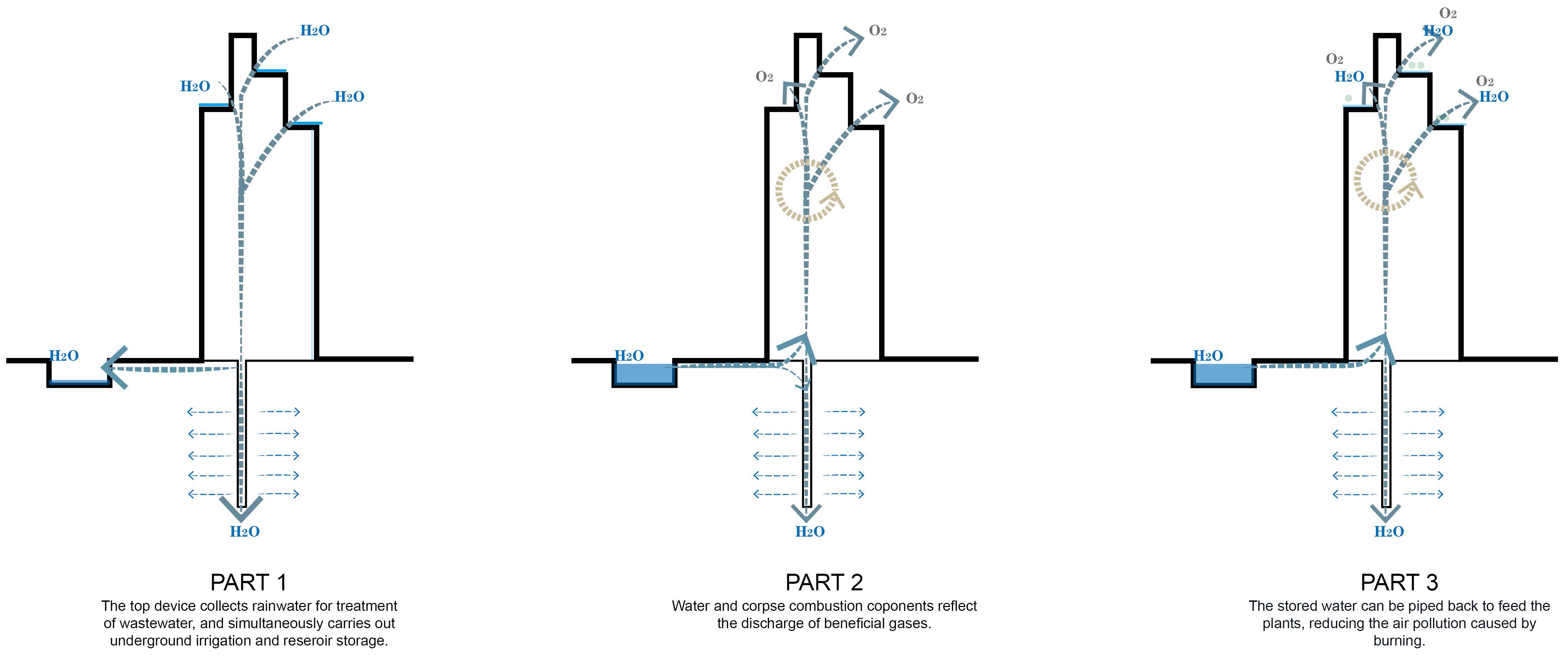
A water-collecting device captures and filters rainwater, allowing it to recharge groundwater and provide irrigation for the planted areas—an important consideration for Shanghai’s dense urban conditions. The cremains are transported by a biodegradable hot-air balloon that rises gradually during the cremation process. Once the burners extinguish, the balloon stabilizes, and the niche device uses natural wind pressure to guide the cremated remains into a designated niche. There, the material is processed and integrated into plant growth, forming a living memorial for worship and remembrance.
Solution to Land Subsidence and Excessive Carbon Emissions
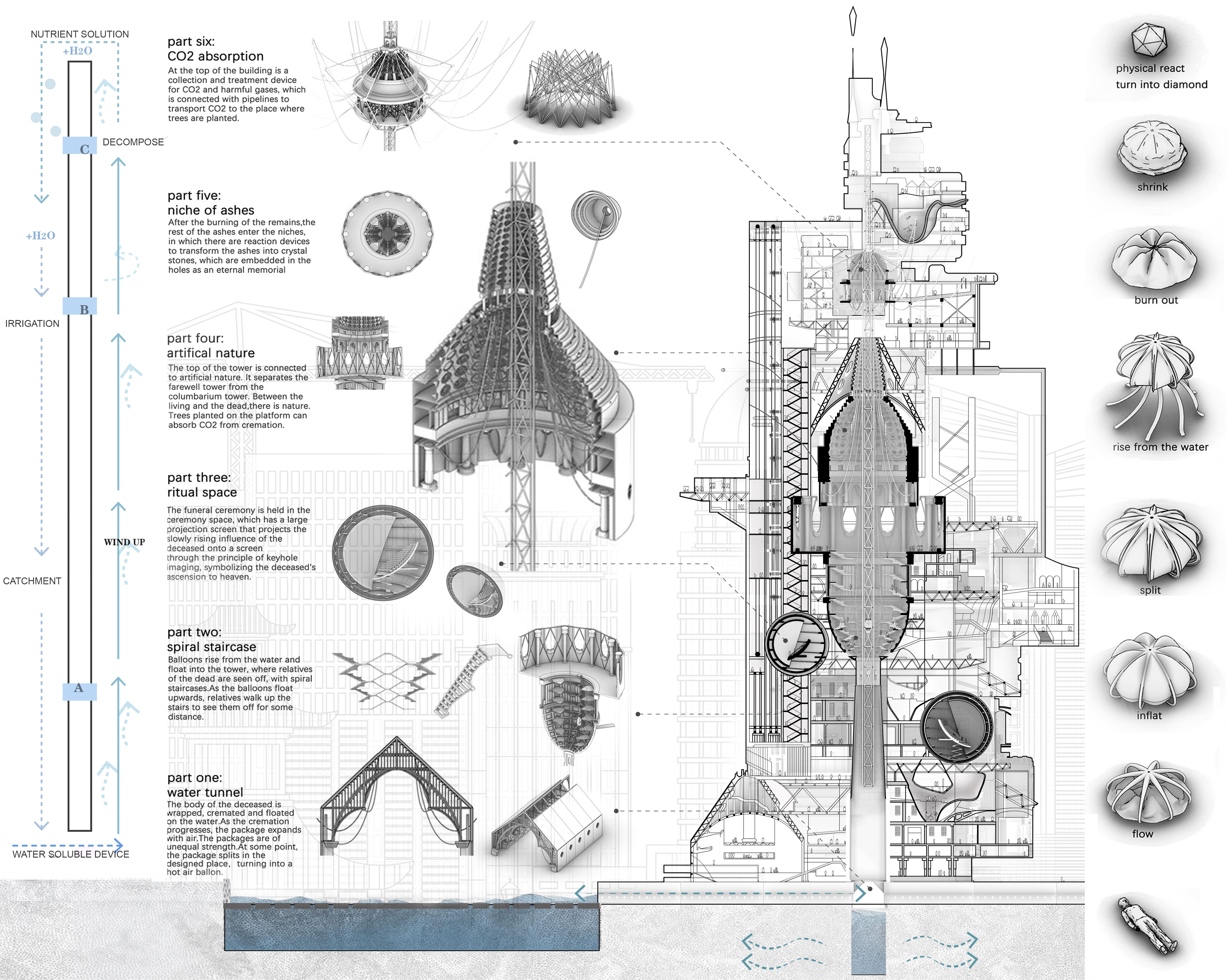
Traditional cremation in China contributes significantly to air pollution, while the city also faces land subsidence caused by excessive water extraction. To address these issues, this project proposes an integrated ecological cremation system.After the body is burned, the device separates the ashes from other by-products and transports the carbon-rich substances to vertical planting zones through a pipeline. These substances are then absorbed by vegetation, reducing pollution, promoting plant growth, and ultimately feeding purified air back into the atmosphere.
From Farewell to Renewal
The cremation process begins with the body enclosed in a biodegradable air balloon floating along the water passage. As combustion generates heat, the balloon gradually expands until buoyancy lifts it into the air. On its ascent, it passes through the farewell space, where the living can climb the surrounding stairs to accompany the rising balloon one last time. The balloon then enters the niche chamber—the exclusive domain of the dead—embedded within the inner wall like a modern reinterpretation of the Pantheon.
Once the burners extinguish, the balloon stabilizes, and natural wind pressure guides the cremated remains into a niche, where they are later processed and used to nourish plants for worship. Carbon dioxide produced during cremation is directed into a tree-filled absorption zone, transforming pollution into growth and symbolizing emotional healing. Finally, the process releases dry ice and other condensed materials into the air, forming rainfall that flows back through the mirrored spatial sequence, reconnecting the world of the dead with the living and returning to the urban water system.
In Search of Faith, At the Edge of Farewell
"The deceased slowly travelled, this is the last period of journey and memorize."

“I am about to embark on the journey of seeing off my relatives, which will also be my last walk with my relatives. The dead relatives were put into the device and sailed slowly along the waterway. Next, I'm going to see you off.”
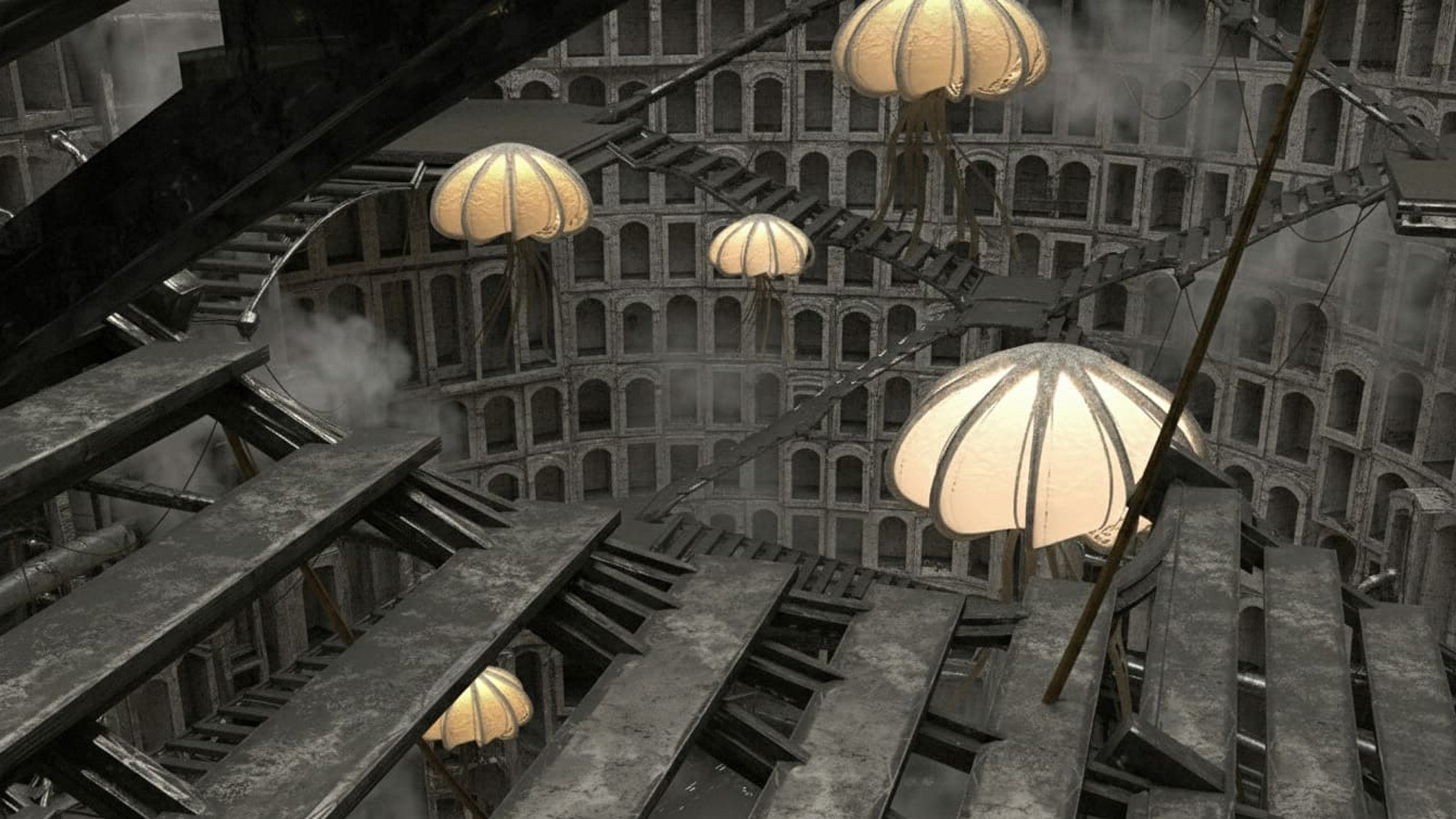
“He rises slowly, and I follow his movement—watching his light, letting it guide me through the darkness. No one disturbs this moment; it is quiet, solemn, and complete. I walk with him to the very end. Ahead lies the final path he must take.”
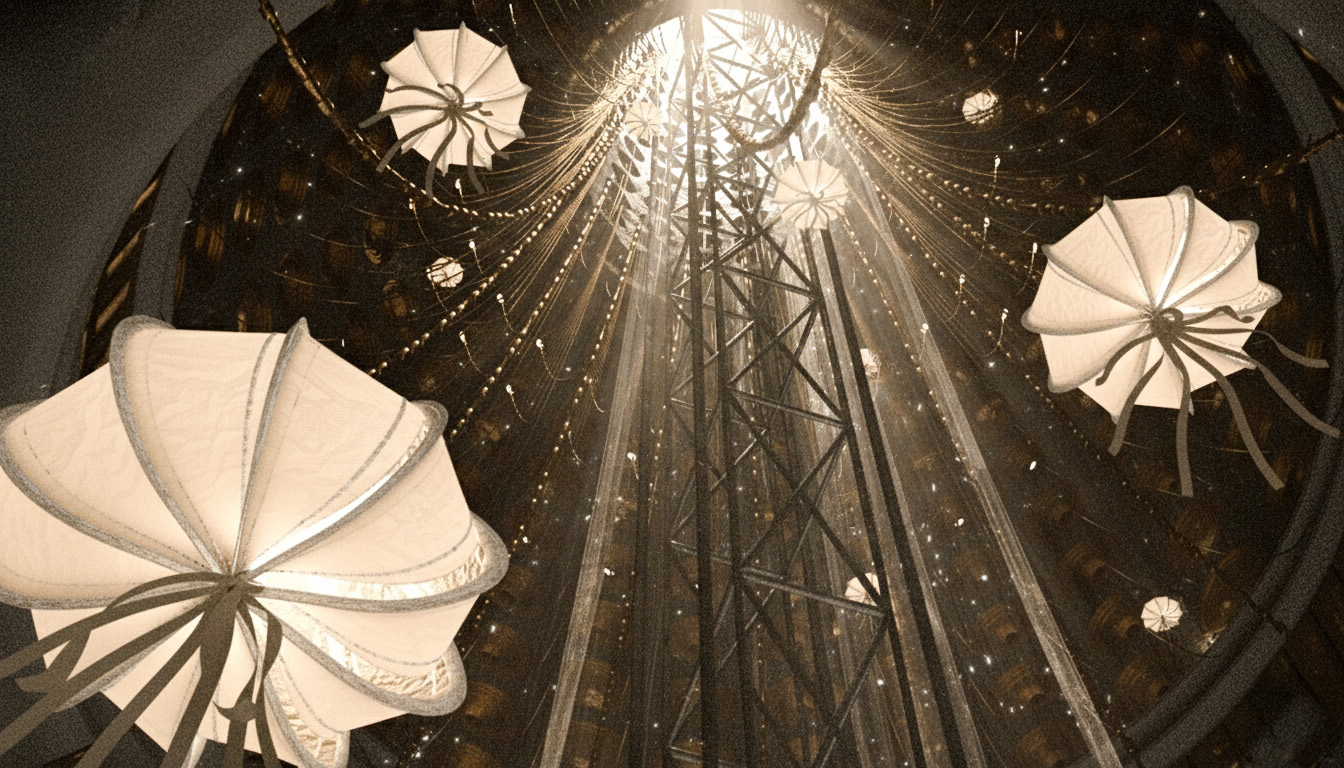
“I stood on the platform and watched him continue on. At a certain point, my steps stopped, and I could only watch as he slowly entered the niche. All I could do was place my hand on the outer wall—feeling its final warmth, the last trace of his passage.”
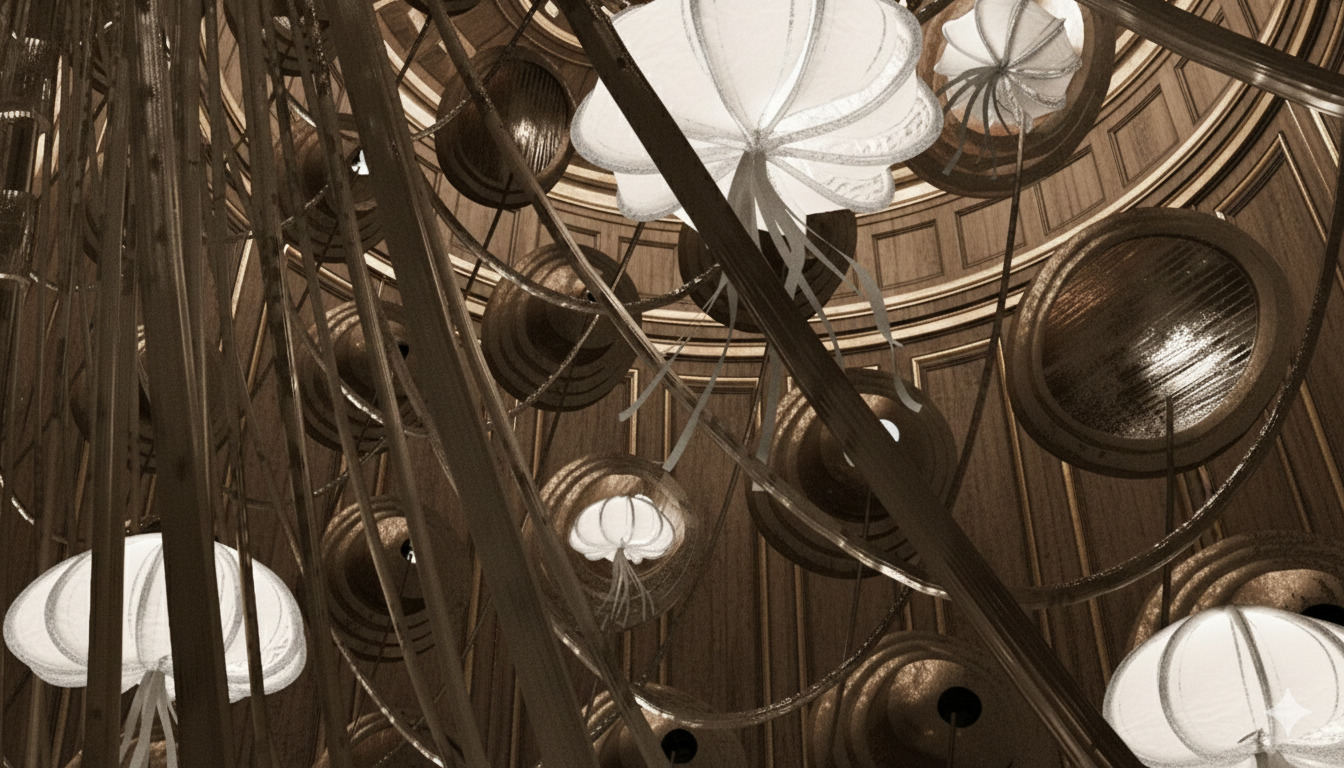
“I stood before the light in silence, almost as if caught in an illusion. I know he will eventually return to dust, yet I can hold my thoughts of him in every plant he will nourish—his final gesture, his quiet belief. In this stillness, I find myself reflecting… wondering about faith.”
“I move through both sunshine and darkness, watching people and their shifting emotions—joy, anger, sorrow, and everything in between. In this play of light and shadow, I keep moving forward. Slowly, I begin to understand my faith, the quiet pillar of my life. I remind myself: keep believing, and keep searching.”
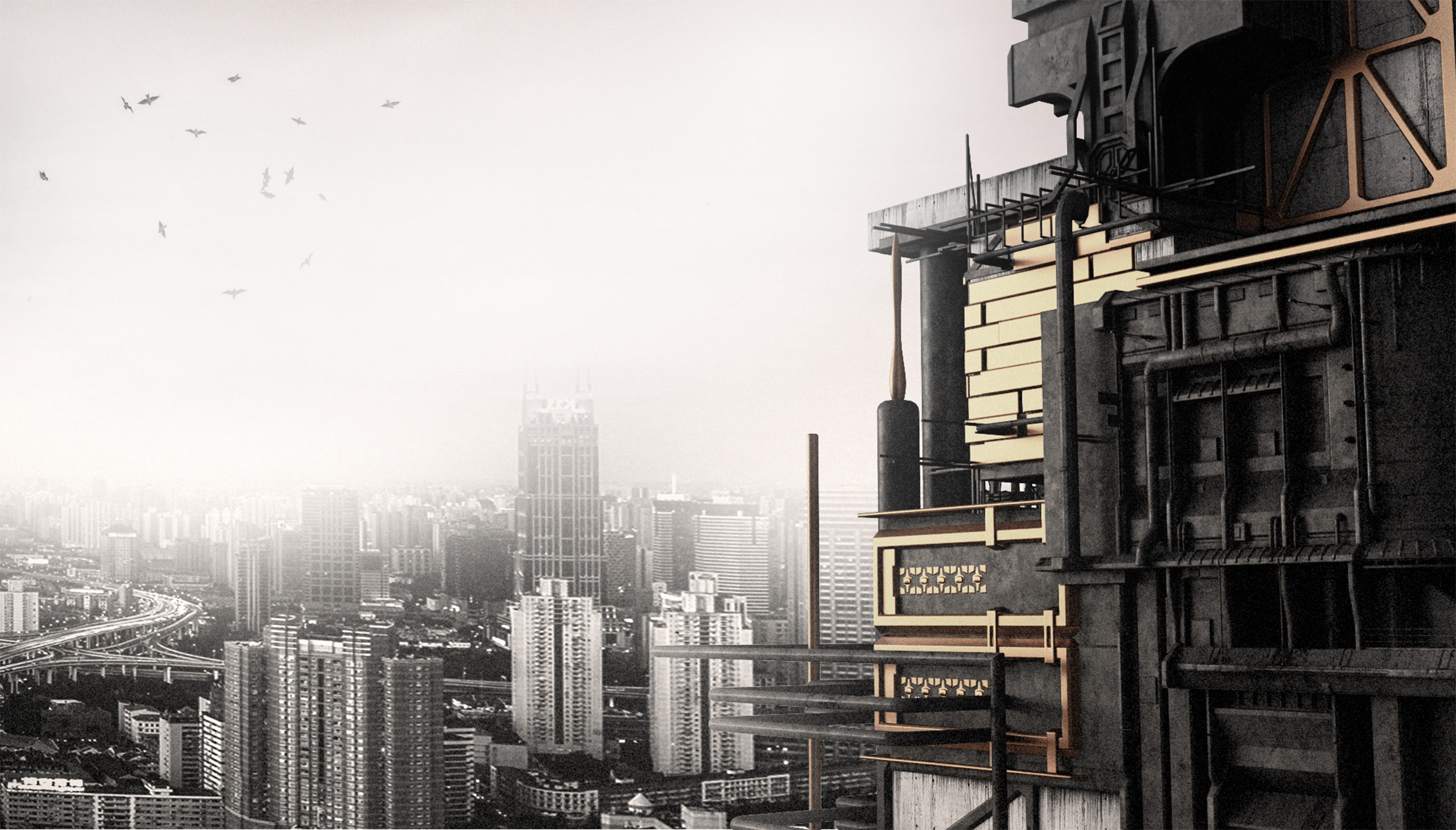
“This space preserves the love and longing we carry for the world. It invites every visitor to reflect on life and death, and to rediscover their own spiritual grounding. Perhaps, within this quietness, we can begin to find the faith we once lost.”
Site Plan
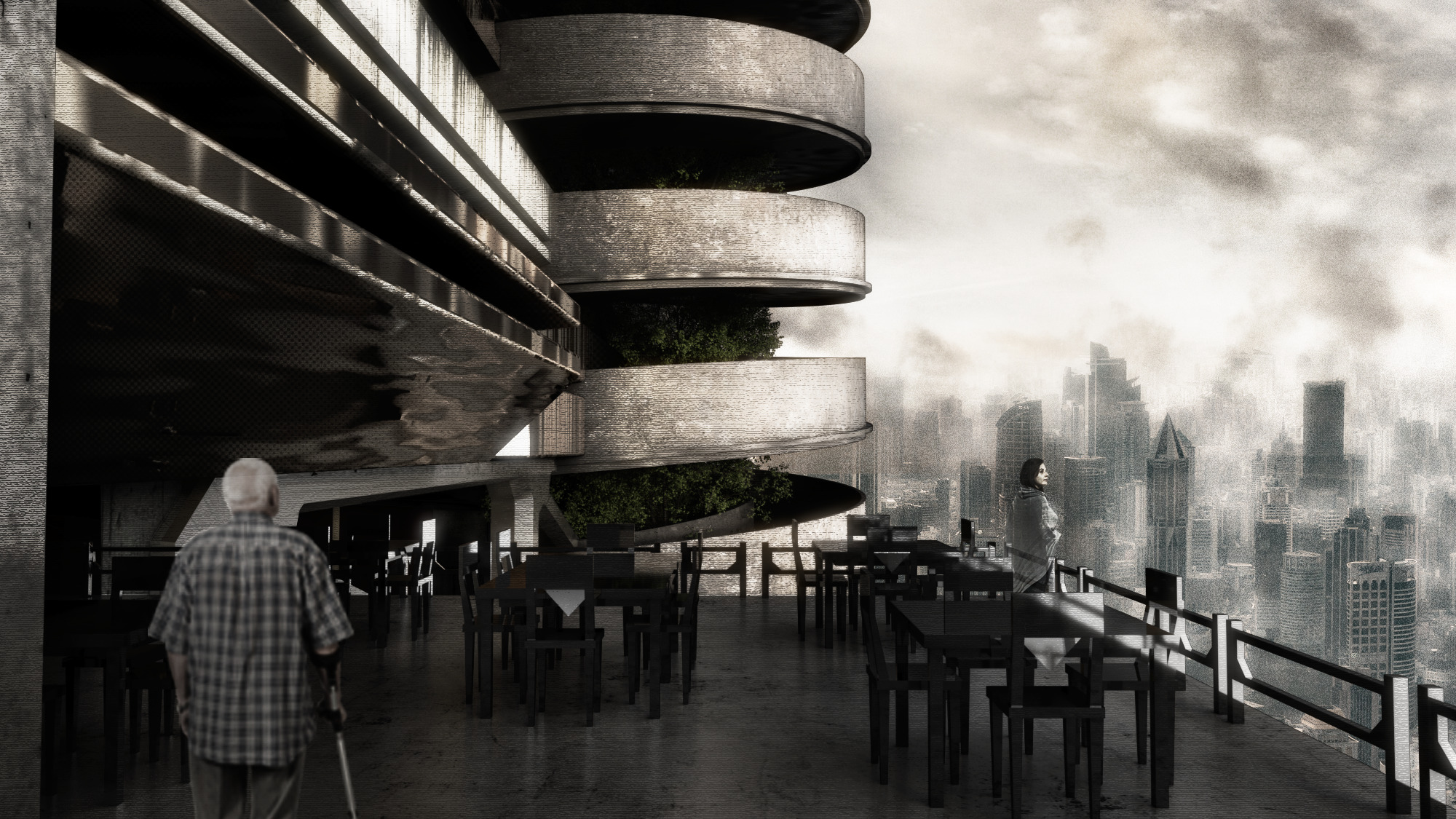
In the end, this project is not only a proposal for a new burial ritual, but a meditation on how architecture can heal—materially, spiritually, and ecologically.
By weaving together spaces for farewell, reflection, and regeneration, the system reconnects the living and the dead through cycles of light, water, and growth. It transforms cremation from a purely consumptive act into one that nourishes the urban environment, restores ecological balance, and rekindles individual faith.
Through these intertwined processes, the project imagines a future where architecture becomes a gentle mediator: offering comfort to the living, dignity to the dead, and resilience to the city. It is a quiet reminder that even in the highest density and the fastest pace, we can still create spaces that carry belief, memory, and the possibility of renewal.